


CoC Cannot Withdraw Approved Resolution Plan Due To Improved Financials: SC
 Copy Link
 Share
 Save
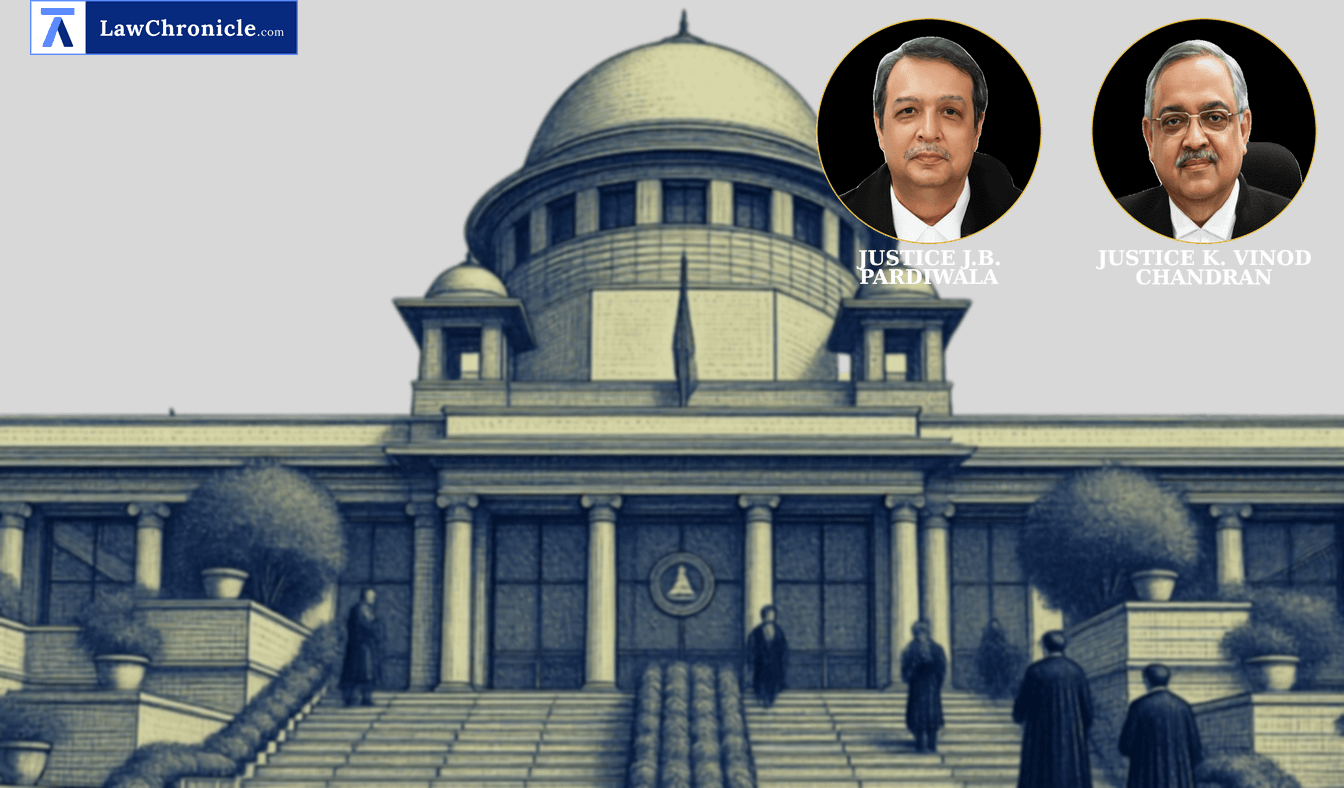
In a decisive affirmation of the statutory framework under the Insolvency and Bankruptcy Code, 2016, the Supreme Court has ruled that the Committee of Creditors cannot unilaterally withdraw an approved resolution plan merely because a corporate debtor's financial health improved during pending proceedings.
Evaluating an appeal challenging an order of the National Company Law Appellate Tribunal, a Division Bench comprising Justice J.B. Pardiwala and Justice K. Vinod Chandran examined whether financial creditors can alter their stance after approving a resolution plan under Section 30(4) of the Insolvency and Bankruptcy Code, 2016. The dispute arose after the Committee of Creditors sought to withdraw its earlier approval and invite fresh Expressions of Interest on the ground that the corporate debtor's accumulated cash balances had increased substantially, which would allegedly result in a windfall for the successful resolution applicant.
Key Takeaways
No Post-Approval Exit for Creditors: Once the Committee of Creditors approves a resolution plan, it loses the liberty to withdraw the plan solely because the corporate debtor's financial position improved during the intervening period.
Statutory Binding Nature: Approved resolution plans bind both the creditors and the successful resolution applicant under the scheme of the Insolvency and Bankruptcy Code, 2016, preventing parties from shifting stances based on commercial opportunism.
Limits of Section 12A Withdrawal: Withdrawal under Section 12A of the Insolvency and Bankruptcy Code, 2016 read with Regulation 30A of the Insolvency and Bankruptcy Board of India (Insolvency Resolution Process for Corporate Persons) Regulations, 2016 can only be invoked prior to the approval of the resolution plan by the Committee of Creditors, and not after it has been submitted to the Adjudicating Authority.
Mandatory Assessment by NCLT: Improved profitability alone cannot justify refusing approval under Section 31 if the resolution plan meets all mandatory requirements under Section 30(2) of the Insolvency and Bankruptcy Code, 2016.
Court Observations and Directions
The Supreme Court underscored that the binding mechanism created by the Insolvency and Bankruptcy Code, 2016 prevents either the financial creditors or the resolution applicant from reneging on commitments once an approval is voted through. Relying on Ebix Singapore (P) Ltd. v. Committee of Creditors of Educomp Solutions Ltd. and Another, State Bank of India and Others v. Consortium of Murari Lal Jalan and Florian Fritsch and Another ( "(2025) 4 SCC 354": 2024 CaseBase(SC) 202), and Glas Trust Company LLC v. Byju Raveendran & Others ( "(2024) SCC Online 3032": 2024 CaseBase(SC) 798), the Court explained that Section 12-A of the Insolvency and Bankruptcy Code, 2016 read alongside Regulation 30-A of the Insolvency and Bankruptcy Board of India (Insolvency Resolution Process for Corporate Persons) Regulations, 2016 does not provide an open-ended right to exit after a plan has reached the Adjudicating Authority for confirmation.
Analyzing the statutory scheme and its previous ruling in Kalyani Transco v. Bhushan Power & Steel Ltd., the Bench clarified that although the Committee of Creditors maintains a vital interest until full implementation, it cannot alter or jeopardize the submitted plan. The Supreme Court, in its reasoning, observed that "Read together, we are of the opinion that the withdrawal of an application can only be till the CoC approves the plan and after it is placed before the Adjudicating Authority, there can be no withdrawal either of the application or the approved Resolution Plan."
Addressing the Adjudicating Authority's duty under Section 31(1) of the Insolvency and Bankruptcy Code, 2016, the Apex Court issued specific directions to expedite the pending applications. The Supreme Court expressed that "We make it clear that except on the binding nature of the Resolution Plan, vis-a-vis the CoC and the SRA, as already upheld by this Court, we have only made prima facie observations which need not govern the final adjudication by the NCLT. We hence request the applications directed to be considered by the NCLT to be taken up together and a decision rendered as expeditiously as possible, reckoning the delay already occasioned."
Ratio
After a resolution plan is approved by the Committee of Creditors by the requisite statutory majority under Section 30(4) of the Insolvency and Bankruptcy Code, 2016 and submitted to the Adjudicating Authority for confirmation under Section 31, neither the Committee of Creditors nor the Successful Resolution Applicant possesses any statutory right or jurisdiction to modify or withdraw the approved plan on account of subsequent changes in the financial condition of the Corporate Debtor.
Background
The financial creditor initiated Corporate Insolvency Resolution Process against the Corporate Debtor under Section 7 of the Insolvency and Bankruptcy Code, 2016. The consortium comprising the successful resolution applicant submitted a resolution plan of Rs. 172.55 crores, which was duly approved by the Committee of Creditors and submitted to the National Company Law Tribunal for confirmation. However, prolonged litigation and interim stay orders delayed the implementation of the plan, during which the corporate debtor's cash balance grew from Rs. 30 crores to Rs. 165 crores. Citing this enhancement in asset value, the Committee of Creditors unanimously voted to withdraw the approved plan and issue a fresh Form-G to maximize asset value. Concurrently, the holding company of the corporate debtor sought to terminate the insolvency process by offering a One-Time Settlement. The National Company Law Tribunal allowed the Committee of Creditors to withdraw the plan, but the Appellate Tribunal overturned that decision, holding that the Committee of Creditors lacked jurisdiction to withdraw an approved plan, citing Ebix Singapore (P) Ltd. v. Committee of Creditors of Educomp Solutions Ltd. and Another and Amtek Auto Ltd. (CoC) v. Dinkar T. Venkatasubramanian, while referencing exercise of constitutional powers in Uttara Foods & Feeds (P) Ltd. v. Mona Pharmachem under Constitution of India.
Dismissing the financial creditors' appeal, the Supreme Court affirmed the Appellate Tribunal's view that approved plans are statutorily binding, while directing the tribunal to evaluate the pending applications strictly within the parameters of Section 30(2) and Section 31 of the Insolvency and Bankruptcy Code, 2016.
Case Details:
Case No.: Civil Appeal No.12045 of 2026
Neutral Citation: 2026 INSC 1154
Case Title: Bank of India & Ors. v. S.M. Kamal Pasha & Ors.
Source: 2026 CaseBase(SC) 9060
Similar Articles


 Breaking News


