Collector's grant of non‑agricultural permissions did not attract judicial immunity, Bombay High Court holds
 Copy Link
 Share
 Save
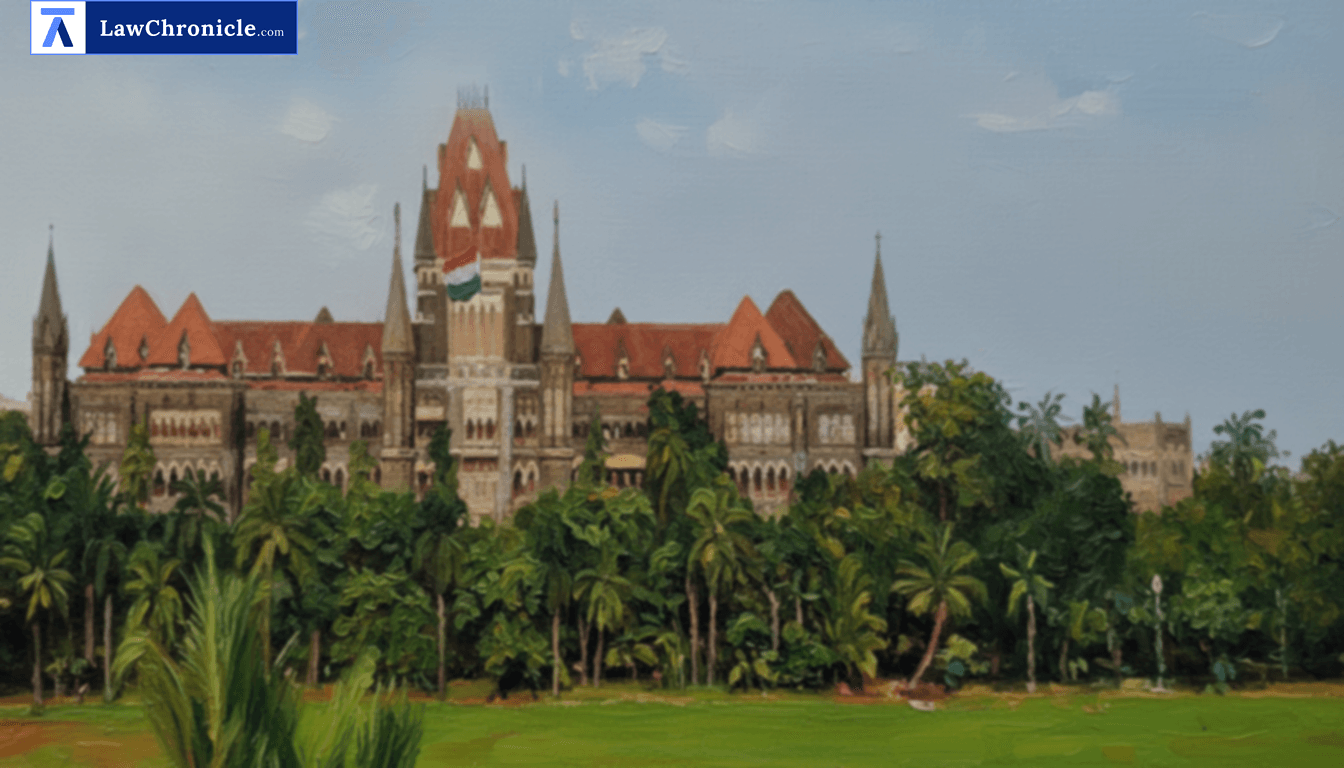
A single‑judge bench of Justice Mridula Bhatkar heard a writ petition challenging orders of the Special Judge, CBI, Daman, which had refused to discharge a former Secretary (Finance) and ex‑Collector (additional charge) from criminal prosecution arising out of alleged irregular grants of permission for non‑agricultural (NA) use of land in 1993. The petition raised the core question whether actions taken by the petitioner in his capacity as Collector were “judicial” and therefore immune under the Judges (Protection) Act, 1985 and section 77 IPC.
The High Court rejected the petition and upheld the Sessions Judge's order refusing discharge. The court held that the statutory scheme under the Goa, Daman and Diu Land Revenue Code, 1968 did not render the Collector a “Judge” entitled to the protection claimed. The Court noted that while Section 165 made a revenue officer a “Revenue Court” and Section 180 deemed formal or summary inquiries judicial for limited penal provisions, those provisions did not convert every decision of a Collector into a judicial act attracting immunity. The Court, in its reasoning, observed: “Thus, the Collector while conducting an enquiry under section 32 of the Act, he determines a question or decides it. ... A Judge is always a part of the Court, however, still the duties, norms, character, qualities of a Judge are totally different, therefore, an establishment, set up and proceedings and Presiding Officer may form a Court yet that Presiding Officer sometimes cannot have a status of a Judge. ... Nowhere in this section pertaining to enquiry, the legislature has used the word ‘Judge’ but has used the word ‘Court’. The legislature did not intend that revenue officer under the Code shall be deemed to be a Judge. ... Thus, under the Code, the Collector does not enjoy the immunity which is available under Section 3 of the Judges (Protection) Act of 1985 and under section 77 of Indian Penal Code.” The court further observed that “grant of permission for NA is neither a formal nor a summary inquiry but it is an ordinary inquiry.”
Background The petitioner, Narayan Diwakar, had held additional charge of Collector of Daman in 1993 and passed 13 permissions for conversion of agricultural land to non‑agricultural use in favour of co‑accused. A CBI FIR alleged conspiracy and corrupt practices, invoking Section 13(1)(d) read with 13(2) of the Prevention of Corruption Act and various IPC offences. The Special Judge took cognizance and rejected the petitioner's discharge application under Section 227 CrPC on 29 July 2011; a subsequent order of 15 July 2015 was also challenged.
Counsel for the petitioner argued that the Collector’s determinations under Sections 30 and 32 of the Code, and the deeming provisions in Sections 165 and 180, rendered him a “Judge” as defined in Section 19 IPC and in the Judges (Protection) Act, thereby attracting protection under Section 77 IPC and Section 3 of the Judges (Protection) Act. Reliance was placed on the Division Bench decision in E.S. Sanjeeva Rao and Supreme Court authorities on the scope of criminal misconduct under the Prevention of Corruption Act.
The CBI and State contended that permissions for NA use constituted administrative functions and ordinary inquiries under Section 181 of the Code; the procedural safeguards present for Provident Fund authorities under Section 7A EPF Act were absent here, so the Sanjeeva Rao ratio was distinguishable. The prosecution relied on material including statements and alleged forged plans to establish irregularity and prima facie abuse of official position.
The High Court analysed Sections 165, 180 and 32 and held that the Code contemplated three types of inquiries—formal, summary and ordinary—and that NA permissions fell within ordinary inquiries and not within the judicial protection provisions. The court also examined authorities on Section 13(1)(d)(i) and found that, on the material placed before it, there was prima facie evidence to frame charges for abuse of public office. The writ petition was dismissed and the trial court order refusing discharge was maintained. No interim directions were issued by the High Court.
Case Details: Case No.: WP1620 of 2016 Case Title: Narayan Diwakar s/o. Late Sh. Chatti Ltd. Vs. The State of Maharashtra & Anr. Appearances: For the Petitioner(s): Mr. Sanjay Diwakar a/w. Mr. Sushil Gupta, Ms. Rina Mishra i/b. Upendra Lokegaonkar, Advocate for the petitioner. For the Respondent(s): Mrs. P.P. Shinde, APP for respondent no. 1/State; Mr. H.S. Venegavkar, Advocate for respondent no. 2/CBI.
Similar Articles
 Breaking News