Colour Blindness Not A Bar For Office Jobs: Calcutta High Court
 Copy Link
 Share
 Save
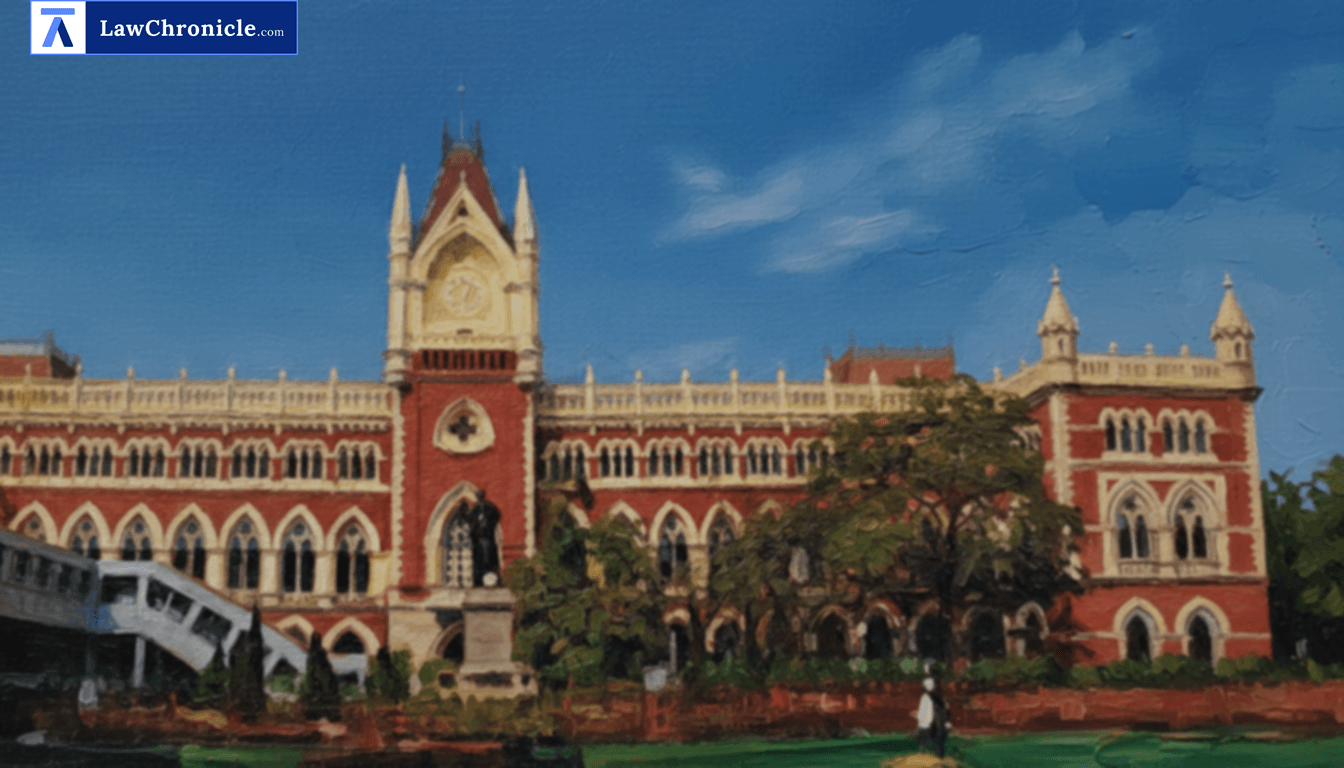
The Calcutta High Court has dismantled the arbitrary imposition of medical standards in public employment, ruling that colour blindness cannot be treated as a blanket disqualification for desk-based roles unless a functional necessity is explicitly proven. In a significant blow to executive discretion, the Court held that mining companies cannot retrospectively alter recruitment criteria to exclude candidates based on physical conditions that have no rational nexus with their job descriptions.
Justice Rai Chattopadhyay presided over the matter, examining whether the rejection of a provisionally selected candidate for the post of Accountant due to colour blindness was legally sustainable under the governing service rules of Coal India Limited.
Key Takeaways
Functional Nexus Requirement
Physical conditions can only operate as a disqualification if the governing rules expressly state so or if there is a demonstrated necessity for the specific job duties.
Nomenclature vs Function
Service grades or pay scales mentioned in advertisements do not override functional classifications defined in medical rules for determining physical fitness standards.
Anti-Retrospective Policy
Appointing authorities cannot introduce new substantive disqualifications through executive clarifications after the recruitment process has already commenced.
Select List Validity
While empanelment does not create an indefeasible right to appointment, the expiry of a selection panel cannot be used to validate an illegal administrative rejection made during its validity.
Court Challenges Arbitrary Medical Standards
The Court analyzed the Medical Attendance Rules - Coal India Limited (MAR) and observed that the respondent authority failed to distinguish between field-based mining roles and office-based accounting roles. The bench noted that the requirement for colour discrimination was strictly reserved for Group-A employees directly involved in mining operations and safety-sensitive tasks, a category the petitioner did not fall into despite the post's designation as Grade 'A'.
The Court has following directions:
"i. The letter dated 16th December, 2021 issued by the respondent authority declaring the petitioner unfit for employment on the ground of colour blindness is hereby set aside.
ii. The respondents are directed to give effect to the provisional selection of the petitioner for the post of Accountant/Cost Accountant, T & S Grade 'A', in accordance with the selection process, by treating colour blindness, by itself, as not constituting a disqualification for his appointment to the said post.
iii. Necessary consequential steps for issuance of the appointment letter shall be taken by the competent respondent authority within a period of four weeks from the date of communication of this order."
The Court, in its reasoning, observed: "A physical or medical characteristic cannot be converted into a blanket disqualification without examining its functional nexus with the duties of the post... The classification between candidates who possess and do not possess normal colour vision can withstand constitutional scrutiny only where such distinction bears a reasonable relation to the duties for which the appointment is made."
Ratio
In the absence of a specific rule or a demonstrated functional requirement linking colour discrimination to the essential duties of a post, colour blindness cannot be used as a ground to declare a candidate medically unfit for public employment. Such an exclusion is arbitrary and violates the guarantees of equality and equal opportunity under Articles 14 and 16 of the Constitution of India.
Background
The petitioner applied for the post of Accountant/Cost Accountant following a 2019 notification. Despite being provisionally selected, he was declared "Unfit for Employment" by the Medical Board due to colour blindness. The respondent company, Eastern Coalfields Limited, argued that under the Mines Act, 1952 and Mines Rules, 1955, all employees in a mining establishment must meet certain medical standards, asserting that modern accounting involving colour-coded charts makes colour vision essential.
The petitioner relied on Nandkumar Narayanrao Ghodmare versus State of Maharashtra ( "(1995) 6 SCC 720": 1995 CaseBase(SC) 1290), where the Supreme Court held that colour blindness shouldn't bar employment if the condition doesn't interfere with duties. He also cited High Court precedents in Pradip Kumar Maji versus Coal India Limited and Ashes Kumar Roy versus Coal India Limited, which involved similar disputes within Coal India. The respondents countered using Tarun Pan versus State of WB and Ali Hossain Mandal versus W.B. Board of Primary Education to argue that empanelled candidates have no vested right to appointment, especially after a list expires. However, the Court distinguished these, noting that the legality of the rejection must be tested against the Medical Attendance Rules - Coal India Limited as they stood during recruitment, following the principle reaffirmed in Tej Prakash Pathak v. Rajasthan High Court ( "(2025) 2 SCC 1": 2024 CaseBase(SC) 948).
Case Details:
Case No.: WPA 6821 of 2022
Neutral Citation: 2023:CHC-AS:28574
Case Title: Surendra Kumar Gupta Vs. The Coal India Limited & Ors.
Appearances:
For the Petitioner(s): Mr. Tarun Kumar Das, Advocate; Mr. Rajib Kumar Acharyya, Advocate
For the Respondent(s): Mr. Manik Das, Advocate
Source: 2026 CaseBase(CAL) 2945
 Breaking News