


Compassionate Appointment Cannot Be Claimed Decades After Employee's Death: Andhra Pradesh HC
 Copy Link
 Share
 Save
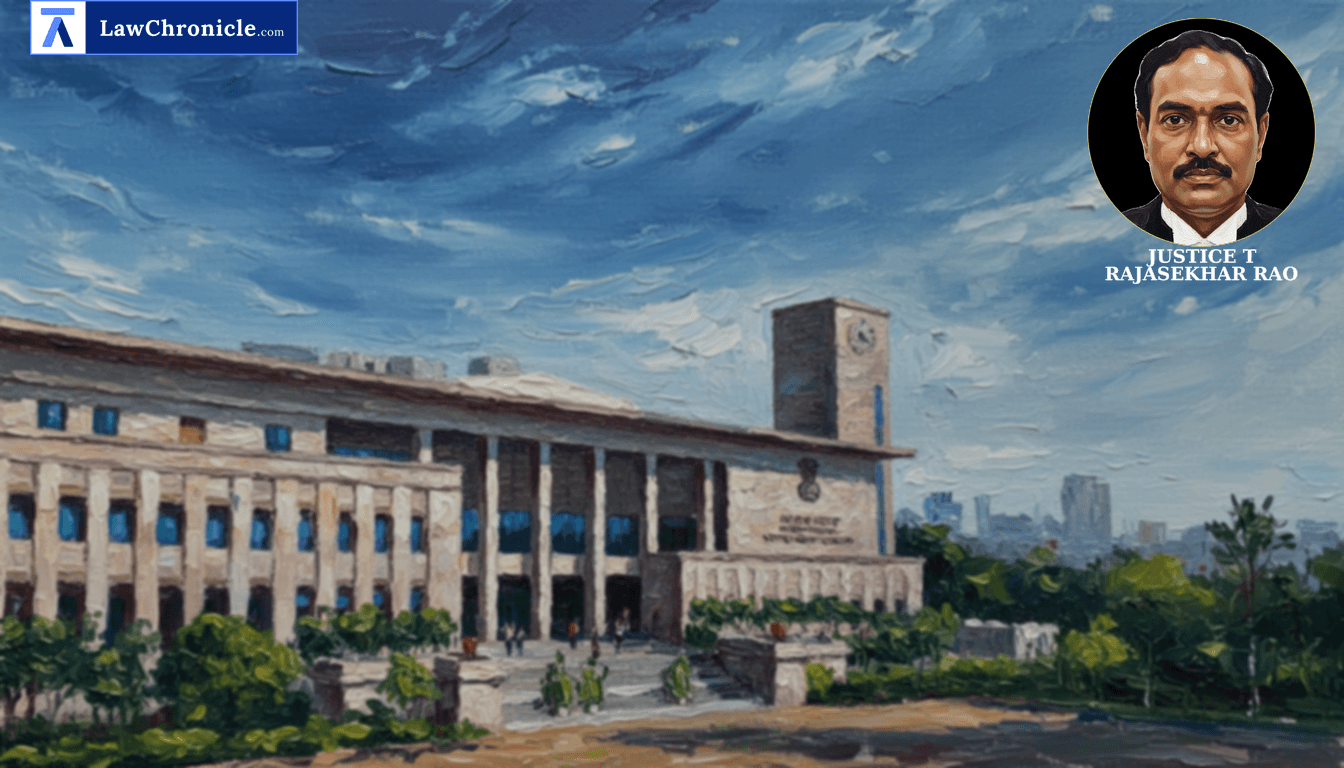
Extinguishing a delayed claim for compassionate employment, the High Court of Andhra Pradesh held that compassionate appointment is an exception designed solely to rescue a family from immediate penury, not an alternative source of recruitment. The Court affirmed that decades of survival post the employee's demise coupled with exceeding the prescribed age limit disentitles a candidate from seeking extraordinary relief.
A single-bench judge comprising Justice Tarlada Rajasekhar Rao adjudicated the writ petition challenging the rejection of compassionate appointment by APGENCO.
Key Takeaways
- Immediate Crisis Purpose: Compassionate appointment exists purely to tide over immediate financial crises caused by the sudden death of a breadwinner.
- Livelihood Survival Extinguishes Claim: Long passage of time demonstrates that the family is no longer in penury, invalidating late claims.
- Mandatory Eligibility Criteria: Applicants must strictly satisfy prescribed age limits and educational qualifications at the time of consideration.
- No Right to Negative Equality: Prior relaxations granted in isolated cases cannot be claimed as binding precedents to bypass statutory rules.
Court's Rationale on Compassionate Employment
The High Court emphasized that compassionate appointment is a concession rather than a vested right. Addressing the delay and age factor, the Court observed:
The Court, in its reasoning, observed: "It is well settled law in a catena of decisions held that the compassionate appointment is a concession shown by the employer to the family of a deceased employee to rescue the family from penury. The appointment on compassionate ground is not another source of recruitment but merely an exception to the aforesaid requirement taking into consideration the fact of the death of employee while in service leaving his family without any means of livelihood. In such cases the object is to enable the family to get over sudden financial crisis. But such appointments on compassionate ground have to be made in accordance with the rules, regulations or administrative instructions taking into consideration the financial condition of the family of the deceased. In the present case, after the death of the petitioner's mother way back on 2016, the petitioner was able to sustain and eke out their livelihood till 2026, that is, for about 10 years. After such a long period of years, it is too difficult to hold that the family is still in penury."
The Court issued the following directions:
"Accordingly, the present writ petition is dismissed. However, no order as to costs."
Ratio
Compassionate appointment is an exception to public employment principles meant strictly to address immediate financial indigence. A prolonged delay of several years in seeking appointment, combined with the applicant exceeding maximum age limits, negates the claim of penury and disentitles the candidate from relief under Constitution of India.
Background
The petitioner's mother served as a Junior Plant Attendant with APGENCO and died in harness in September 2016. The petitioner submitted representations seeking compassionate appointment. APGENCO rejected the claim citing B.P.M.S. No. 119 dated February 10, 1982, which stipulates that compassionate appointment is ineligible if there is an earning member or pension in the family, noting that the petitioner's father was receiving a substantial monthly pension.
The petitioner approached the High Court under Article 226 of the Constitution of India, contending that rejection was arbitrary and violative of Article 14 and Article 16 of the Constitution of India. The petitioner argued that relaxation had been granted to another individual in Memo dated December 28, 1999, which was sustained in W.P. No.13954 of 2010 and affirmed in W.A. No.158 of 2021. APGENCO countered that the cited instance was an exceptional case made on special merits and could not serve as a precedent, while highlighting that the petitioner was around 47 years old and the family had sustained itself for a decade. Finding that the family was not in penury and the petitioner was age-barred, the High Court dismissed the writ petition.
Case Details:
Case No.: W.P.No. 11340 of 2022
Neutral Citation: 2026:APHC:33216
Case Title: Mandava Venkata Sreedhar v. The APGENCO and Anr.
Appearances:
For the Petitioner(s): G V Shivaji
For the Respondent(s): Nagaraju Naguru, K. Krishnabushan Chowdary (SC For APGENCO)
Source: 2026 CaseBase(AP) 11391
Similar Articles



 Breaking News


