


Complainant In Cheque Bounce Case Can File Appeal As 'Victim' Without Special Leave: Andhra Pradesh HC
 Copy Link
 Share
 Save
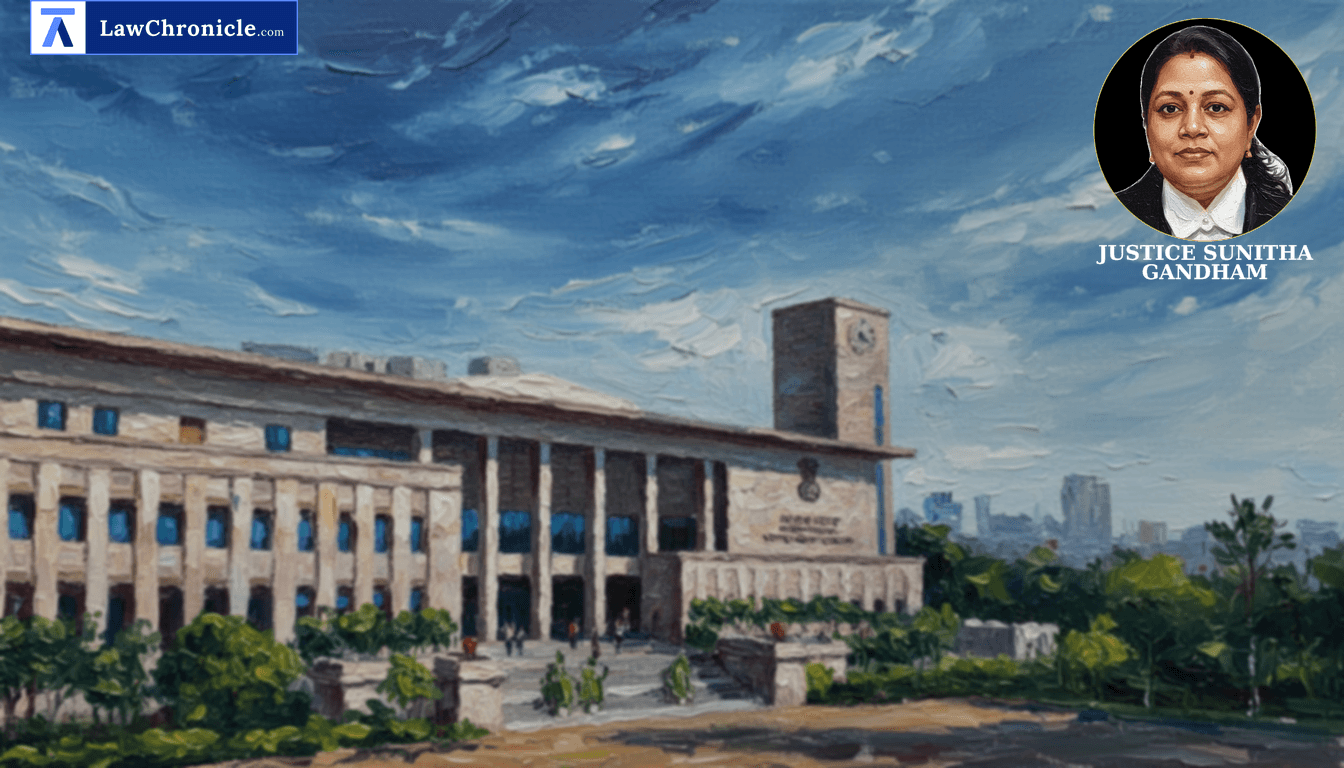
Empowering complainants in financial default cases, the High Court of Andhra Pradesh has ruled that a person entitled to the proceeds of a dishonoured cheque is a 'victim' and can directly appeal an acquittal before the Sessions Court without seeking special leave. This decision clarifies that the procedural requirements for private complaints under the Negotiable Instrument Act, 1881 are superseded by the victim's right to appeal under the general criminal procedure law.
In a proceeding heard by Justice Sunitha Gandham, the Court addressed a criminal appeal filed against a 2016 judgment of acquittal passed by the Judicial First Class Magistrate-cum-Principal Junior Civil Judge, Gudivada. The case originated from a complaint under Section 138 of the Negotiable Instrument Act, 1881 involving a cheque returned with the endorsement 'payment stopped by drawer'.
Key Takeaways
Victim Status for Complainants
Complainants in cheque bounce cases are legally classified as 'victims' under Section 2 (wa) of the Code of Criminal Procedure, 1973, granting them broader appellate rights.
No Special Leave Required
When appealing an acquittal under the proviso to Section 372 of Code of Criminal Procedure, 1973, a victim does not need to seek special leave from the High Court, unlike traditional complainant appeals under Section 378(4).
Retrospective Application of Precedents
Interpretations of law by Constitutional Courts are deemed retrospective in nature unless the judgment explicitly specifies prospective operation.
Jurisdictional Shift
Appeals against acquittals in Section 138 cases must now be directed to the jurisdictional Sessions Court rather than the High Court if invoked under the victim proviso.
Legal Precedents and the Definition of 'Victim'
The primary issue before the Court was whether the appeal was maintainable before the High Court or if it fell under the proviso to Section 372 of the Code of Criminal Procedure, 1973 (now reflected in Section 413 of BNSS). The Court relied heavily on the landmark ruling in Celestium Financial v. A.Gnanasekaran to resolve the ambiguity regarding the dual status of a complainant as a victim.
The Court, in its reasoning, observed: "In the circumstances, we find that Section 138 of the Act being in the nature of a penal provision by a deeming fiction against an accused who is said to have committed an offence under the said provision, if acquitted, can be proceeded against by a victim of the said offence, namely, the person who is entitled to the proceeds of a cheque which has been dishonoured, in terms of the proviso to Section 372 of the CrPC, as a victim. As already noted, a victim of an offence could also be a complainant."
Retrospective Operation of Supreme Court Judgments
The Court further clarified the temporal application of this legal principle. Referencing Kanishk Sinha vs. The State of West Bengal ( "2025 INSC 278": 2025 CaseBase(SC) 179) and Government of India & another v. Sri Devraj URS Medical College ( "2026 LiveLaw (SC) 766": 2026 CaseBase(SC) 749), the Court noted that while legislation is generally prospective, judicial interpretations of the law by the Supreme Court apply retrospectively. Since Celestium Financial v. A.Gnanasekaran did not specify prospective application, its mandate that victims need not seek special leave applies to pending matters.
Court Directions
Finding that it lacked the jurisdiction to entertain the appeal on merits due to the availability of a remedy before the Sessions Court, the Court issued the following directions:
"The Registry shall transmit the entire appeal record to the jurisdictional sessions Court. It is needless to say that the learned counsel for the appellant shall have liberty to carry out the amendment in the cause title and also the provisos thereof and file neat copy of appeal."
Ratio
A complainant under Section 138 of the Negotiable Instrument Act, 1881 who is entitled to the cheque proceeds qualifies as a 'victim' under Section 2(wa) of the Code of Criminal Procedure, 1973. Consequently, such a person has a statutory right to prefer an appeal against an order of acquittal under the proviso to Section 372 of the Code of Criminal Procedure, 1973 to the jurisdictional Sessions Court without the requirement of seeking special leave to appeal from the High Court.
Background
The appellant had initiated criminal proceedings after a cheque dated August 31, 2010, issued by the respondent, was dishonoured. The Trial Court acquitted the respondent on November 25, 2016. At the time, there was uncertainty regarding the jurisdiction of the Sessions Court to hear such appeals. The appellant approached the High Court seeking special leave to appeal. However, during the pendency of this appeal, the legal landscape shifted with the Supreme Court's clarification that complainants, as victims, have an inherent right to approach the Sessions Court. Consequently, the High Court disposed of the appeal for statistical purposes while transferring the matter to the appropriate subordinate appellate forum.
Case Details:
Case No.: CRIMINAL APPEAL NO: 779/2017
Neutral Citation: 2026:APHC:42955
Case Title: Sirapura Venkata Rama Rao V. Karri Kameswara Rao And Anr
Appearances:
For the Petitioner(s): Sai Gangadhar Chamarty
For the Respondent(s): A K Kishore Reddy
Source: 2026 CaseBase(AP) 17819
Similar Articles
 Breaking News


