Compulsory Retirement for Creating WhatsApp Group without Organization Consent not Valid: Bombay HC
 Copy Link
 Share
Share Save
Save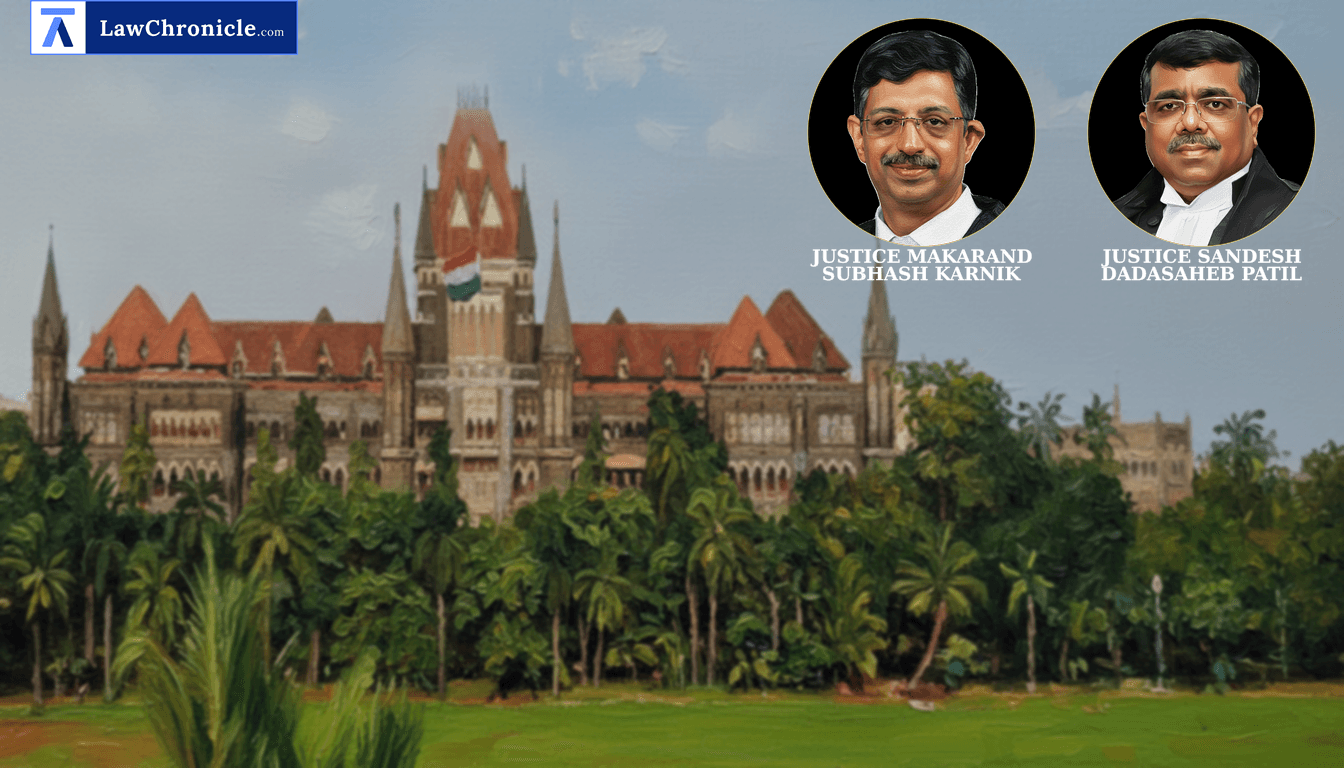
The Bombay High Court has declared that the mere creation of a WhatsApp group by an employee without organizational consent cannot be the basis for terminating a long-standing academic career, labeling such disproportionate punishment as a violation of constitutional protections. The Bench ruled that in the absence of proven financial gain or personal profit, punitive actions like compulsory retirement for simple social media coordination are 'strikingly excessive' and legally unsustainable.
A division bench of Justice M. S. Karnik and Justice Sandesh D. Patil presided over the matter, evaluating the legality of the Tata Institute of Social Sciences' (TISS) decision to compulsorily retire a professor who had served for over three decades. The Petitioner challenged the suspension and the subsequent punishment order arising from allegations of creating a parallel placement service via the messaging platform.
Key Takeaways
Social Media Limits
Starting a professional networking group on social media, even without formal permission, does not inherently constitute 'private trade' or 'business' under service rules.
Proportionality Over Privilege
Courts will invoke the doctrine of proportionality to strike down 'sledgehammer' punishments for minor procedural lapses that do not result in personal financial gain.
Perversity in Inquiry
An inquiry finding is deemed perverse if it concludes that 'placement services' exist without any evidence of monetary consideration or diverted benefits to the employee.
Redemption of Back Wages
While reinstating employees after excessive punishment, courts may balance equities by awarding partial back wages, such as 50%, especially when the employee was near superannuation.
Court Rejects 'Placement Service' Allegations
The Bombay High Court scrutinized the WhatsApp communication titled 'TISSians Career Impact2' and found that the platform was primarily used by alumni to share job opportunities from external sites like Naukri.com. The bench observed that the registered alumni association had raised no grievances and there was no evidence that the Petitioner charged money for these services. The bench noted that while the institute's logo was initially used, it was later removed, and this alone could not justify the career-ending penalty.
The Bench discussed that “WhatsApp being a social media platform, merely starting a WhatsApp group and being member of the WhatsApp group without there being further finding of any personal gain diverted to the benefit of the Petitioner, in our view, the punishment of ‘voluntarily retirement’ is grossly disproportionate... Merely starting a WhatsApp group by an employee without the permission of the organisation itself is not sufficient to put an end to long standing accomplished the career of a person.”
Ratio
The doctrine of proportionality dictates that a penalty must be commensurate with the gravity of the misconduct; any penalty that is strikingly excessive or one that a reasonable person would never reach based on the evidence is perverse and violative of Article 14 of the Constitution of India. Administrative authorities cannot use a 'sledgehammer to crack a nut' where a lesser restrictive alternative or a simple warning would suffice for procedural irregularities.
Background
The Petitioner, a Professor at TISS since 1985, was suspended in 2016 following allegations that he created a WhatsApp group for alumni using the institute’s logo, which allegedly violated the code of conduct and Section 72 of the Information Technology Act 2000. It was further alleged that this amounted to a parallel business in breach of Central Civil Services (Classification, Control and Appeal) Rules, 1965. Despite his denials, a one-man inquiry committee found him guilty of misusing his position for personal gain.
The Petitioner relied on Ranjit Thakur Vs. Union of India ( "(1987) 4 SCC 611": 1987 CaseBase(SC) 59) to argue against the severity of the punishment. The Respondents, citing Deputy General Manager & Ors Vs. Ajai Kumar Srivastava ( "(2021) 2 SCC 612": 2021 CaseBase(SC) 1228) and Indian Oil Corporation & Ors. Vs. Ajit Kumar Singh ( "(2023) 19 SCC 102": 2023 CaseBase(SC) 634), argued that judicial review is limited to the decision-making process and not the merit of the decision. However, the High Court found the findings perverse, noting that sharing career opportunities among alumni did not constitute 'trade'. The Bombay High Court ultimately applied the principles discussed in Omsairam Steels & Alloys (P) Ltd. Vs. State of Odisha regarding the balancing and necessity tests of the proportionality doctrine to set aside the compulsory retirement.
Case Details:
Case No.: WRIT PETITION NO. 1487 OF 2018
Neutral Citation: 2026:BHC-AS:37817-DB
Case Title: Dr. Swapan Garain v. Tata Institute of Social Sciences & Others
Appearances:
For the Petitioner(s): Mr. Jaiprakash Sawant, Advocate
For the Respondent(s): Mr. Dhruva Gandhi a/w Mr. Dheer Sampat i/b M. V. Kini & Co.
Source: 2026 CaseBase(BOM) 5662
 Breaking News