Contract Workers Entitled To Pay Parity With Regular Employees: Bombay HC
 Copy Link
 Share
Share Save
Save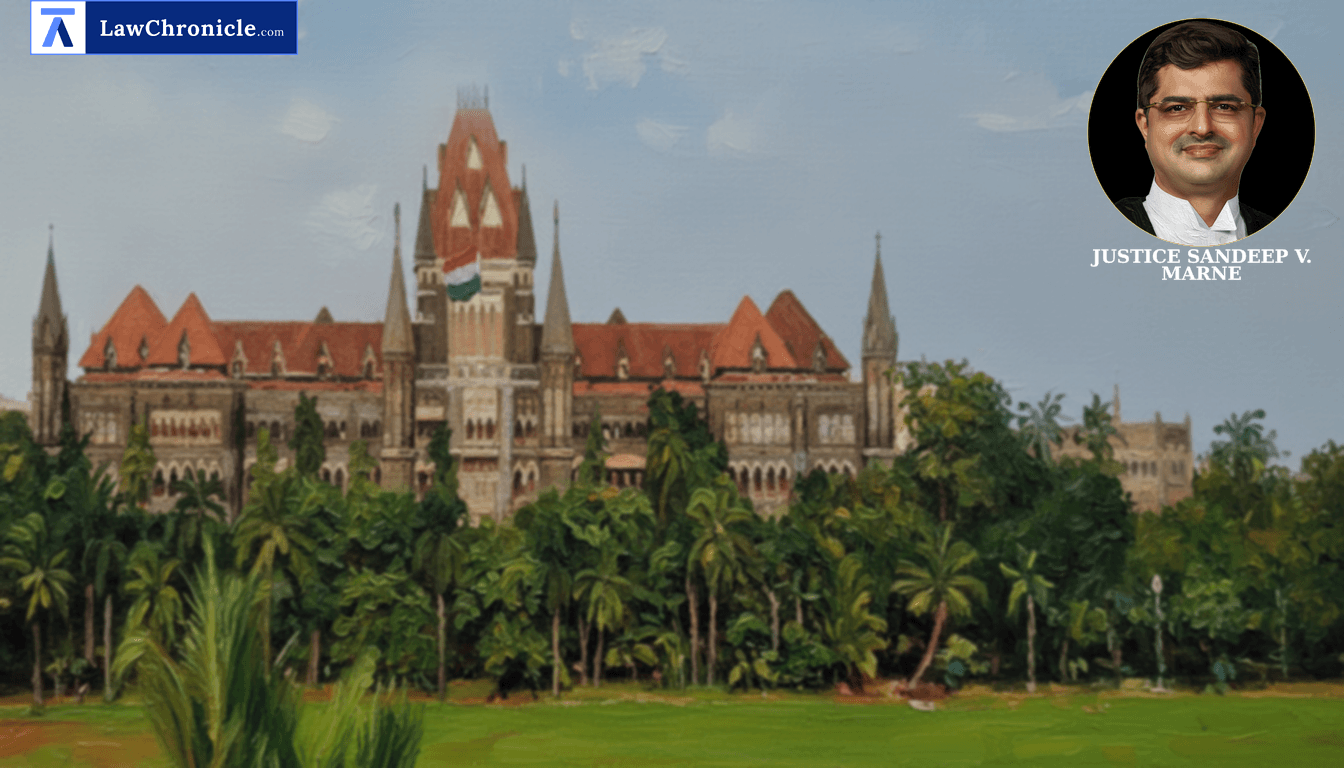
In a decisive mandate against wage discrimination, the Bombay High Court has affirmed that contract workers performing duties identical to permanent staff must be paid at the minimum of the regular pay scale, holding that principal employers cannot hide behind intermediaries to avoid statutory wage obligations. The ruling reinforces the protective mantle of labour welfare laws, establishing that the absence of a direct employment contract does not absolve state entities from ensuring 'Equal Pay for Equal Work' when manpower is outsourced to bypass recruitment bans.
Justice Sandeep V. Marne presided over the matter, evaluating whether workers engaged through third-party agencies for technical and non-technical roles at a state electricity distribution company were entitled to wage parity with permanent employees. The Court navigated the complex intersection of contractual autonomy and statutory mandates to protect the dignity of labour.
The Mandate of Equal Pay for Equal Work
While the Petitioner contended that there was no direct employer-employee relationship and that wages were a matter of tender-based contracts, the Court found that the workers were performing the exact same duties as regular employees such as Lineman and Meter Readers. This necessitated the application of the principle of equal pay for equal work as expounded in State of Punjab Versus. Jagjit Singh and Ors. ( "2017 (1) SCC 148": 2016 CaseBase(SC) 490) and subsequently reiterated in Sabha Shanker Dube Versus. Divisional Forest Officer and others ( "2019 12 SCC 297": 2018 CaseBase(SC) 781).
Statutory Obligations under Maharashtra Rules
Beyond judicial precedents, the Court emphasized the statutory duty under Rule 25 of the Maharashtra Contract Labour (Regulation and Abolition) Rules, 1971. The Court noted that since the Petitioner was registered under the Contract Labour (Regulation and Abolition) Act, 1970, it was legally bound by the conditions of the license which mandate that contract labour performing the same kind of work as direct employees must receive the same rates of wages.
The Court, in its reasoning, observed: "Thus, it is a statutory duty imposed under Rule 25(2)(iv)(b) of the Maharashtra Contract Labour (Regulation and Abolition) Rules, 1971 on the contractor to pay same wages to its workers as payable to the workmen of principal employer if both perform same kind of work... The Petitioner has itself admitted in the Petition that the contract workers are engaged in view of recruitment ban imposed by the State Government. There is ample material on record which is relied upon by the Respondent-Union to infer that there is similarity of work performed by regular and contract workers."
Court Directions
The Court has the following directions:
"(i) The impugned Awards are upheld to the extent of declaration made by the Industrial Tribunal for payment of wages to the members of Respondent-Union in the minimum of pay scale (at the lowest grade in the regular pay scale) as that of permanent employees of the Petitioner.
(ii) However, direction for payment of difference of wages from December 2016 in case Reference (IT) No. 12 of 2018 and from May 2016 in case of Reference (IT) No. 16 of 2020 is modified by directing that the difference of wages shall be payable to the members of Respondent-Union forming part of Reference (IT) No. 12 of 2018 w.e.f. 16 March 2018 and to the members of Respondent-Union forming the part of Reference (IT) No. 16 of 2020 w.e.f. 18 March 2020.
(iii) The difference of wages shall be payable only till the time members of the Respondent remain/remained to be employed by the contractors with the Petitioner."
Key Takeaways
Statutory Primacy Over Contractual Terms
Specific rules under the Contract Labour (Regulation and Abolition) Act, 1970 override private tender agreements when determining the minimum wage standards for outsourced manpower.
Impact of Recruitment Bans
State entities using contract labour to fill perennial vacancies created by recruitment bans cannot deny these workers pay parity if the nature of work is identical to sanctioned posts.
Limitation on Arrears
While the right to equal pay is a continuous cause of action, the Court restricted the recovery of arrears to the date the reference was made to the Tribunal, following Union of India & Ors. Vs. Tarsem Singh.
Narrow Construction of Precedent
Distinguished the ruling in Municipal Council, Nandyal Municipality Versus. K Jayaram and others, noting that while regularization is a different legal standard, wage parity is a statutory requirement under specific state rules.
Ratio
Where contract labour is engaged through an intermediary to perform the same kind of work as direct employees of the principal employer, Rule 25(2)(iv)(b) of the Maharashtra Contract Labour (Regulation and Abolition) Rules, 1971 imposes a statutory obligation to ensure pay parity at the minimum of the regular pay scale, regardless of the lack of a direct employer-employee relationship.
Background:
The dispute arose when the Maharashtra State Electricity Distribution Company Limited (MSEDCL) engaged contract workers via various agencies to fill gaps caused by a state-imposed recruitment ban. The Respondent-Union demanded wages equal to those of permanent employees. The Industrial Tribunal, Thane, ruled in favour of the workers, directing the company to pay the difference in wages. MSEDCL challenged this before the High Court, arguing that the Minimum Wages Act, 1948 or other wage agreements were the only benchmarks and that the 'Equal Pay' principle did not apply to indirect contractual staff. However, the High Court partially allowed the petitions only to the extent of modifying the period of arrears, while upholding the core principle of wage parity based on the Maharashtra Contract Labour (Regulation and Abolition) Rules, 1971.
Case Details:
Case No.: WRIT PETITION NO. 3170 OF 2025 WITH WRIT PETITION NO. 3172 OF 2025
NeutralCitation: 2026:BHC-AS:29905
Case Title: Maharashtra State Electricity Distribution Company Limited V/s. Bhartiya Kamgar Karmachari Mahasangh
Appearances:
For the Petitioner(s): Mr. Prashant Chavan, Senior Advocate with Mr. Nirav Shah and Ms. Richika Kadam i/b M/s. Little & Co.
For the Respondent(s): Mr. G. R. Naik with Mr. Uresh U. Sawant and Ms. Rutika Naik i/b Mr. G.R. Naik Co.
Source: 2026 CaseBase(BOM) 944
 Breaking News