


Contractual Appointment Against Regular Vacancy Unconstitutional: SC
 Copy Link
 Share
Share Save
Save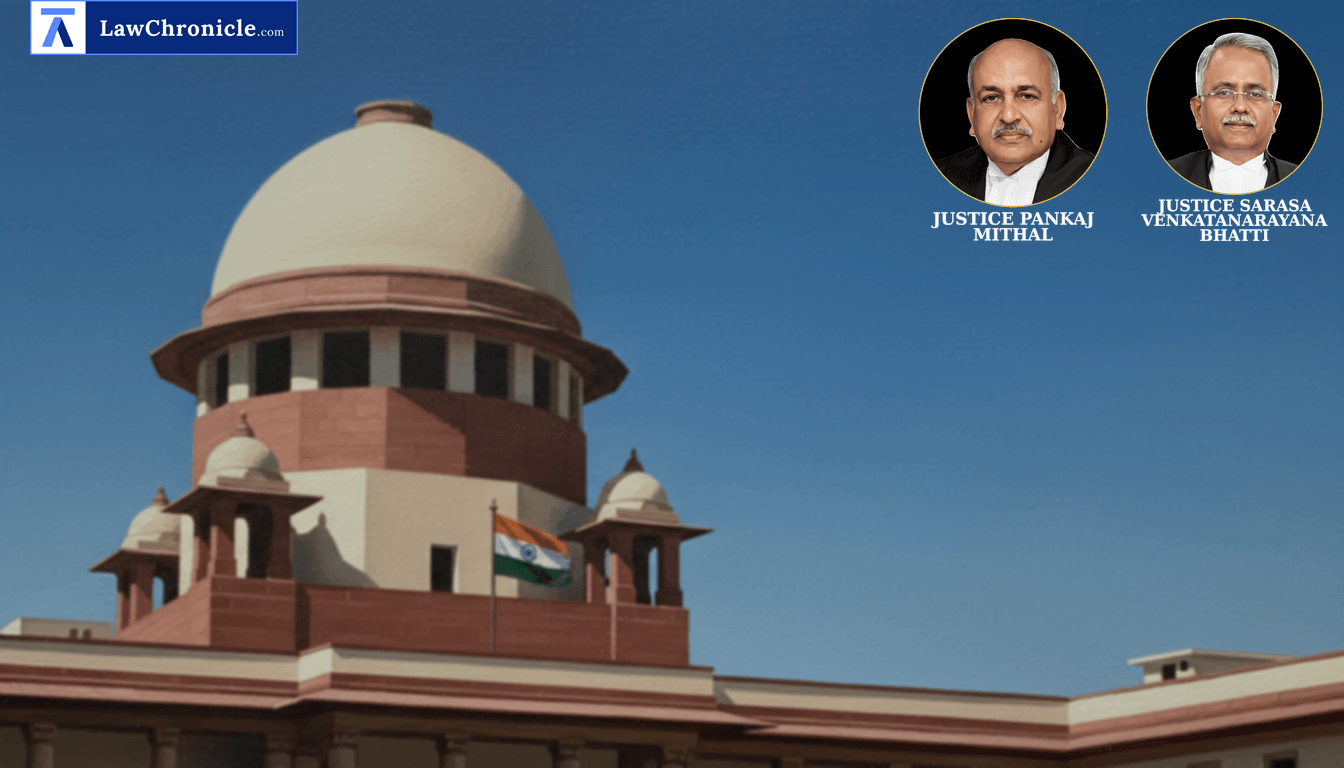
In a significant ruling, the Supreme Court has declared that offering a contractual appointment against an advertisement specifically meant for a regular vacancy is patently illegal and unconstitutional when the candidate meets all eligibility criteria. The Court emphasized that educational institutions cannot arbitrarily deny regular appointments to qualified candidates while others selected through the same process are granted permanent positions.
Supreme Court Overturns High Court Ruling on Academic Appointments
A bench comprising Justice Pankaj Mithal and Justice S.V.N. Bhatti adjudicated upon the appeal challenging the denial of a regular appointment to an Assistant Professor at IIIT-Allahabad. The Court found that despite being shortlisted and found suitable for a regular post, the appellant was selectively offered a contractual role without any recorded reasons for such differential treatment. This, the Court held, constituted a violation of the fundamental right to equality.
Court's Rationale on Arbitrary Contractualization
The Court, in its reasoning, observed: "The real controversy in the Civil Appeal is not whether a contractual appointee is entitled to regularisation, but whether issuing a contractual appointment against an advertisement meant for a regular vacancy, subjecting it to the regular process and arbitrarily granting a contractual appointment, is sustainable."
The bench further noted that the selection process was uniform for all candidates, yet the appellant was singled out. The Court observed that "denying a regular appointment is patently illegal and unconstitutional." It stressed that while judicial review does not allow the court to act as an appellate body over selection committees, it must intervene when the denial of a regular appointment lacks any disclosed justification or just reason.
Violation of Constitutional Safeguards
The appellant contended that the singular treatment meted out to him suffered from discrimination and violated Articles 14 and 16 of the Constitution of India. The Court agreed, noting that the advertisement made no mention of contractual appointments and that the appellant possessed all requisite qualifications, including a Ph.D. and the necessary teaching experience.
Background:
The dispute originated from an advertisement issued in 2013 by the Institute for various faculty positions in Pay Band-IV and Pay Band-III. The appellant applied for the post of Assistant Professor (Information Security). Despite being found suitable by the Selection Committee, he was offered a contract for 12 months, whereas thirteen other candidates were given regular appointments. The appellant initially accepted the offer under what he termed 'economic compulsion' but later challenged the decision.
Previously, the High Court of Judicature at Allahabad had dismissed the appellant's writ petition and subsequent appeal, ruling that his acceptance of the contractual terms and continued service amounted to acquiescence. However, the Supreme Court set aside these findings, holding that the illegality of the initial selection procedure could not be overlooked due to the appellant's conduct. The Court eventually allowed the appeal, granting the appellant regular appointment with continuity of service, though without back wages.
Case Details:
Case No.: CIVIL APPEAL NO(S). 5307 OF 2024
NeutralCitation: 2026 INSC 487
Case Title: LOKENDRA KUMAR TIWARI v. UNION OF INDIA AND OTHERS
Appearances:
For the Petitioner(s): Mr. Sudhir Kumar Saxena, Senior Counsel
For the Respondent(s): Mr. Sanyat Lodha, Counsel
Source: 2026 CaseBase(SC) 412
 Breaking News