Convict Sentenced Under IPC 397 Entitled to Emergency Parole for Mother's Surgery: Kerala HC
 Copy Link
 Share
Share Save
Save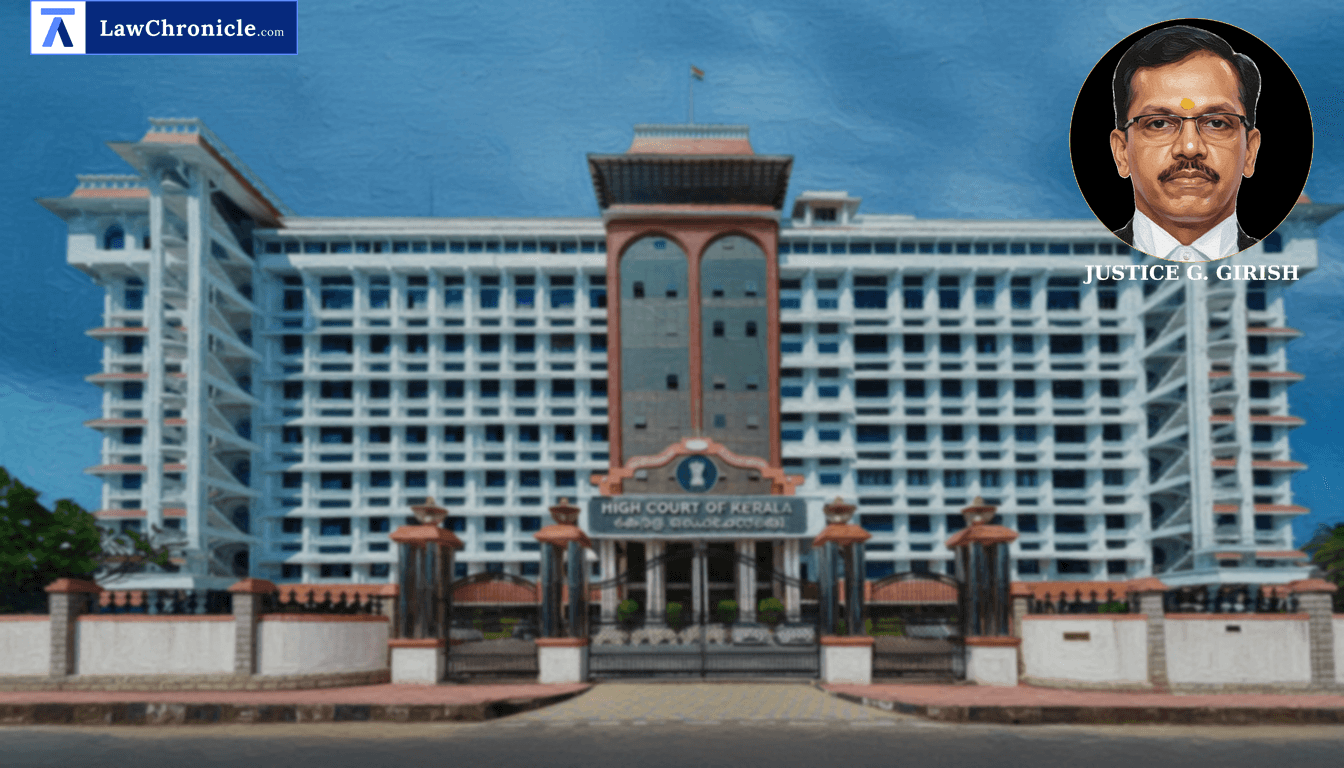
Balancing penal severity with humanitarian imperatives, the High Court of Kerala has mandated emergency leave for a convict undergoing imprisonment for a grave offence to facilitate care for his mother during a major surgical procedure. The ruling underscores that strict statutory bars against routine release cannot completely obliterate judicial discretion when critical family medical emergencies arise.
In a single-judge bench, Justice G. Girish considered a writ petition filed under Article 226 of the Constitution of India, seeking emergency leave for a convict undergoing sentence at the Central Prison and Correctional Home, Viyyur, to attend to his mother during a scheduled medical operation.
Addressing the medical necessity, the Court noted the documentation produced by the petitioner and found sufficient justification to grant temporary relief. The Court has the following directions:
"The 3rd respondent is hereby directed to pass the necessary orders granting emergency leave to Convict No.677/2024 (Liju Antony) of the Central Prison and Correctional Home, Viyyur, for a period of seven days with effect from 31.07.2026, to enable him to attend his mother, who is to undergo a surgery."
The Court, in its reasoning, observed: "Having regard to Ext.P2 - Medical Certificate, issued by the Junior Consultant, Obstetrics & Gynaecology, of the Department of Health Services, Kerala, I am of the view that the petitioner has to be granted emergency leave for a period of seven days to attend his mother, who is scheduled to undergo a surgery for 3rd degree uv prolapse."
Key Takeaways
Humanitarian Leave Prevails: Emergency leave can be granted for medical crises of immediate family members despite the gravity of the underlying conviction.
Evidentiary Reliance on Public Doctors: Medical certificates issued by government department doctors carry persuasive weight in evaluating emergency leave petitions.
Strict Time-Bound Relief: The Court granted a targeted, seven-day leave window specifically tailored to cover the period of surgery and immediate care.
Ratio
Article 226 of the Constitution of India empowers the High Court to grant temporary emergency leave/parole to a convict for attending to a close relative undergoing serious medical procedures, notwithstanding objections based on the nature of the offence or conviction under serious provisions of the IPC.
Background:
The writ petition was filed by Leelamma Antony, the 67-year-old mother of Convict No. 677/2024 (Liju Antony). The petitioner sought a direction to the Superintendent of the Central Prison, Viyyur, to grant emergency leave to her son so he could attend to her during a scheduled surgery for correction of 3rd degree uv prolapse.
The State opposed the prayer, with the learned Public Prosecutor submitting that the prisoner was ineligible for emergency leave because he was serving a sentence for an offence under Section 397 of the IPC. The State further contended that a proper certificate from a Civil Surgeon detailing serious ailments had not been produced.
However, upon evaluating the medical certificate issued by the Junior Consultant, Obstetrics & Gynaecology, Department of Health Services, Kerala, the High Court held that a sufficient case was made out. The Court allowed the writ petition and issued directions granting seven days of emergency leave to the convict.
Case Details:
Case No.: WP(CRL.) NO.986 OF 2026
NeutralCitation: 2026:KER:57114
Case Title: Leelamma Antony V. State Of Kerala And Ors.
Appearances:
For the Petitioner(s): Shri. Harikrishnan K., Shri. Basil Sajan, Shri. Mohammed Hashmi Thaha, Smt. Chandhana Bhaiju
For the Respondent(s): SRI. GITHESH.R - SR.PP
Source: 2026 CaseBase(KER) 4574
 Breaking News