Conviction Under Section 325 IPC Upheld; Himachal Pradesh HC Reduces Sentence to Three Years
 Copy Link
 Share
 Save
In a decisive affirmation of the evidentiary value of injured witnesses, the Himachal Pradesh High Court upheld the conviction of a shopkeeper for a violent assault involving a wooden stick, while simultaneously reducing the prison term from five years to three years. The ruling reinforces the judicial principle that minor discrepancies or delays in testimony do not invalidate the core truth of a victim's account, especially when corroborated by medical evidence and forensic reports.
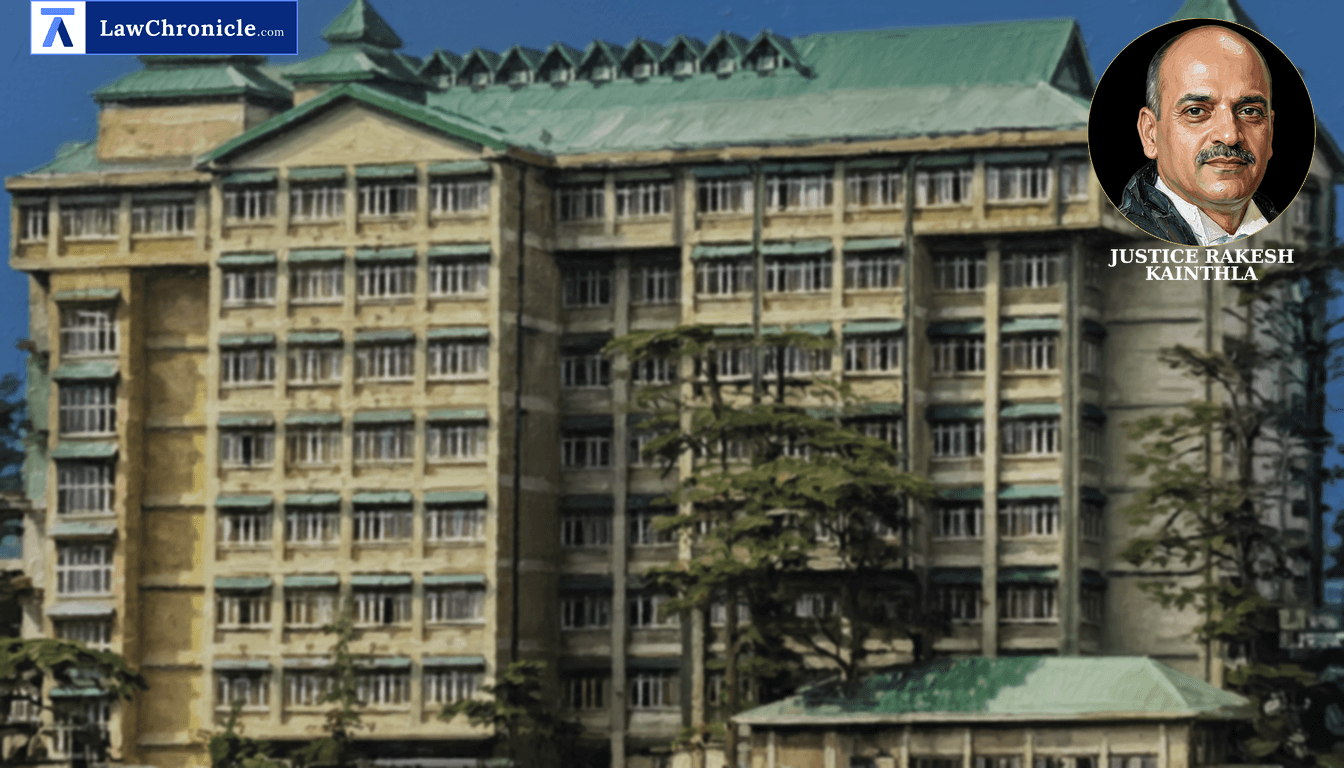
In an appeal heard by Justice Rakesh Kainthla, the Court examined a challenge against the judgment of the Additional Sessions Judge, Fast Track Court, Chamba. The appellant had been convicted under Section 325 of the Indian Penal Code for causing grievous hurt to a fellow shopkeeper during an altercation following the consumption of alcohol.
Key Takeaways
Primacy of Injured Witness Testimony
Injured witnesses are held to a higher standard of credibility as they are unlikely to spare the real culprits and falsely implicate others, making their testimony extremely valuable in criminal trials.
Rejection of 'Falsus in Uno'
The Indian legal system does not apply the principle that a witness who is false in one aspect is false in everything; courts must 'sift the grain from the chaff' to extract the truth.
Police Negligence and Complainant Rights
A victim cannot be penalized for a delay in reporting or registering a case if the police, despite being informed by medical authorities, failed to take timely action.
Reasoning on Sentence Reduction
While maintaining conviction, courts may reduce sentences based on the duration of litigation (14 years in this case) and the specific circumstances of the assault, such as the number of blows dealt.
Judicial Scrutiny of Witness Competence and Forensic Evidence
The appellant argued that the victim was an incompetent witness because he was unable to answer questions promptly. However, the Court rejected this, noting that a delay in responding due to a brain injury does not equate to a lack of rational understanding. Referring to State v. Raj Kumar and Acharaparambath Pradeepan v. State of Kerala ( "(2006) 13 SCC 643: (2008) 1 SCC (Cri) 241: 2006 SCC OnLine SC 1421": 2006 CaseBase(SC) 1206), the Court held that once a statement is recorded, a presumption of competence arises.
Furthermore, the Court addressed the discrepancy regarding the victim's blood group. The defense contended that the failure to prove the victim's blood group was 'O' (matching the blood found on the wooden stick) was fatal. The Court, relying on Balwan Singh v. State of Chhattisgarh ( "(2019) 7 SCC 781": 2019 CaseBase(SC) 2037) and Mustakeem v. State of Rajasthan, clarified that the presence of human blood on a recovered weapon, combined with reliable oral testimony, is sufficient for conviction.
The Court has following directions:
"The present appeal is partly allowed, and the sentence of 5 years imposed by the learned Trial Court is reduced to rigorous imprisonment for 3 years for the commission of an offence punishable under Section 325 of the Indian Penal Code. Subject to this modification, the rest of the judgment and order passed by the learned Trial Court are upheld. A modified jail warrant be prepared accordingly. The record of the learned Court below be sent back with a copy of this judgment for the information of the learned Trial Court."
The Court, in its reasoning, observed: "The importance of an injured witness in a criminal trial cannot be overstated. Unless there are compelling circumstances or evidence placed by the defence to doubt such a witness, this has to be accepted as extremely valuable evidence in a criminal trial... The evidence of the injured witness has greater evidentiary value, and unless compelling reasons exist, their statements are not to be discarded lightly."
Ratio
The testimony of an injured witness possesses high evidentiary value and cannot be discarded due to minor contradictions, exaggerations, or a delay in reporting caused by police remissness. Furthermore, the principle of 'falsus in uno, falsus in omnibus' is not applicable in Indian criminal jurisprudence; courts are duty-bound to separate truth from falsehood even if parts of a witness's statement are found to be inaccurate.
Background
The dispute originated on June 8, 2012, at Dram Nallah, where the victim and the accused consumed alcohol inside a shop. A wordy duel escalated into violence when the accused struck the victim on the head with a wooden stick, causing a depressed skull fracture and active bleeding from the ear. The victim remained unconscious and was eventually operated upon at PGI Chandigarh.
During the trial, several witnesses turned hostile, and the defense argued that the victim had sustained injuries from an accidental fall while intoxicated. However, medical experts (PW-11) testified that the isolated head injury was inconsistent with a fall from height, which would have typically caused multiple corresponding injuries. The Trial Court convicted the accused under Section 325 of the Indian Penal Code, but the High Court, while upholding the guilt, found the five-year sentence excessive given that 14 years had passed since the incident. The Court also declined to grant the benefit of the Probation Of Offenders Act, 1958, citing the gravity of the injury and the accused's failure to assist the victim after the assault.
Case Details:
Case No.: Cr. Appeal No. 4137 of 2013
Neutral Citation: 2026:HHC:47940
Case Title: Baldev @ Dev Versus State of H.P.
Appearances:
For the Petitioner(s): Ms. Sheetal Vyas, Advocate.
For the Respondent(s): Mr. Jitender Sharma, Additional Advocate General.
Source: 2026 CaseBase(HP) 11164
 Breaking News