


Conviction Under Section 498-A Requires Substantiated Evidence Of Cruelty: SC
 Copy Link
 Share
 Save
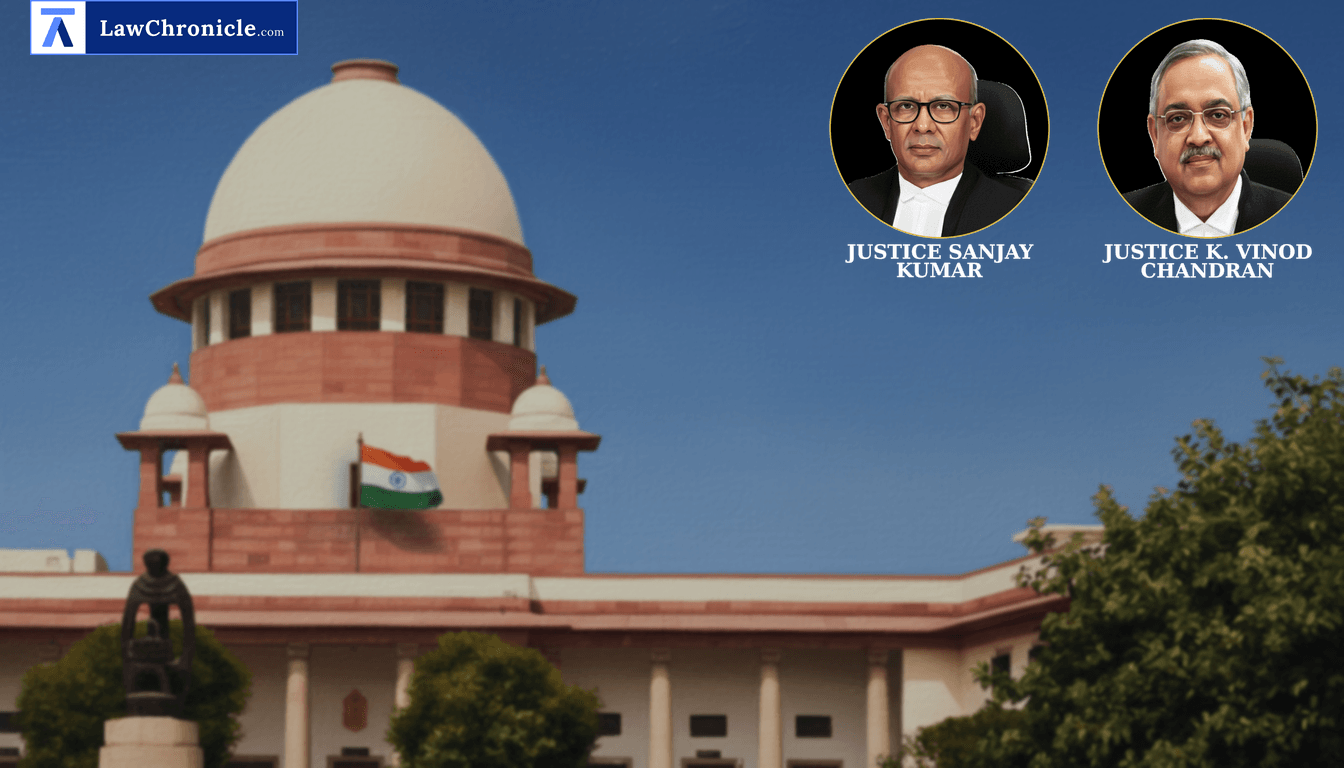
The Supreme Court set aside the conviction of a husband under Section 498-A of the Indian Penal Code, 1860, emphasizing that general and omnibus allegations of torture without specific instances or substantiation cannot form the basis of a criminal conviction. A bench of Justice Sanjay Kumar and Justice K. Vinod Chandran observed that while the death was admittedly a suicide, the evidence failed to establish that the appellant's conduct drove the deceased to take the extreme step.
Analysis of General and Omnibus Allegations
The Court scrutinized the findings of the trial court and the High Court, noting a significant inconsistency in convicting the accused under the Dowry Prohibition Act, 1961 despite finding no evidence of dowry demands. The Bench highlighted that the prosecution's case rested on vague oral testimonies and unverified letters that lacked specific details regarding the alleged harassment.
The Court, in its reasoning, observed: "We are conscious of the fact that to attract Section 498-A, there need not be a demand of dowry, since any unlawful demand made by the husband or his family is covered under Explanation (b). Explanation (a) of Section 498-A also brings in any mindless action, willful in nature, driving the wife to commit suicide under ‘cruelty’. But the evidence led by way of oral testimony, here, does not put forth any unlawful demand or such mindless acts of physical or mental torture as rightly found by the High Court."
Failure to Prove Handwriting and Specific Instances
The Evidentiary Gap in Letters and Testimony
The Court pointed out that the letters produced by the prosecution (Exts. 6 and 7) were never verified for handwriting and contained vague contents that did not clearly establish harassment. Furthermore, the testimonies of the family members (PW2 to PW5) were categorized as general in nature, lacking specific dates or definite instances of cruelty.
Background:
The case originated from the death of the appellant's wife by pesticide poisoning. The trial court initially acquitted the husband and in-laws of charges under Section 304-B of the Indian Penal Code, 1860 due to lack of evidence for dowry demands, but convicted them under Section 498-A read with Section 34 of the Indian Penal Code, 1860 and Section 4 of the Dowry Prohibition Act, 1961. The High Court later affirmed the conviction but modified the sentences and directed the release of the in-laws under the Probation of Offenders Act, 1958.
Upon appeal, the Supreme Court found that the conviction was unsustainable because the oral testimony and documents fell short of establishing the legal threshold for cruelty. The Court reiterated that even under Explanation (a) of Section 498-A, there must be evidence of willful, mindless actions, which was missing in the present case. Consequently, the Supreme Court allowed the appeal and acquitted the appellant.
Case Details:
Case No.: CRIMINAL APPEAL NO. OF 2026 (@ Special Leave Petition (Crl.) No. 21118 of 2025)
NeutralCitation: 2026 INSC 544
Case Title: Gandadhipa Sahu Versus State of Odisha & Ors.
Appearances:
For the Petitioner(s): Sri Kailash Vasdev, Senior Counsel
For the Respondent(s): Ms. Ankita Chaudhary, State Counsel
Source: 2026 CaseBase(SC) 470
Similar Articles



 Breaking News


