Court Affirms State Power To Dissolve University Where Chancellor Lacked Visitor’s Approval; High Court Remand Set Aside
 Copy Link
 Share
Share Save
Save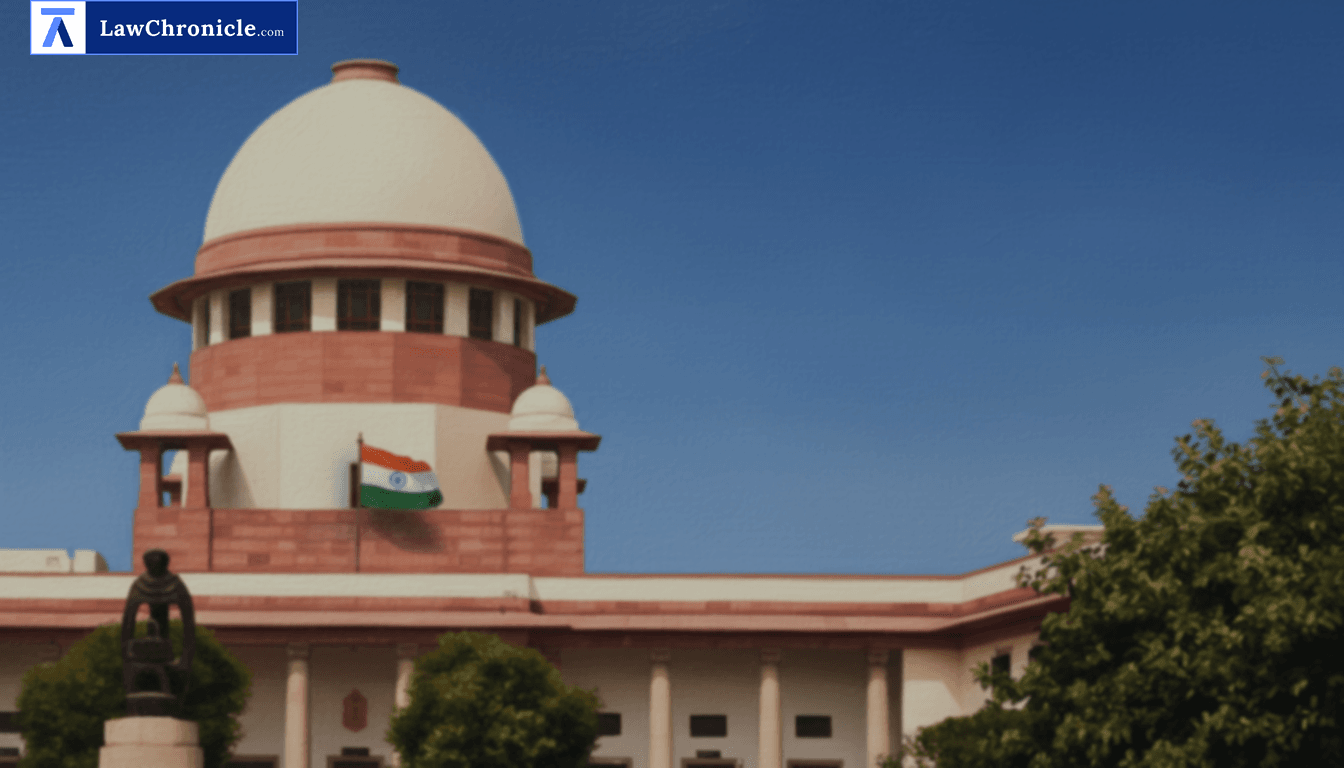
A bench of Justices Pamidighantam Sri Narasimha and Sandeep Mehta heard appeals arising from rival challenges to the dissolution of a State private university and an order of the Meghalaya High Court remanding the matter to a Single Judge. The appeals concerned whether the appointment of the University’s Chancellor complied with the CMJ University Act, 2009, whether the State followed Section 48 before dissolving the university, and whether the High Court Division Bench was justified in remanding the matter for fresh consideration.
The Court summarised that the Sponsor’s unilateral appointment of the Chancellor was conditional on the Visitor’s approval and therefore could not acquire validity by inaction; it held that the State complied with Section 48 in issuing show-cause notices and in passing the dissolution order dated 31 March 2014, and that the Division Bench’s direction to remit the matter for fresh merits adjudication was unwarranted. The Supreme Court accordingly dismissed the appellants’ appeal and allowed the State’s appeal to the limited extent of setting aside the remand, while affirming the dissolution decision and leaving to the State the exercise of consequential measures.
The Court, in its reasoning, observed: “On perusal of the sub-section (1) of Section 14 of the Act, it becomes crystal clear that the Sponsor must appoint a person suitable to be appointed as the Chancellor of the University, however, such appointment is ‘subject to the approval’ of the Visitor. It is evident from the aforesaid provision that the legislative intent behind the provision was that the appointment of the Chancellor, made by the University, shall require mandatory approval by the Visitor failing which, such appointment would be non est in the eyes of law.”
Decision Summary also recorded that the absence of any statutory deeming provision barred treating the Visitor’s silence as a “deemed approval.” The Court noted earlier High Court observations that “the provisions of the CMJ University Act, 2009, does not support the contention … that there would be a 'deemed approval' for appointment of the Chancellor,” and relied on settled principles that approval by a higher authority must be given to make an action effective. The Supreme Court accepted the State’s finding that, after issuance of show-cause notices and consideration of replies, the evidence disclosed mismanagement, irregular degrees and impermissible off-campus activities, and that the procedure under Section 48 had been followed in issuing directions, giving opportunity to be heard and in concluding dissolution was warranted.
Background The dispute arose after the Chandra Mohan Jha Foundation established CMJ University under a Meghalaya statute in 2009 and the Foundation appointed a Chancellor in 2009. The Governor, as Visitor, never formally approved that appointment. The Visitor issued directions on 30 April 2013 identifying alleged anomalies including absence of Visitor’s approval for the Chancellor, award of B.Ed./Ph.D. degrees without requisite regulatory approvals, off‑campus centres, and failure to file annual reports. The university challenged the Visitor’s letter; High Court orders in May 2013 and a Division Bench order in May 2013 upheld the Visitor’s power. The Supreme Court in SLP disposed an earlier challenge on 13 September 2013 and directed the State to pass a speaking order under Section 48 after notice and opportunity; the order stated that “within three months ... the State Government shall, after giving an opportunity to the petitioners to show cause ... pass a speaking order under Section 48 of the 2009 Act.”
The State issued show-cause notices on 12 November 2013 and 24 January 2014; the university replied, but the State found the replies inadequate, recorded detailed reasons and on 31 March 2014 dissolved the university under Section 48(2). The Single Judge of the Meghalaya High Court quashed the dissolution in July 2015 on procedural fairness grounds; the State appealed. The Division Bench of the High Court in May 2021 quashed the Single Judge’s order but remanded the matter to the Single Judge for a merits reconsideration; both parties then moved to the Supreme Court. The Supreme Court held that the appointment of the Chancellor was void for want of Visitor’s approval, that the dissolution order complied with Section 48 and this Court’s directions, and that the Division Bench’s remand to the Single Judge was unjustified and was set aside. The Supreme Court affirmed the dissolution order and dismissed the appellants’ challenge; it allowed the State’s appeal to set aside the remand. The Court ordered no costs and left implementation measures to the State.
Case Details: Case No.: Civil Appeal Nos. 9694–9695 of 2024 Case Title: CMJ Foundation and Others v. State of Meghalaya and Others Appearances: For the Petitioner(s): Senior counsel for the appellants (names not specified in the reported excerpt) For the Respondent(s): Senior counsel for the State of Meghalaya (names not specified in the reported excerpt)
 Breaking News