


Court Holds Governing Body Is Veritable Party to League Arbitration, Appoints Sole Arbitrator
 Copy Link
 Share
 Save
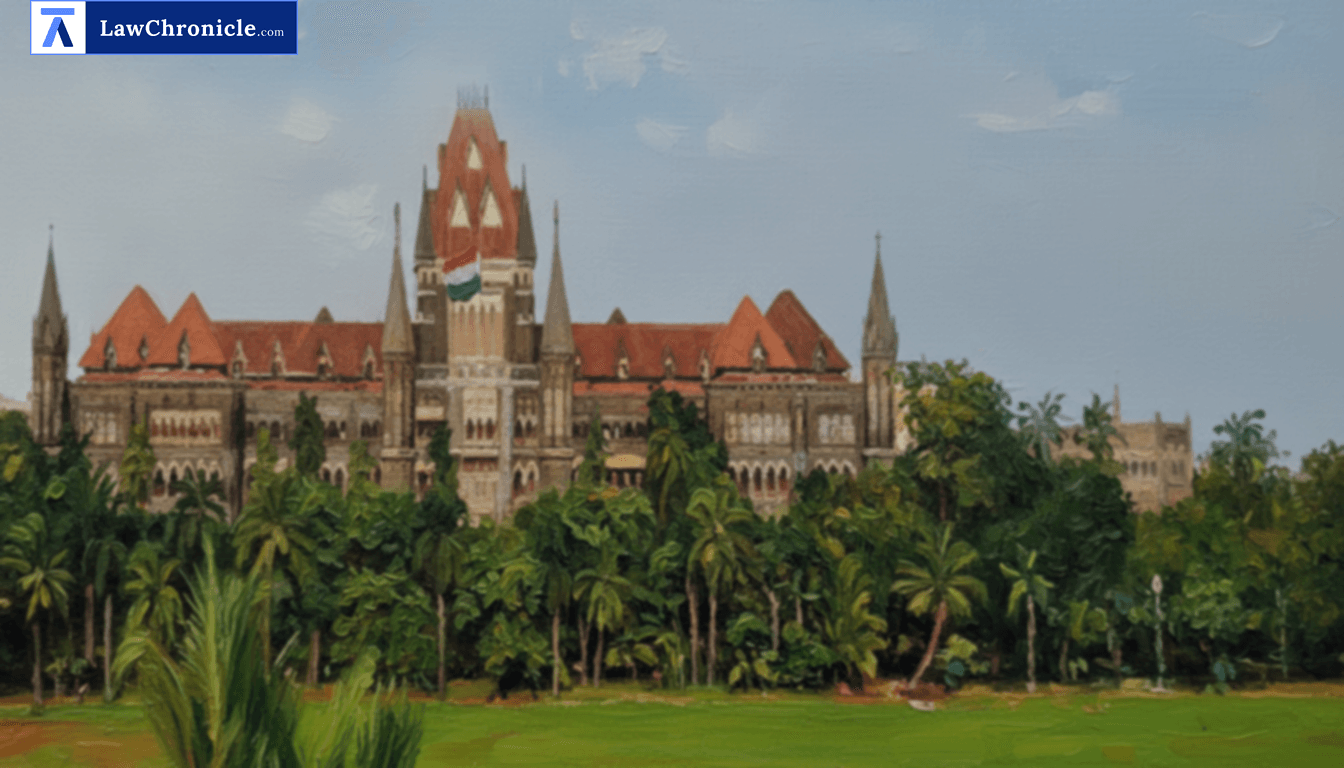
A Single Judge bench of Justice Sandeep V. Marne heard an application under Section 11 of the Arbitration and Conciliation Act, 1996 filed by a franchise owner seeking appointment of an arbitrator to adjudicate disputes arising from a Participation Agreement for the T20 Mumbai League and contested impleadment of the Mumbai Cricket Association (MCA) — a non‑signatory — into the arbitration, and an objection by the league manager that the claims were time‑barred.
The court allowed the petition and held that an arbitration agreement existed with respect to both respondents and that MCA could be treated as a “veritable party” to the arbitration. The judge appointed former Chief Justice of the Kerala High Court, Justice Nitin Jamdar, as sole arbitrator and directed the parties to share arbitral costs equally subject to the final award. The Court, in its reasoning, observed: “Applying the tests of Cox and Kings as discussed above to the facts of the present case, in my view, MCA is clearly a veritable party to the arbitration agreement contained in the PA. MCA always expressed intention to effect legal relationship with Applicant and Respondent No.1 as all decisions relating to organising and holding of the League including participation by a team are ultimately taken by MCA. If conduct and relationship between the MCA on one hand and Respondent No.1 and the Applicant on the other is taken into consideration, there can be little doubt that MCA always exhibited intention to be bound by the PA. If any doubt was left, MCA stepped in and executed Supplementary Agreement to which it is a principal party.” The court further noted that issues of limitation and the merits of time‑bar would be left to the arbitral tribunal in view of recent Supreme Court authorities.
Background The dispute arose out of a Participation Agreement dated 9 March 2018 between the applicant team owner and Probability Sports (PSIPL) for operation of a team in the T20 Mumbai League, organised under the aegis of the MCA. A Novation Agreement and a Supplementary Agreement (dated 12 April 2019) followed; the Participation Agreement contained an arbitration clause but the Supplementary Agreement did not. The applicant alleged that MCA exercised final decision‑making power over scheduling, format and participation and that Respondent No.1 was only an operator; the applicant therefore sought that MCA be treated as a party to arbitration. Respondent No.1 accepted existence of the arbitration clause but contended the claim was barred by limitation; MCA denied it was a signatory or a principal and opposed impleadment.
The applicant relied on authorities including the Constitution Bench decisions on the “group of companies” and composite transaction doctrines (notably Cox & Kings and related precedents) to argue that MCA’s role and its signature on the Supplementary Agreement rendered it a veritable party. MCA and Respondent No.1 relied on judgments restraining extension of arbitration to non‑signatories and argued that the Supplementary Agreement did not incorporate the arbitration clause.
The court examined the texts of the Participation Agreement and the Supplementary Agreement, contemporaneous conduct (including meetings and communications organised by the MCA), and the termination notice by Respondent No.1 which, the court recorded, stated: “The service of this Notice of Termination has been endorsed and approved by the MCA.” Relying on the tests laid down by higher courts — mutual intent, relationship of non‑signatory to signatory, commonality of subject matter, composite nature of transaction and participation in performance — the court found that MCA had taken on contractual obligations and had materially participated in performance and termination of the arrangements, rendering the arbitration clause applicable to it. The judge held that the Supplementary Agreement was “inextricably intertwined” with the Participation Agreement and that specific performance of rights to participate in the League could not be adjudicated in the absence of MCA’s joinder.
On the limitation objection, the court followed recent Supreme Court guidance and declined to conduct an intricate evidentiary inquiry at the Section 11 stage, leaving issues of limitation and merits to the arbitral tribunal. The court expressly noted the Supreme Court’s clarification in earlier proceedings that observations by an appellate bench in interim proceedings would “have no bearing or binding effect on the arbitration proceedings.”
The application under Section 11 was allowed. The court appointed Mr Justice Nitin Jamdar (former Chief Justice, Kerala High Court) as sole arbitrator, directed communication of the order to him, requested his statutory disclosures, and directed that arbitral fees be governed by the Bombay High Court (Fee Payable to Arbitrators) Rules, 2018, with costs initially shared equally and finally subject to the award. All substantive rights and contentions were left open to be raised before the arbitral tribunal. There was no order as to costs.
Case Details: Case No.: CARAP(L) 18608 of 2025 NeutralCitation: 2026:BHC-OS:6638 Case Title: Jupicos Entertainment Private Limited v. Probability Sports (India) Private Limited and Anr. Appearances: For the Petitioner(s): Mr. Prahlad Paranjpe with Mr. Vikramjit Garewal, Ms. Shweta More and Ms. Rupa Shaw i/b Mr. Atishay Jain For the Respondent(s): For Respondent No.1: Mr. Devesh Juvekar with Mr. Mithilesh Chalke and Ms. Shivangi Goel i/b Rajani Associates; For Respondent No.2: Mr. Rashmin Khandekar with Mr. Pranav Nair, Ms. Swati Sawant, Mr. Milind Spose and Mr. Utkarsh Pawar i/b M/s S.K. Legal Associates LLP
Coram: SANDEEP V. MARNE, J. Judgment pronounced on: 16 March 2026.
Similar Articles
 Breaking News


