


Court Holds Section 34 Challenge Cannot Become Appellate Rehearing; Division Bench Restoration Of Arbitral Award Upheld
 Copy Link
 Share
 Save
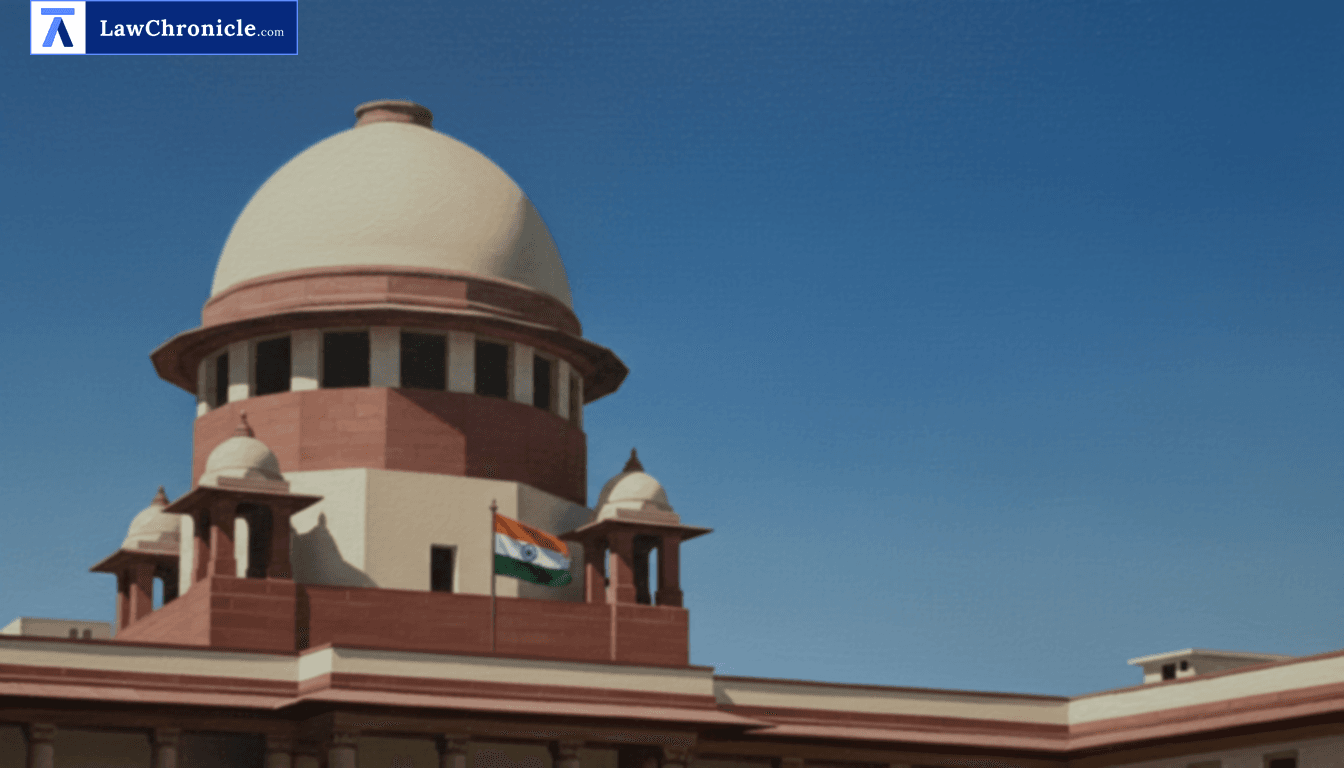
A bench of Justices Abhay S. Oka and Ujjal Bhuyan heard an appeal by special leave against a Division Bench judgment of the Madras High Court which had set aside a Single Judge’s order that had annulled an arbitral award under Section 34 of the Arbitration and Conciliation Act, 1996. The core issue concerned whether the Single Judge exceeded the narrow scope of Section 34 by re-appraising the merits of an arbitral award that had upheld deduction of liquidated damages.
The Supreme Court dismissed the appeal and upheld the Division Bench’s restoration of the arbitral award. The Court held that the power under Section 34 was restrictive and not appellate in nature and that a court could not interfere merely because it preferred a different view from that of the arbitrator. The Court, in its reasoning, observed: “Section 34 is not in the nature of an appellate provision. It provides for setting aside an arbitral award that too only on very limited grounds ... If two views are possible, there is no scope for the court to re-appraise the evidence and to take the view other than the one taken by the arbitrator. The view taken by the arbitral tribunal is ordinarily to be accepted and allowed to prevail.” The bench further noted that the Single Judge had “clearly gone beyond the grounds provided in Section 34” and therefore the Division Bench was justified in reversing that order. The Court dismissed the appeal and recorded that there would be no order as to costs.
Background The dispute arose from a public tender in which the respondent (a software technology parks authority) awarded a contract to the appellant construction company for an office building and related works with an initial completion date in January 2007. The appellant completed the works on 30 November 2007, roughly ten months after the original scheduled completion. The respondent had deducted liquidated damages of Rs. 82,43,499 under clause 26 of the contract and made other deductions, leaving a small balance paid to the appellant. The appellant invoked the arbitration clause, and the sole arbitrator examined five claims by the appellant and three counter-claims by the respondent. The arbitrator found that the respondent had demonstrated direct financial loss from the delay—continued rent at old premises and loss of rent at the new complex—and that the contract permitted deduction of liquidated damages at the prescribed rate; accordingly the arbitrator held recovery of liquidated damages to be contractually and legally valid and recorded a nil award on the claims and counter-claims.
The appellant filed an application under Section 34 before the Madras High Court. The Single Judge set aside the arbitral award on the ground that extensions of time had been granted and that the delay was attributable to events such as landslides and rains; the Single Judge observed that “if the building had been erected and there were landslides, it would affect the building constructed and there would not only have been loss of money, but also loss of lives.” The Division Bench, on appeal under Section 37, reversed the Single Judge, holding that the Single Judge had acted beyond the limited remit of Section 34 and had effectively re-appreciated evidence and substituted its view for that of the arbitrator.
The Supreme Court reviewed clauses 26 (liquidated damages), 27 (extension of time) and 28 (consequences of non-compliance), the arbitrator’s finding that most of the delay was within the contractor’s control, and the legal tests under Sections 55, 73 and 74 of the Indian Contract Act. Applying established precedents on the narrow scope of judicial interference in arbitration under Section 34, the Court concluded that the Division Bench was correct to restore the arbitral award. The appeal was dismissed; no interim directions or further liberties were granted.
Case Details: Case No.: 2025 INSC 574; Civil Appeal No. 5383 of 2024 Case Title: Consolidated Construction Consortium Limited v. Software Technology Parks of India Appearances: (List advocates if available, for both sides using the format) For the Petitioner(s): [Names not specified in the reported judgment] For the Respondent(s): [Names not specified in the reported judgment]
Similar Articles
 Breaking News


