Court Orders Retrospective Promotion and Monetary Benefits After Quashed Disciplinary Proceedings
 Copy Link
 Share
Share Save
Save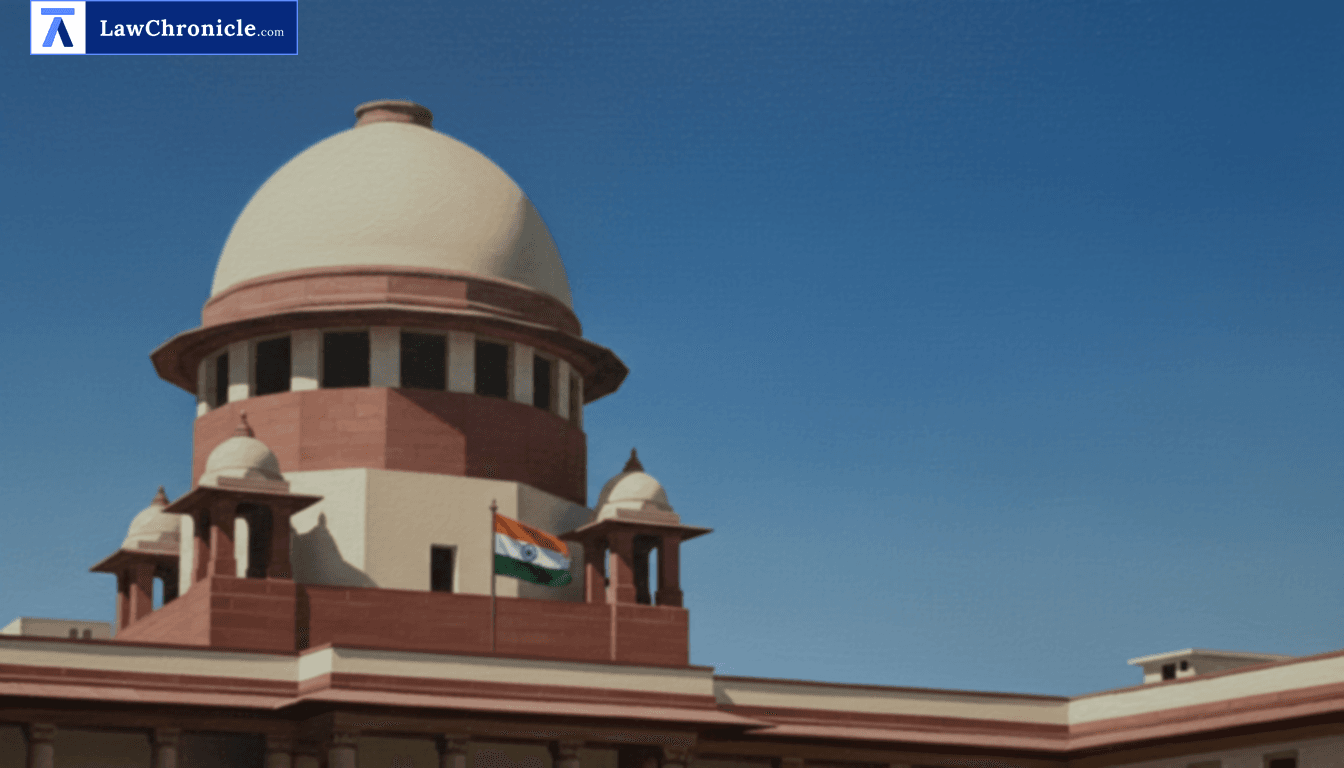
A bench of Justices K.V. Viswanathan and B.R. Gavai heard an appeal against the Telangana High Court’s dismissal of a contempt petition that challenged non-compliance with an earlier writ judgment. The central question was whether an employee, whose departmental disciplinary proceedings were set aside for bias, was entitled to be placed on promotion retrospectively from July 28, 2001 with consequential monetary benefits.
The Supreme Court partly allowed the appeal, set aside the High Court order, and directed the employer to grant promotion from Manager Scale-II to Manager Grade-III effective 28.07.2001 with all monetary benefits and interest at 6% per annum, to be implemented within four weeks. The Court observed that the disciplinary process was vitiated by a “fundamental defect” that was not the fault of the employee and that mere payment of the reduced pay did not amount to compliance with the writ judgment. The Court, in its reasoning, observed: “Insofar as promotion with effect from 28.07.2001 for the post of Manager Grade-III is concerned, we order that the appellant should be granted the same with all monetary benefits since the fundamental defect in the enquiry was due to no fault of the appellant. The defect was also accepted by the Bank when they did not press the appeal. The benefit of promotion to Manager Grade-III from 28.07.2001 is covered in the expression ‘consequential benefits’ as ordered in the judgment of the learned Single Judge dated 20.07.2017 in Writ Petition No. 7616 of 2008. We say so on the facts of the present case.” The Court declined to initiate contempt proceedings but granted an opportunity for remedial action.
Background
The appellant, K. Samba Moorthy, joined Bank of Baroda in 1983 and reached the Manager cadre (MMG-II). He faced show-cause notices in 1999–2000 and a charge-sheet in December 2000. His promotion result to MMG/S-III declared in July 2001 was kept in abeyance pending disciplinary proceedings; following inquiry he received a minor penalty in August 2001 and the promotion was “treated as cancelled” by communication dated 30.08.2002. The appellant challenged the disciplinary orders in 2008; the Single Judge allowed the writ petition on 20.07.2017, concluding that “there existed real likelihood of bias” because the enquiry officer was junior and a candidate for the same promotion, and awarded the appellant “all the consequential benefits.” The Division Bench stayed that order on 13.09.2017 but later disposed of the writ appeal on 30.03.2022 leaving questions of law open; the Single Judge’s order thereby stood final in practice. Meanwhile the appellant was promoted in 2012 to Scale-III and later failed in subsequent promotion exercises.
The appellant filed a contempt petition in 2023, alleging non-compliance because the employer paid only Rs. 19,446 (the reduction in pay) and did not grant retrospective promotion or full monetary benefits. The High Court dismissed the contempt petition, finding compliance and observing that promotion up to higher scales could not be ordered in a contempt proceeding. The Supreme Court reviewed those findings, held that the employer ought to have extended the benefit of promotion retrospectively as part of the “consequential benefits” granted by the Single Judge, and found that paying only the reduced pay did not satisfy the earlier judgment. The Court reserved liberty to the appellant to pursue any other claims relating to denial of later promotions and ordered that such proceedings not be rejected on grounds of limitation or laches.
Case Details: Case No.: 2025 INSC 110 (Civil Appeal No. ________ of 2025 @ Special Leave Petition (Civil) No. 10245 of 2024) Case Title: K. Samba Moorthy v. Sanjiv Chadha & Ors. Appearances: For the Petitioner(s): Mr. Abhijit Basu, Senior Advocate; Ms. Tatini Basu, Advocate For the Respondent(s): Ms. Praveena Gautam, Advocate
 Breaking News