


Delhi High Court Rejects Partition Suit As Vexatious Under Order VII Rule 11, Holding Agreement to Sell and GPA Do Not Confer Title
 Copy Link
 Share
 Save
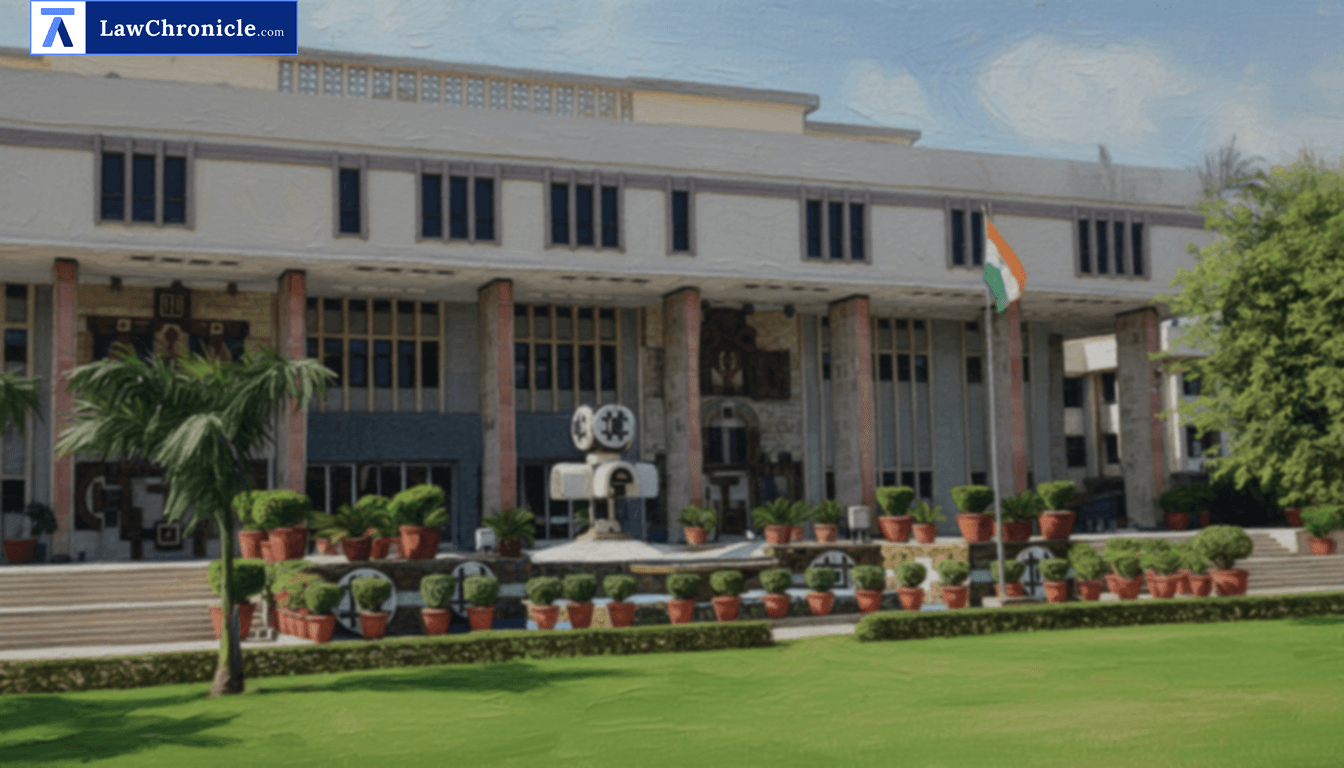
A single‑judge bench of Justice Amit Bansal heard a suit challenging title and seeking partition, permanent injunction and cancellation of a registered sale deed; the court considered whether the plaint disclosed a cause of action or was barred by limitation and accordingly examined the applicability of Order VII Rule 11 CPC.
The court held that the plaintiffs’ case, founded on an unregistered Agreement to Sell, a General Power of Attorney and a receipt, did not disclose a cause of action and was manifestly vexatious, warranting rejection of the plaint under Order VII Rule 11(a) CPC. The judge observed that title in immovable property could be conveyed only by a registered sale deed and relied on binding Supreme Court precedents including Suraj Lamp & Industries (P) Ltd. and Ramesh Chand. The Court, in its reasoning, observed: "From a reading of the aforesaid extracts from the judgments of the Supreme Court, it is abundantly clear that a title to an immovable property cannot be claimed on the basis of an Agreement to Sell, a General Power of Attorney and a Receipt. The title can only be conveyed through a registered conveyance deed/sale deed. Even if there is an Agreement to Sell, at best, the intending buyer would have a right to file a suit for specific performance." The judgment further stated that "the plaint is manifestly vexatious and does not disclose a cause of action," and concluded that "in exercise of powers under Order 7 Rule 11(a) of CPC, the plaint is rejected."
Background The plaintiffs, legal heirs of Dinesh Kumar Bhatia (d. 1985), alleged that their predecessor and the predecessor of the defendants had purchased a 1 Bigha, 2 Biswas plot jointly by an Agreement to Sell, a Receipt and a General Power of Attorney dated 7 April 1981, and claimed a 50% share. Defendants, legal heirs of Amrish Kumar Bhatia (d. 2010), produced a registered sale deed dated 2 January 1982 in favor of their predecessor and moved for rejection of the plaint under Order VII Rule 11(a) and (d) CPC on grounds of non‑disclosure of cause of action and limitation.
The plaintiffs amended the plaint in March 2024 to add a declaration seeking cancellation of the 1982 sale deed as void ab initio. They contended that the sale deed had not been disclosed to their predecessor, and stressed that partition and declaration required framing of issues and evidence. Defendants argued that ATS, GPA and receipt did not confer title; that a suit for specific performance against the vendor was the correct remedy; and that the registered sale deed constituted notice, rendering a challenge after decades time‑barred.
Justice Bansal analyzed binding authorities. He reproduced and applied the rule in Suraj Lamp that transfer of immovable property by way of sale required a registered deed under Section 54 of the Transfer of Property Act and that agreements to sell, powers of attorney and receipts did not confer title. The court followed subsequent Supreme Court decisions including Ramesh Chand and RBANMS Educational Institution, and applied the test for rejection under Order VII Rule 11 as articulated in Dahiben and Liverpool & London; namely, whether the plaint, read in entirety with relied documentary material, would, if taken at face value, lead to a decree. The Division Bench precedent of this Court in Mania Ghai v. Nishant Chander, following Patil Automation, was noted for confirming that courts may suo motu reject a plaint when lack of cause of action is apparent on record.
Applying these principles, the court found no registered title in favour of the plaintiffs’ predecessor, observed that the plaintiffs had not sought specific performance nor impleaded the vendor, and concluded that continuation of the suit would waste judicial time. No interim directions were issued and no costs were recorded in the judgment; the operative result was rejection of the plaint under Order VII Rule 11(a) CPC.
Case No.: CS(OS) 141/2022 Case Title: NEELAM BHATIA AND ORS v. RITU BHATIA AND ORS Appearances: For the Petitioner(s): Mr. M. P. Sinha, Mr. Govind Pareek and Mr. Arnav Jain, Advocates For the Respondent(s): Mr. Sanjiv Bahl, Mr. Vikram Arora, Mr. Pawas Agarwal, Ms. Mansi Negi and Mr. Amish Tiwari, Advocates
Similar Articles
 Breaking News


