


Court upholds conviction for abetment of suicide in actress’s death; rules out rape and strangulation, censures errant autopsy opinion
 Copy Link
 Share
 Save
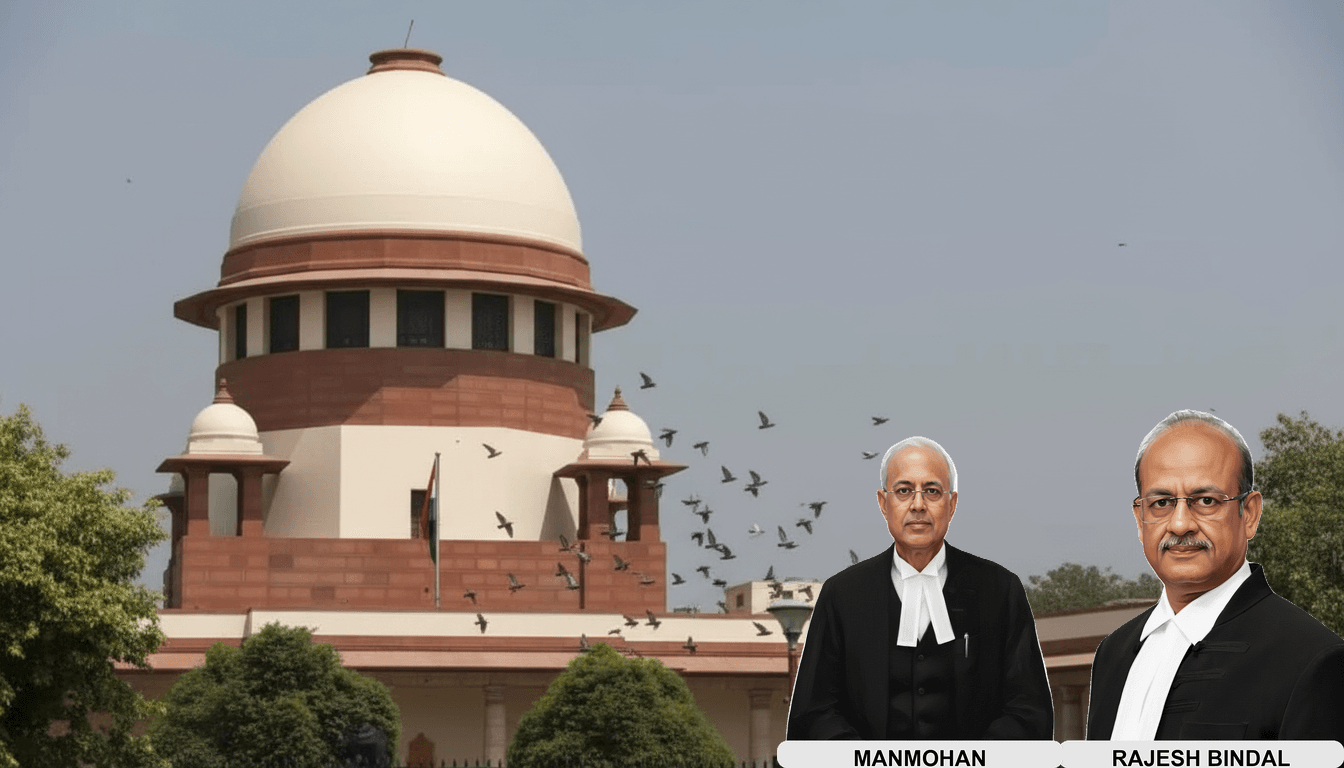
A bench of Justice Rajesh Bindal and Justice Manmohan heard appeals by Gudipalli Siddhartha Reddy and by the mother of the deceased challenging the common judgment of the Andhra Pradesh High Court dated 28 December 2011. The appeals arose from a Sessions Court conviction in Sessions Case No.88 of 2003 for offences under Sections 306 and 309 IPC in the death of actress S. Pratyusha; the High Court had earlier reduced the substantive sentence under Section 306 IPC and increased the fine. The Court was called upon to resolve whether the death resulted from poisoning in a suicide pact, or from homicidal manual strangulation and sexual assault as initially alleged, and to adjudicate evidentiary disputes arising from contradictory forensic reports and a controversial postmortem by Dr. B. Muni Swamy.
The Supreme Court dismissed the appeals and affirmed the legal conclusions that the deceased died of organophosphate poisoning (Nuvacron) and that the appellant abetted her suicide and attempted suicide. The Court held that the evidentiary matrix — contemporaneous hospital statements, medical records, AP FSL and CFSL reports, expert committee and AIIMS opinions — converged to establish poisoning and ruled out death by manual strangulation or ante-mortem sexual assault. The Court noted that Dr. B. Muni Swamy had given a premature and "erroneous and unprofessional" postmortem opinion to the media and that his conclusions were refuted by subsequent expert findings; since he was deceased, no further punitive steps were taken. The Court, in its reasoning, observed: “Consequently, this Court holds that the accused’s conduct in entering into and acting upon the suicide pact falls squarely within all the three situations envisaged in Section 107 of the IPC. His participation directly facilitated the deceased’s suicide.” The judgment also quoted expert findings that "the cause of death is due to Organophosphate poisoning" and recorded that semen could not be identified by naked eye examination.
Background
The deceased, Ms. Pratyusha, and the appellant had a long-standing relationship and intended to marry; the appellant’s parents allegedly opposed the union. On 23 February 2002 the pair were last seen together after the appellant visited a beauty parlour; both were admitted to CARE Hospital that evening after consuming poison. The deceased died on 24 February 2002; the appellant survived. An initial postmortem by Dr. B. Muni Swamy recorded "pressure over the neck, asphyxia due to manual strangulation" and noted that "semen [was] collected", and he publicly stated on television that sexual assault and strangulation could not be ruled out. Subsequent forensic and institutional inquiries produced divergent findings: AP FSL and CFSL detected organophosphate (Monocrotophos/Nuvacron) in viscera and other samples; CDFD reported a male DNA fraction on a cotton swab but the male profile did not match the appellant or his associates; a three‑member State Expert Committee and an AIIMS panel concluded that the injuries were therapeutic and that death resulted from organophosphate poisoning.
CBI investigation charged the appellant under Sections 306 and 309 IPC (abetment of suicide and attempt to commit suicide). At trial the prosecution relied on hospital records, eyewitness accounts of the pair being together, sale records and witness identification for purchase of the pesticide and other items, forensic reports, and expert committee opinions. The Sessions Court convicted and sentenced the appellant; the High Court dismissed appeals but adjusted the sentence in part. The Supreme Court reviewed the totality of ocular, medical and forensic evidence, rejected the contention that the death resulted from rape and strangulation, and held that the appellant had intentionally aided the suicide by procuring the pesticide and participating in a suicide pact. The Court drew adverse inferences from the appellant’s denials and his failure to explain incriminating circumstances under Section 313 CrPC. The appeals were dismissed; the Court directed the appellant to surrender within four weeks. The Court also recorded that Dr. Muni Swamy’s premature publicisation of his postmortem opinion had caused public controversy and that his conduct was professionally unsound, but refrained from imposing further consequences in view of his death.
Case Details:
Case No.: 2026 INSC 160; Criminal Appeal No. 457 of 2012; Criminal Appeal Nos. 894-895 of 2012
Case Title: Gudipalli Siddhartha Reddy v. State C.B.I.
Appearances:
For the Petitioner(s): Mr. S. Nagamuthu, Senior Counsel; Mr. L. Narasimha Reddy, Senior Counsel; Mr. Gireesh Kumar (for mother of deceased / appellant in related appeals)
For the Respondent(s): Mr. Nachiketa Joshi, Senior Counsel (for CBI/State)
Source: 2026 CaseBase(SC) 132
Similar Articles

 Breaking News


