Courts may require Waiver of Interest Rate in Land Acquisition Appeal to Condone Delay: Bombay HC
 Copy Link
 Share
Share Save
Save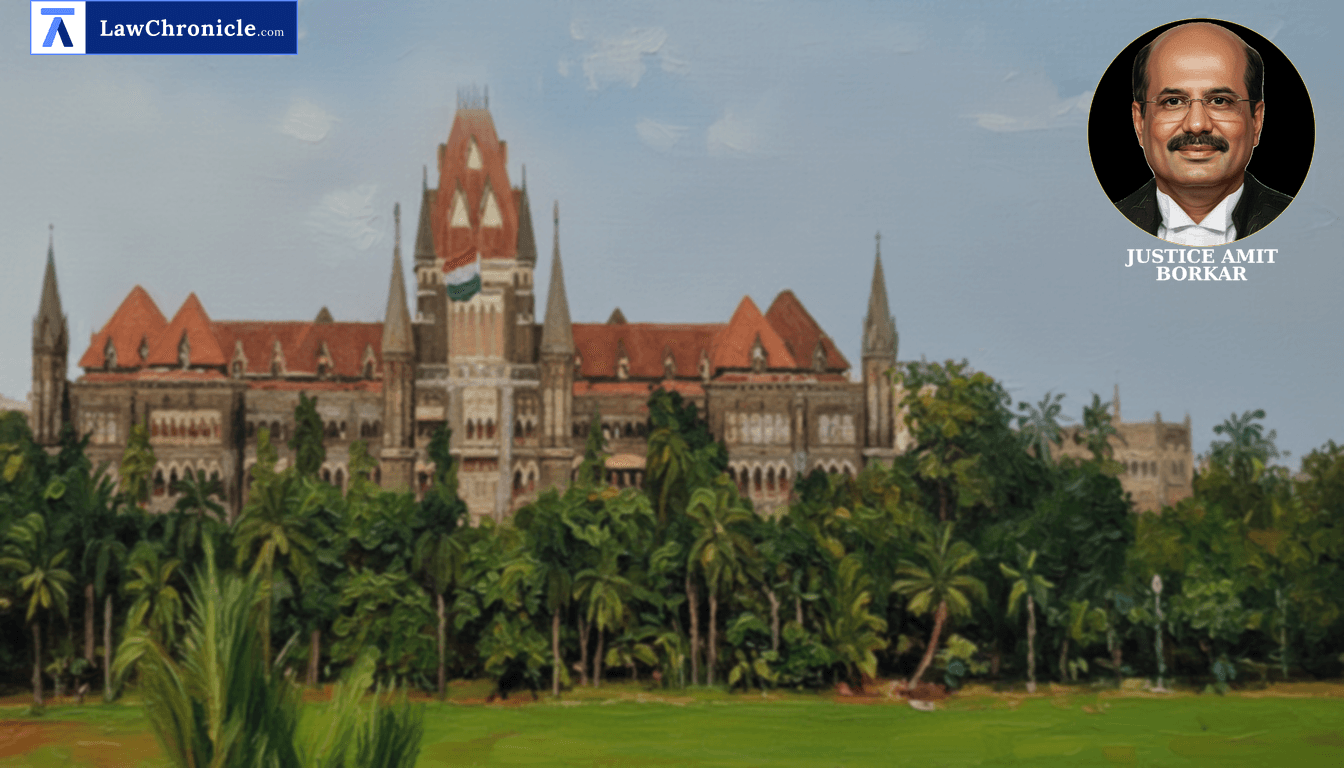
The Bombay High Court has established that Courts may balance equities by requiring land acquisition appeal claimants to waive interest for the period of delay as a condition to condone delay in filing. Justice Amit Borkar heard a group of applications involving significant delays in filing land acquisition appeals and cross-objections. The Bombay High Court was tasked with determining whether a claimant can be directed to give an undertaking to waive interest on enhanced compensation as a prerequisite for condoning delay under Section 5 of the Limitation Act, 1963.
Key Takeaways
Equitable Balancing of Interests
Courts can protect the public exchequer by ensuring the State is not burdened with interest payments for periods during which the claimant failed to approach the court.
Parity vs. Financial Liability
While claimants may be entitled to higher compensation on a par with similarly situated landowners, they do not have an automatic right to interest for the period they remained inactive.
Discretionary Power under Limitation Act
Though [Limitation Act, 1963 does not explicitly mention "interest waiver," the discretionary power to condone delay allows courts to attach reasonable conditions to the relief granted.
Applicability to Cross-Objections
Similar principles apply to delayed cross-objections under Order XLI Rule 22 of the Code of Civil Procedure, 1908, though the court must specifically identify the actual period of delay attributable to the claimant.
Conditional Condonation of Delay
The Bombay High Court observed that the object of Section 5 of the Limitation Act, 1963 is to do substantial justice and not to punish a party for late filing. However, in land acquisition matters involving the Land Acquisition Act, 1894, the financial consequences of delay become critical. The Bombay High Court relied heavily on the precedent in Dhiraj Singh v. State of Haryana and Nimna Dudhna Project v. State of Maharashtra to distinguish between the right to fair compensation and the right to statutory interest for the delayed period.
The Bench explained conditional condonation of delay in land acquisition appeal that "In an appropriate land acquisition matter, the Court can require the claimant to give an undertaking that interest on the enhanced compensation shall not be claimed for the period attributable to the delay, as a condition attached to condonation of delay for balancing the equities. Such condition shall be reasonable and confined to the actual period of delay."
The Bombay High Court further clarified that Section 5 of the Limitation Act, 1963 does not independently empower a court to alter statutory interest defined under Sections 28 or 34 of the Land Acquisition Act, 1894. Instead, the exclusion of interest is a condition attached to the discretionary relief of condoning the delay itself.
Parity with Similarly Situated Landowners
Justice Borkar noted that in cases like Ningappa Thotappa Angadi v. LAO and Suresh Kumar v. State of Haryana ( "2025 SCC OnLine SC 896": 2025 CaseBase(SC) 544), the Supreme Court balanced equities by preserving the right to enhanced compensation while denying interest for the period of delay. The Bombay High Court emphasized that while Section 34 of the Land Acquisition Act, 1894 makes interest mandatory, the court can regulate the relief where justice requires, especially when the acquiring body is a public body not responsible for the delay.
Regarding the Code of Civil Procedure, 1908, the Bombay High Court noted that while Section 5 may not strictly apply to cross-objections governed by Order XLI Rule 22, the same equitable principle of interest exclusion can be applied if a claimant seeks enhancement after a significant period of inaction.
Ratio
While Section 5 of the Limitation Act, 1963 does not independently authorize the alteration of statutory interest, a court exercising its discretionary power to condone delay in land acquisition matters may impose a reasonable condition requiring the claimant to waive interest for the actual period of delay to balance equities and prevent undue financial burden on the public exchequer.
Background
The matter arose from several First Appeals where claimants sought condonation of delay in filing land acquisition appeals or cross-objections for enhanced compensation under the Land Acquisition Act, 1894. The State argued that granting full statutory interest for long periods of inaction would unfairly penalize the public exchequer. The claimants argued that Limitation Act, 1963 does not empower the court to extract interest waivers. The Bombay High Court analyzed multiple precedents including Mahadev Govind Gharge v. LAO and State of Maharashtra v. Kalu Ladku Mhatre, concluding that courts must adopt a pragmatic approach to ensure landowners receive fair compensation while regulating the financial consequence of their delay.
Case Details:
Case No.: FIRST APPEAL (ST.) NO.18561 OF 2018
Neutral Citation: 2026:BHC-AS:36767
Case Title: Motiram Bhika More v. The State of Maharashtra & Anr. (With connected matters)
Appearances:
For the Petitioner(s): Mr. Prathamesh T. Bhanuvanshe, Ms. Amrita Kharkar, Mr. Shriram S. Kulkarni
For the Respondent(s): Mr. A.R. Patil, Additional G.P.
Source: 2026 CaseBase(BOM) 5642
 Breaking News