


Courts Must Not Evaluate Trial Depositions For Granting Bail Once Trial Commences: Gujarat HC
 Copy Link
 Share
 Save
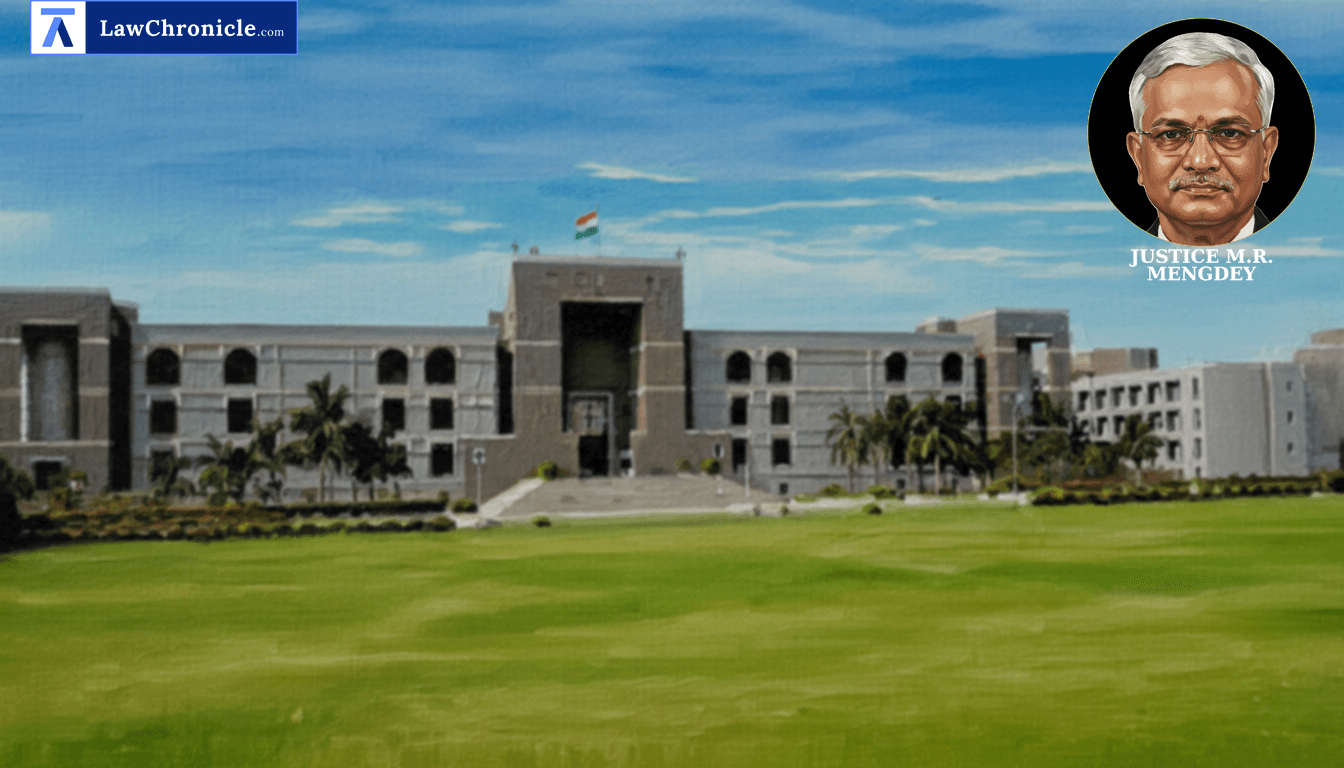
The High Court of Gujarat has slammed the brakes on evaluating trial depositions for the purpose of granting bail, ruling that such a practice unduly interferes with the judicial process of a pending trial. The court underscored that once a trial commences, it must be allowed to reach its final conclusion without the High Court exercising its discretion based on interim evaluations of oral evidence.
A single-judge bench of Justice M. R. Mengdey heard a successive regular bail application filed under Section 483 of the Bharatiya Nagarik Suraksha Sanhita. The applicant was seeking release in connection with an FIR registered at Nikol Police Station for various offences, including murder under the BNS. The court was tasked with deciding whether new developments in trial evidence and a period of incarceration exceeding one year and nine months warranted the release of the accused.
Key Takeaways
Trial Integrity Preserved
High Courts should refrain from looking into the depositions of victims or witnesses while hearing bail applications once the trial has progressed, to avoid impacting the trial court's eventual appreciation of evidence.
Strict View on Successive Bail
Filing multiple bail applications without significant changes in circumstances or despite specific liberties granted by higher courts will be viewed critically by the judiciary.
Medical Evidence vs. Eyewitness Testimony
In bail matters, the existence of multiple eyewitnesses specifically attributing roles to the accused often outweighs defense arguments regarding a lack of external injuries in medical reports at the prima facie stage.
Judicial Restraint During Active Trials
The court emphasized that evaluating the quality of evidence or depositions while the trial is ongoing is not a correct practice. The bench noted that the trial of the offense had progressed substantially, with 22 witnesses already examined and several others dropped.
The Court, in its reasoning, observed: "Once the trial commences, it should be allowed to reach its final conclusion which may either result in the conviction of the accused or acquittal of the accused. The moment the High Court exercises its discretion in favour of the accused and orders release of the accused on bail by looking into the deposition of the victim, it will have its own impact on the pending trial when it comes to appreciating the oral evidence of the victim."
Addressing the defense's reliance on medical reports, the Court highlighted that the postmortem note indicated the probable cause of death to be shock and hemorrhage due to injuries caused by a hard and blunt object. Despite the applicant's claim that no external injuries were found, the Court refused to discard the categorical statements of eyewitnesses who saw the applicant giving kicks and fist blows to the deceased.
The Court has following directions:
"In view of these reasons, no ground is made out for entertaining the present application."
Ratio
When a criminal trial has commenced and is progressing substantially, the High Court shall not exercise its discretionary power to grant bail by evaluating or appreciating the depositions of witnesses already recorded, as such an exercise risks prejudicing the trial court's independent evaluation of evidence. Unless the trial is unduly delayed for no fault of the accused, the right to a speedy trial does not automatically override the necessity of allowing a trial to reach its natural conclusion without interference from superior courts at the evidentiary stage.
Background
The incident arose from a dispute over car parking, where the complainant and his father (the deceased) were allegedly assaulted by the applicant and other co-accused. The prosecution alleged that the applicant inflicted kicks and fist blows on the deceased, who later succumbed to his injuries. The applicant was arrested on December 9, 2024, and had spent approximately 21 months in custody.
This was the applicant's third successive bail application. The first application was dismissed by the High Court in March 2025, a decision that was challenged in the Supreme Court via Special Leave to appeal (Criminal) No.7637 of 2025. The Apex Court had granted liberty to the applicant to renew his request for bail after one year. However, a second application was filed prematurely and dismissed in November 2025. In the present application, the applicant argued that the death was not homicidal but due to a natural heart attack, citing CCTV footages and telephonic transcripts. The Court, relying on the principles laid down in X v. State of Rajasthan, found no merit in these contentions at this stage and dismissed the application.
Case Details:
Case No.: R/CR.MA/20486/2026
Neutral Citation: 2026:GUJHC:59938
Case Title: Pratik @ Piyush Vinodbhai Tilakdhari Tiwari Versus State Of Gujarat
Appearances:
For the Petitioner(s): MR BHARGAV BHATT with MR KISHAN R CHAKWAWALA, MR. MANAN S DOSHI
For the Respondent(s): MR TRUPESH KATHIRIYA, APP, Shri Dhruv Choudhury (for Complainant)
Source: 2026 CaseBase(GUJ) 23994
Similar Articles
 Breaking News


