Criminal Antecedents and Gravity of Offence Bar Bail in Violent Assault Case: Himachal Pradesh HC
 Copy Link
 Share
 Save
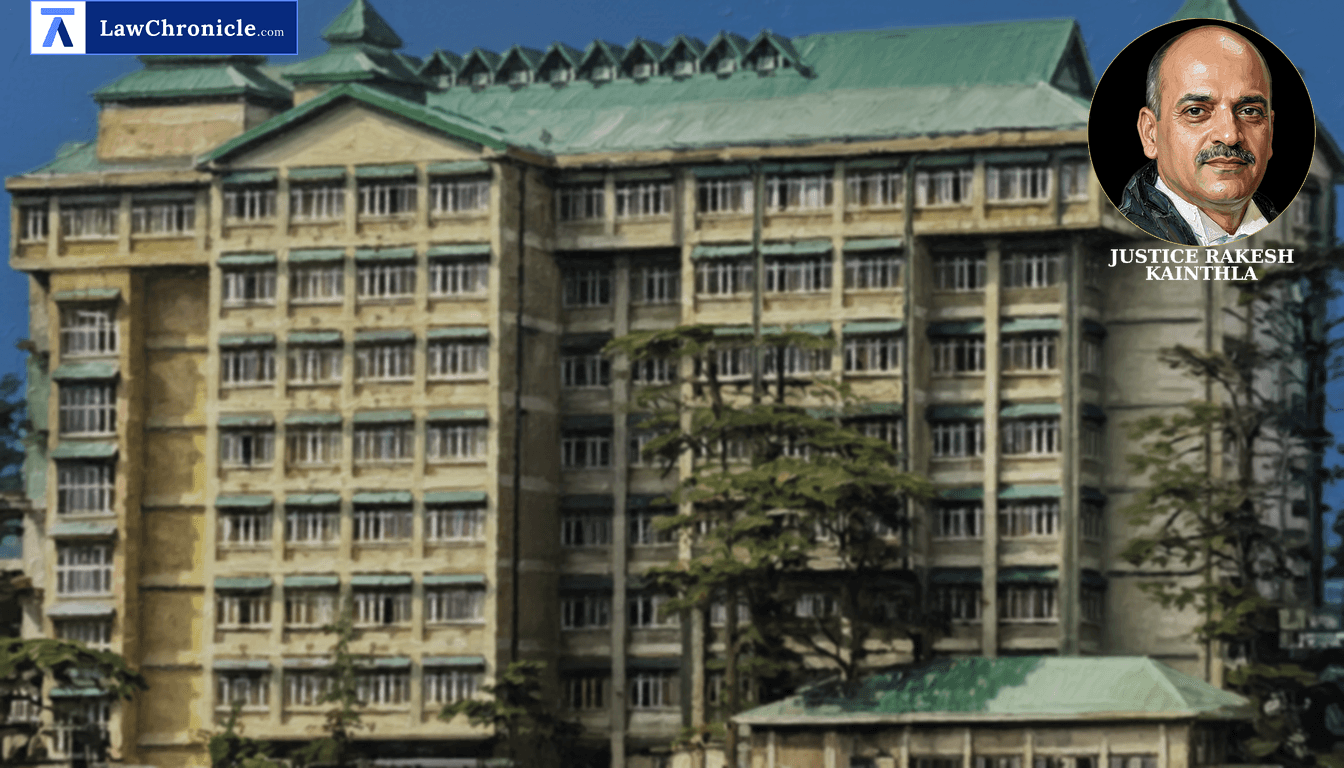
Criminal antecedents serve as a formidable barrier to personal liberty in heinous crimes where the shared common intention to kill is prima facie evident through the use of deadly weapons. The Himachal Pradesh High Court has reinforced that the principle of 'bail not jail' must yield to the necessity of preventing witness intimidation and the repetition of offences by habitual offenders.
In a decisive ruling, a single-judge bench of Justice Rakesh Kainthla dismissed the regular bail plea of an accused involved in a violent birthday party scuffle, emphasizing that the severity of the potential punishment and a history of criminal involvement outweigh the claim for parity with co-accused on interim relief.
Key Takeaways
Primacy of Criminal Antecedents
Past criminal history significantly diminishes the prospects of obtaining bail, particularly when previous FIRs relate to similar violent offences.
Common Intention in Violent Scuffles
Participation in a group assault involving deadly weapons like swords on vital body parts suggests a shared common intention to commit murder, justifying detention.
Limitations of Parity Principle
Interim bail orders granted by superior courts to co-accused do not automatically entitle other accused to bail on the grounds of parity, especially if their roles or specific circumstances differ.
Gravity of Charge as a Decisive Factor
When the offence is punishable by life imprisonment, the court may reasonably presume a higher risk of the accused avoiding the course of justice.
Judicial Scrutiny of Bail Parameters
The Court extensively analyzed the established benchmarks for granting bail as articulated in Pinki v. State of U.P., which highlights that the nature of the charge, the severity of punishment, and the likelihood of interfering with witnesses are vital factors. The bench noted that while the general rule under State of Rajasthan v. Balchand is bail and not jail, this rule is subject to the heinousness of the crime and the risk of the accused thwarting justice.
Referring to Gudikanti Narasimhulu v. Public Prosecutor, High Court of A.P. ( "(1978) 1 SCC 240: 1978 SCC (Cri) 115: 1977 SCC OnLine SC 327": 1977 CaseBase(SC) 7), the Court underscored that when a crime is of the highest magnitude, detention is necessary to ensure appearance at trial. The Court, in its reasoning, observed: "The fact that a sword, a deadly weapon, was used shows that, had Parminder died, the accused would have been guilty of committing murder by causing injury to the head with a deadly weapon. The offence alleged against the petitioner is heinous and is punishable with imprisonment for life."
Impact of Past Conduct on Judicial Discretion
The petitioner's history, involving three previous FIRs, played a critical role in the Court's refusal to grant relief. Citing Champa vs. State of H.P. ( "2025:HHC:28899": 2025 CaseBase(HP) 10940) and Shakti Sharma vs. State of H.P. ( "2026: HHC:33462": 2026 CaseBase(HP) 9179), Justice Kainthla reiterated that criminal antecedents disentitle an accused from the concession of bail, as they support the prosecution's apprehension of potential witness intimidation and recidivism.
The Court has the following directions:
"In view of the above, the present petition fails and is dismissed. The observations made hereinabove are regarding the disposal of this petition and will have no bearing whatsoever on the merits of the case."
Ratio
The existence of multiple criminal antecedents involving similar offences, coupled with the use of deadly weapons in a heinous crime punishable by life imprisonment, provides a reasonable ground to believe that the accused may intimidate witnesses or repeat offences, thereby justifying the denial of bail despite the general principle of 'bail not jail'.
Background
The dispute originated from a violent clash during a birthday celebration on the night of November 19, 2025, at Raijada Hotel. According to the prosecution, the petitioner and several others attacked the informant's group with swords, kicks, and fist blows following a scuffle. The victims sustained grievous injuries, with one individual declared 100% disabled and another requiring urgent head surgery.
The petitioner sought bail under the Bharatiya Nyaya Sanhita, 2023, arguing that a cross-FIR suggested a free fight rather than a premeditated assault. It was further argued that no specific weapon recovery was made from the petitioner and that co-accused had received interim bail from the Supreme Court. The State opposed the plea, highlighting the 42 witnesses cited and the petitioner's criminal record. The Court, after reviewing CCTV footage and the status report, concluded that the petitioner shared a common intention in the life-threatening assault, leading to the dismissal of the petition.
Case Details:
Case No.: CrMP(M) No. 1826 of 2026
Neutral Citation: 2026:HHC:47936
Case Title: Abhishek @ Abhi Versus State of H.P.
Appearances:
For the Petitioner(s): Mr Binat Sharma, Advocate; Mr Hemant Thakur, Advocate
For the Respondent(s): Mr Jitender Sharma, Additional Advocate General
Source: 2026 CaseBase(HP) 11161
 Breaking News