


Criminal Law Cannot Be Used To Settle Essentially Civil Disputes: Calcutta HC
 Copy Link
 Share
 Save
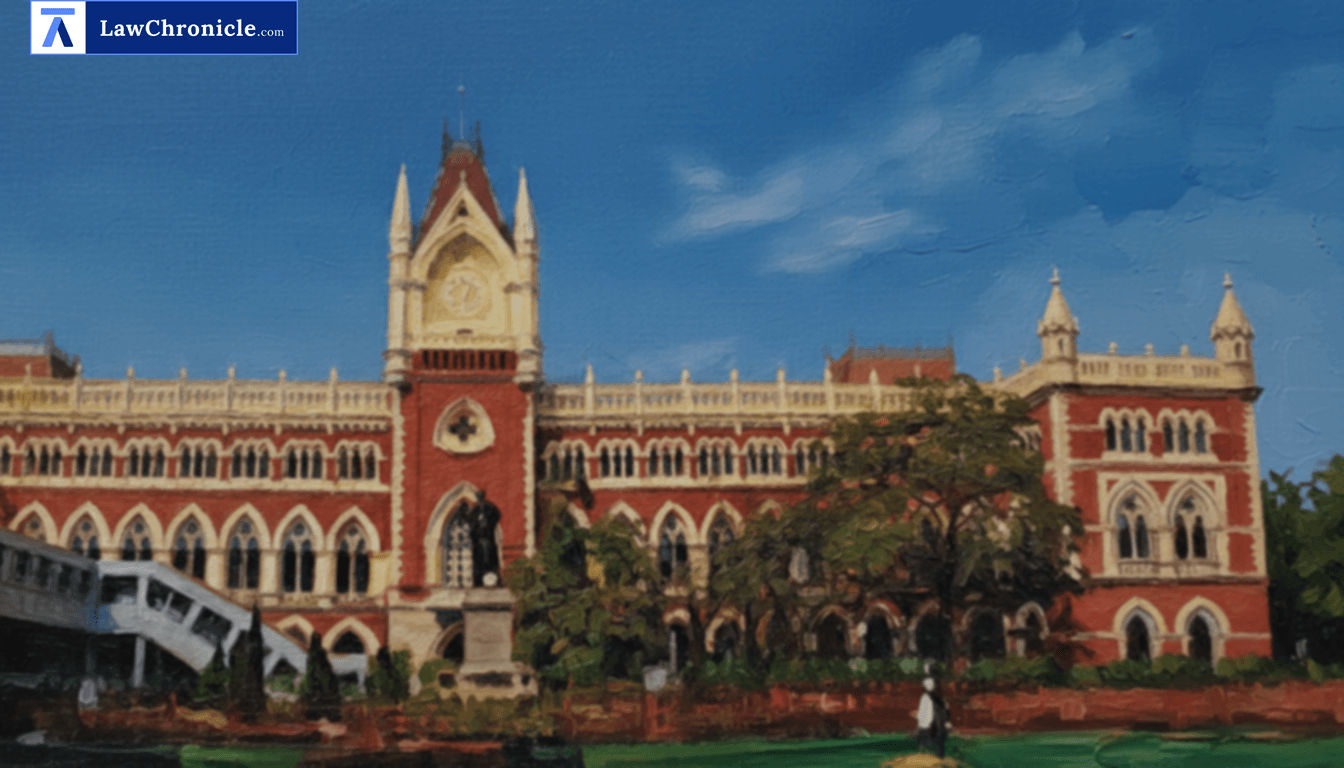
In a stern warning against turning civil property contests into criminal prosecutions, the Calcutta High Court has quashed a criminal complaint filed against a doctor over an eight-year-old trust deed dispute. The High Court declared that attributing threats to a person who died years prior and ignoring mandatory statutory inquiry provisions vitiates criminal proceedings.
A single-judge bench of Justice Ajay Kumar Gupta heard the revisional application challenging the criminal proceedings initiated under Section 482 of the Code of Criminal Procedure, 1973. The Court scrutinized the validity of process issued by the lower court where allegations were leveled against a deceased individual and mandatory territorial inquiry mandates were completely ignored.
Key Takeaways
Bar on Phantom Allegations: Levelling criminal allegations against a deceased person invalidates the prosecution's claims as inherently improbable.
Mandatory Pre-Summons Inquiry: Failure to conduct an inquiry under Section 202 of Code of Criminal Procedure, 1973 when the accused resides outside the court's jurisdiction is a fatal jurisdictional flaw.
Civil Disputes Protected: Litigants cannot weaponize criminal law as a parallel mechanism to pressure opponents in property or trust validity contests.
Court's Analysis on Section 202 CrPC and Civil Character of Dispute
The Calcutta High Court observed that the criminal complaint suffered from severe factual improbabilities, procedural lapses, and unexplained delay. Pointing out the grave error of process issuance, the Court emphasized that alleging overt criminal acts against a long-deceased individual demonstrates clear bad faith.
The Court, in its reasoning, observed: "The allegation of threat attributed to the accused no. 1, who had admittedly died nearly eight years before the date of the alleged occurrence, even if taken at its face value and accepted in its entirety, does not disclose the commission of any offence by him and is, on the face of the complaint itself, so inherently improbable, that no prudent person could ever reach a just conclusion that there exists sufficient ground for proceeding against him... Non-compliance with the mandatory procedure prescribed under Section 202 of the Cr.P.C., applicable where the accused resides beyond the jurisdiction of the Court, constitutes an express legal bar to the continuance of the proceeding in its present form."
Applying the settled legal principles from State of Haryana & Ors. vs. Bhajanlal & Ors., the High Court held that the case squarely fell within the categories warranting interdiction under inherent powers. The Court has following directions:
"Consequently, the proceeding being Complaint Case No. 856 of 2018 under Sections 420/465/471/120B/506/34 of the Indian Penal Code, 1860, pending before the Court of the learned Judicial Magistrate, 2nd Court at Barasat, North 24 Parganas is hereby quashed insofar as the petitioner is concerned."
Ratio
Initiating criminal proceedings on inherently impossible allegations such as attributing criminal acts to a deceased person alongside non-compliance with the mandatory inquiry under Section 202 of Code of Criminal Procedure, 1973 for out-of-jurisdiction accused, constitutes a gross abuse of process, particularly when invoked to settle an essentially civil dispute.
Background
The dispute pertained to a property located in Kolkata. In 2010, the original owner, who had lost his daughter to cancer, executed a registered 'Deed of Trust' in her memory along with his wife, transferring management rights for philanthropic activities to 'Somsar Sri Ramkrishna Seva Mondir'. The petitioner, a reputed physician, was the Secretary of the institution, while one Dr. Tapash Kumar Banerjee was the President. Dr. Banerjee passed away in September 2010.
In 2018, nearly eight years after the registration of the trust deed, the niece of the property owner filed a criminal complaint before the CJM Barasat, alleging fraud, forgery, and criminal intimidation under Sections 420, 465, 471, 120B, 506, and 34 of the Indian Penal Code, 1860. She alleged that on May 7, 2018, both accused persons had threatened her uncle when he sought to revoke the trust deed. Crucially, she omitted informing the Court that accused no. 1 had passed away in 2010. She had also instituted a separate civil suit regarding the trust deed before the Civil Judge at Alipore.
Despite the petitioner residing outside the territorial jurisdiction of the Barasat court, the Magistrate issued summons without conducting the mandatory Section 202 inquiry under Code of Criminal Procedure, 1973. Challenging this, the petitioner moved the High Court under Section 482 of Code of Criminal Procedure, 1973. The High Court allowed the petition, holding that the criminal proceeding was a civil dispute clothed in the garb of criminality, and quashed the complaint against the petitioner.
Case Details:
Case No.: C.R.R. No. 3700 of 2018
Neutral Citation: 2026:CHC-AS:1316
Case Title: Dr. Gour Das Versus Bhabani Bhattacharjee
Appearances:
For the Petitioner(s): Mr. Milon Mukherjee, Ld. Sr. Adv., Mr. Rahul Ganguly, Adv.
Source: 2026 CaseBase(CAL) 1656
Similar Articles



 Breaking News


