


Criminal Trial Fails Without Evidence 0f Essential Ingredients: Jharkhand HC
 Copy Link
 Share
 Save
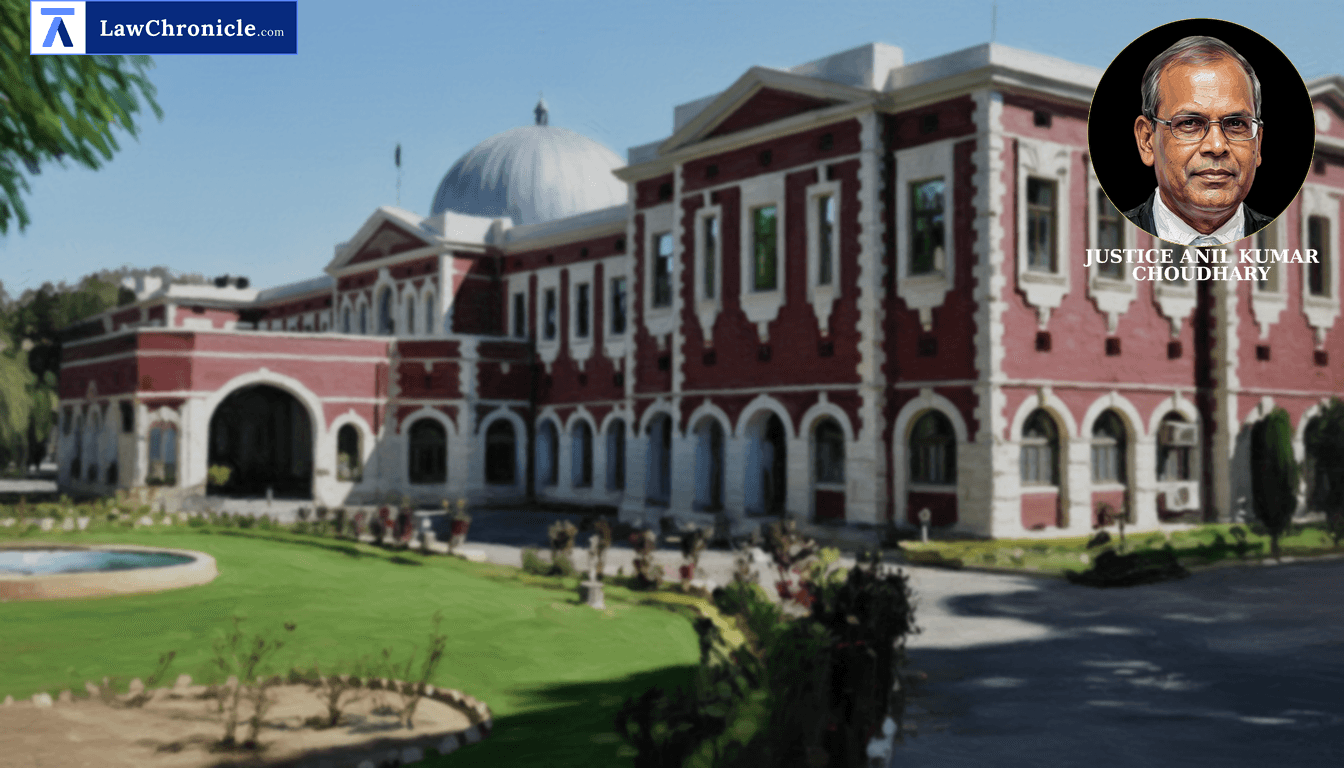
Criminal proceedings cannot survive as a mere formality when the foundational ingredients of alleged offences are conspicuously absent from the record. The Jharkhand High Court has quashed a criminal case involving charges of restraint and intimidation, ruling that continuing a prosecution devoid of specific factual allegations constitutes a gross abuse of judicial process.
Presiding over the matter, Justice Anil Kumar Choudhary scrutinized the criminal proceedings arising from a shop occupancy dispute. The petitioner had approached the court invoking Section 528 of the Bharatiya Nagarik Suraksha Sanhita, 2023, seeking to quash the cognizance order and the entire proceedings pending before the Chief Judicial Magistrate, Palamau.
Court Scrutinizes Missing Elements of Penal Offences
During the hearing, the court undertook a detailed analysis of the charges framed under the Indian Penal Code. It noted that the allegations primarily involved a dispute over a shop previously allotted to the informant's father. However, the court found that the police charge sheet failed to provide any factual basis to support the legal requirements of the sections invoked.
The Court has the following directions:
"The entire criminal proceedings of Daltonganj Town P.S. Case No. 502 of 2023 corresponding to G.R. Case No. 758 of 2024 including the charge sheet and the order dated 27.04.2024 passed by the learned Chief Judicial Magistrate, Palamau in the said case, is quashed and set aside against the petitioner named above."
Regarding the absence of any evidence suggesting physical obstruction or injury, the Court, in its reasoning, observed: "In the absence of such essential ingredients to constitute the offence punishable under Section 506 of the Indian Penal Code, this Court is of the considered view that even if the entire allegations made against the petitioner are considered to be true in their entirety, still the offence punishable under Section 506 of the Indian Penal Code is not made out against the petitioner."
Key Takeaways:
Curbing Abuse of Process
High Courts must intervene under inherent powers when criminal proceedings are used as tools of harassment in the absence of a prima facie case.
Strict Adherence to Ingredients
Trial courts cannot take cognizance of offences like Sections 341 or 323 of the Indian Penal Code unless the specific actions such as voluntary obstruction or causing bodily pain are explicitly alleged.
Civil-Criminal Boundary
Property-related disputes, such as shop occupancy, should not be converted into criminal prosecutions unless the conduct meets the threshold of defined penal acts.
Ratio Decidendi:
A criminal proceeding is liable to be quashed if the allegations, even when taken at face value, do not satisfy the essential statutory ingredients required to constitute the offences charged. Continuation of such proceedings where no legal injury or criminal intent is established amounts to an abuse of the process of law.
Background:
The dispute originated from the petitioner's occupancy of a shop that had been allotted to the informant's deceased father. Following this, an FIR was lodged at Daltonganj Town P.S., leading to a charge sheet and a subsequent order by the Chief Judicial Magistrate taking cognizance of offences under Sections 341, 323, 504, and 506 of the Indian Penal Code. The petitioner argued that even if the facts were accepted, no criminal offence was made out. The State opposed the petition, claiming the allegations were sufficient. Upon review, the High Court found no evidence of 'wrongful restraint' (Section 341), 'voluntarily causing hurt' (Section 323), 'intentional insult' (Section 504), or 'criminal intimidation' (Section 506), leading to the quashing of the entire case.
Case Details:
Case No.: Cr.M.P. No.2014 of 2026
NeutralCitation: [2026:JHHC:20545]
Case Title: Manish Kumar @ Maneesh Kumar v. The State of Jharkhand
Appearances:
For the Petitioner(s): Mr. Gautam Kumar Pandey, Advocate
For the Respondent(s): Mrs. Anuradha Sahay, Addl.P.P.
Source: 2026 CaseBase(JHKD) 14
Similar Articles


 Breaking News


