Daughter-In-Law Cannot Assert Independent Right To Reside In Self-Acquired Property Of Mother-In-Law: Delhi HC
 Copy Link
 Share
Share Save
Save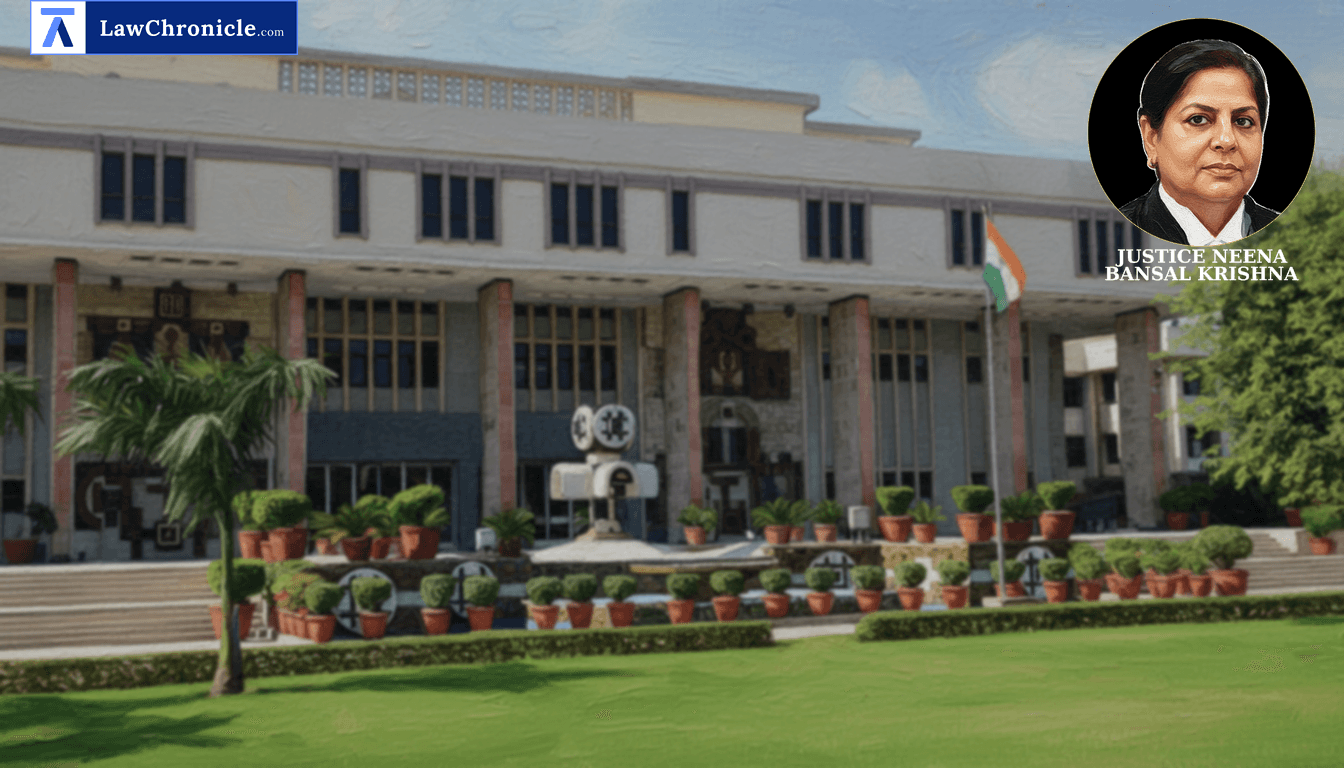
The Delhi High Court affirmed that a daughter-in-law's right to residence is primarily against her husband and does not extend to the self-acquired property of her mother-in-law once the license to occupy the premises has been revoked. The Court clarified that such properties do not constitute a 'shared household' if the mother-in-law never resided there with the couple.
A single-judge bench of Justice Neena Bansal Krishna heard the regular first appeal challenging an ex-parte decree of possession. The litigation involved a mother-in-law seeking to evict her daughter-in-law from a property purchased by the mother-in-law in 2013, where the son and daughter-in-law were initially permitted to stay as licensees.
Legal Status of Daughter-in-law as a Licensee
The Court observed that the son and daughter-in-law were inducted into the suit property as licensees. It noted that even if a rent deed was executed, it was merely an additional document to secure rights and did not grant a permanent right of stay. The bench highlighted that once the owner/mother-in-law terminated the license, the occupants had no legal right to remain.
The Court, in its reasoning, observed: "It is clearly evident that it is a simplicitor case of the Appellant being a licensee in the property, but she lost the license when the owner/Plaintiff asked her to vacate the Suit property. Once the license got terminated, the Appellant was left with no right, title, interest in the Suit property and had no option but to vacate the premises. Even if for the sake of arguments, the Rent Deed is considered, then too, once the son in whose name the alleged tenancy was created, vacated the premises, the status of the Appellant, became that of an unauthorized occupant, liable for eviction. Any right of residence is against the husband and not against the mother-in-law."
Defining 'Shared Household' under Domestic Violence Act
Justice Neena Bansal Krishna analyzed the definition of a shared household under Section 17 of the Protection Of Women From Domestic Violence Act, 2005. The Court determined that since the mother-in-law never lived in the Shakarpur property with the Defendants, and the property was purchased years after the marriage, it could not be classified as a shared household. The Court distinguished the present facts from the principles laid down in Satish Chander Ahuja vs. Sneha Ahuja ( "Civil Appeal No.2483/2020": 2020 CaseBase(SC) 640), noting that the protection against eviction without due process does not override the rights of a property owner when the license is revoked.
Regarding the rights of the wife, the Court remarked: "The Appellant has an absolute right to seek residence or maintenance from her husband but in the facts and circumstances of this case where it is clear that a license was created in favour of the son and the Appellant was in occupation of the Suit property merely as a family member, she cannot assert any independent rights by claiming the Suit property to be a shared household."
Court Directions
The Court has the following directions:
"In view of the aforesaid discussion, it is held that there is no merit in the present case and the Appeal is hereby, dismissed. The Appeal is disposed of along with the pending Application(s)."
Background:
The dispute arose when Smt. Usha Gupta (Respondent No. 1) filed a suit for possession against her son (Respondent No. 2) and daughter-in-law (Appellant). The mother-in-law alleged that despite allowing them to stay in her self-acquired property on a license basis, the daughter-in-law became non-cooperative and pressurized them to transfer the property. The son eventually vacated the house, leaving the daughter-in-law in exclusive possession.
The Trial Court, relying on S.R. Batra and Another vs. Tarun Batra ( "(2007) 3 SCC 169": 2006 CaseBase(SC) 1164) and Shobha Gupta vs. Rajesh Gupta, had previously decreed the suit in favor of the mother-in-law ex-parte. The daughter-in-law appealed, arguing she was not properly served and that S.R. Batra and Another vs. Tarun Batra ( "(2007) 3 SCC 169": 2006 CaseBase(SC) 1164) had been overruled by Satish Chander Ahuja vs. Sneha Ahuja ( "Civil Appeal No.2483/2020": 2020 CaseBase(SC) 640). She further contended that as a deserted wife, her rights should be protected as per B.P. Achla Anand vs. S. Appi Reddy &Anr..
The High Court, however, found that the Appellant was duly served by affixation and failed to appear. It further held that even under the revised legal landscape of Satish Chander Ahuja vs. Sneha Ahuja ( "Civil Appeal No.2483/2020": 2020 CaseBase(SC) 640), the owner's right to revoke a license in a non-shared household remains intact. The appeal was subsequently dismissed under Section 96 of the Code of Civil Procedure, 1908.
Case Details:
Case No.: RFA 273/2020, CM APPL. 28948/2020 & 29143/2020
Case Title: SMT. BHAWNA GUPTA v. SMT. USHA GUPTA & ANR.
Appearances:
For the Petitioner(s): Ms. Charu Ambwani, Advocate with Appellant in person.
For the Respondent(s): Mr. Saurabh Agarwal, Mr. Manuj Kaushik and Mr. Karan Ahuja, Advocates for R-1 and Respondent No.2 through VC.
Source: 2026 CaseBase(DEL) 401
 Breaking News