Daughters Right To Coparcenary Property Unaffected By Fathers Death: Himachal Pradesh HC
 Copy Link
 Share
Share Save
Save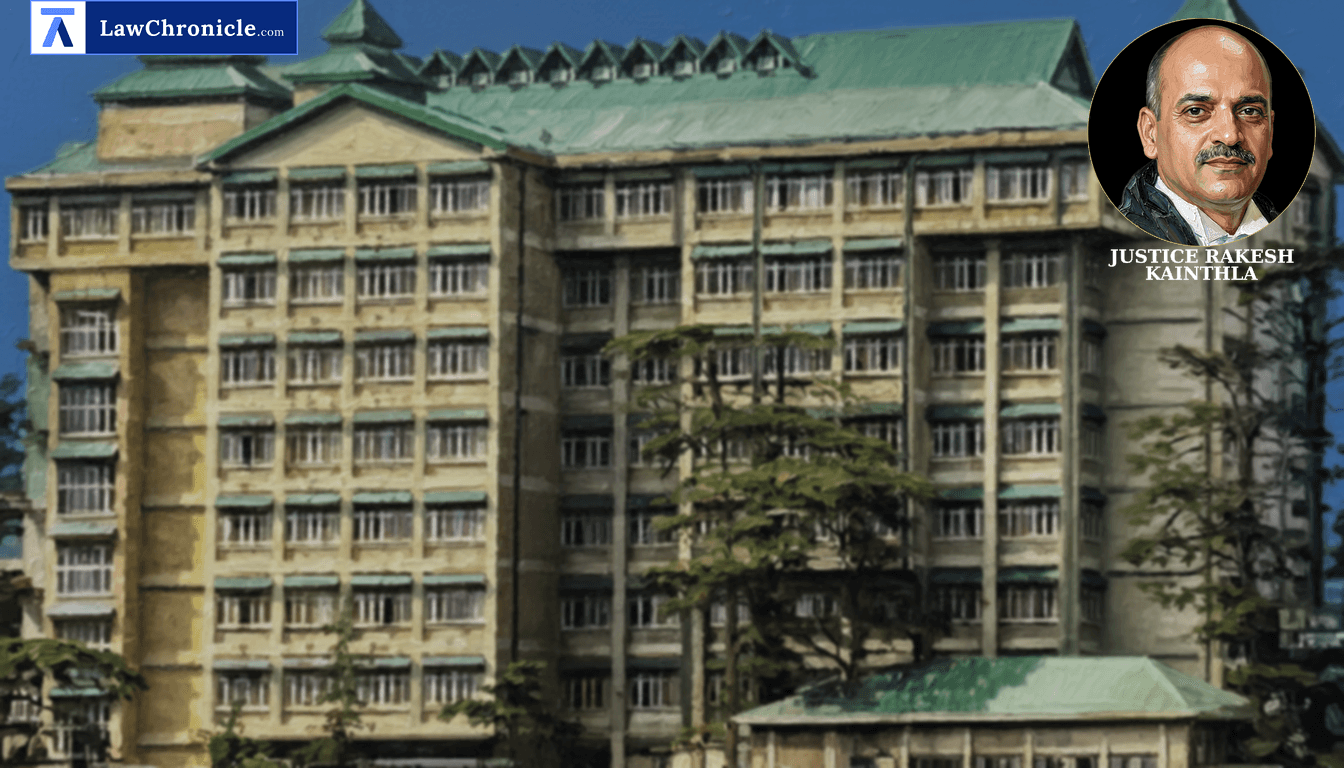
Reinforcing the retroactivity of coparcenary rights conferred on women, the High Court held that daughters possess equal inheritance rights by birth regardless of whether the father was alive when statutory amendments took effect. Clarifying that past unrecorded unpartitioned claims cannot bypass established legal precedents, the court affirmed that equal coparcenary entitlements apply retrospectively under codified family law.
A single-judge bench of Justice Rakesh Kainthla adjudicated the regular second appeal concerning a dispute over ancestral family property and the applicability of res judicata along with statutory inheritance rights of daughters.
Key Takeaways
Equal Coparcenary Rights By Birth: Daughters enjoy coparcenary rights in Mitakshara property by birth in the same manner as sons, irrespective of the father's survival status at the time of amendment.
Bar of Res Judicata: Claims of prior unrecorded partition previously rejected by appellate courts cannot be re-agitated in subsequent suits between the same parties.
Prospective vs Retrospective Rights: The statutory rights of daughters under Section 6 of the Hindu Succession Amendment Act, 2005 operate with effect from September 9, 2005, saving only settled past dispositions or partitions prior to December 20, 2004.
Court Observations and Rationale
The High Court addressed the appellant's contention that female heirs could not claim coparcenary rights as the statutory amendment was prospective. Dismissing the argument, the Court, in its reasoning, observed: "Considering the principle of coparcenary that a person is conferred the rights in the Mitakshara coparcenary by birth, similarly, the daughter has been recognised and treated as a coparcener, with equal rights and liabilities as that of a son... The daughter would step into the coparcenary as that of a son by taking birth before or after the Act."
Tracing the binding authority established in Vineeta Sharma v. Rakesh Sharma ( "(2020) 9 SCC 1: 2020 SCC OnLine SC 641": 2020 CaseBase(SC) 1056), the Court reiterated that coparcenary status is acquired by birth rather than obstructed heritage, making the survival of the father on the date of amendment entirely irrelevant.
The Court issued the following directions:
"Hence, the present appeal fails, and it is dismissed. Pending application(s), if any, also stand(s) disposed of. Records of the learned Courts below be sent down forthwith."
Ratio
Under Section 6 of the Hindu Succession Amendment Act, 2005, a daughter born before or after the amendment is recognized as a coparcener by birth with equal rights and liabilities as a son. The survival of the father on September 9, 2005, is not a prerequisite to claim coparcenary rights, provided the coparcenary existed and past settled dispositions prior to December 20, 2004, remain unaffected.
Background
The dispute originated from a civil suit filed for a declaration of ownership and permanent prohibitory injunction regarding ancestral property owned by Kartar Chand, who died intestate. The suit was opposed on grounds of res judicata, claiming a prior oral partition in 1985 and execution of an unregistered memorandum of partition.
In earlier litigation initiated by Kartar Chand, the appellate court had specifically held that the unregistered compromise could not be treated as a valid partition deed. In the present rounds, the trial court partly decreed the suit determining individual shares, whereas the lower appellate court set aside the decree while observing that possession remained with the defendant.
Aggrieved by the decision, the appellant approached the High Court challenging the share determination and alleging that female daughters were ineligible to inherit coparcenary rights retrospectively. Rejecting all substantial questions of law, the High Court held that the prior rejection of the partition operated as res judicata and dismissed the appeal.
Case Details:
Case No.: RSA No. 337 of 2012
Neutral Citation: 2026:HHC:33813
Case Title: Roshan Lal (deceased) through LRs v. Birbal and others
Appearances:
For the Petitioner(s): Mr. N.K. Thakur, Senior Advocate, with Mr. Karan Sadyal, Advocate
For the Respondent(s): Mr. Tara Singh Chauhan, Senior Advocate, with Mr. Surya Chauhan, Advocate
Source: 2026 CaseBase(HP) 4581
 Breaking News