DDA Layout Plan Prevails: Delhi High Court Rejects RWAs' Review Against Commercial Complex Construction
 Copy Link
 Share
 Save
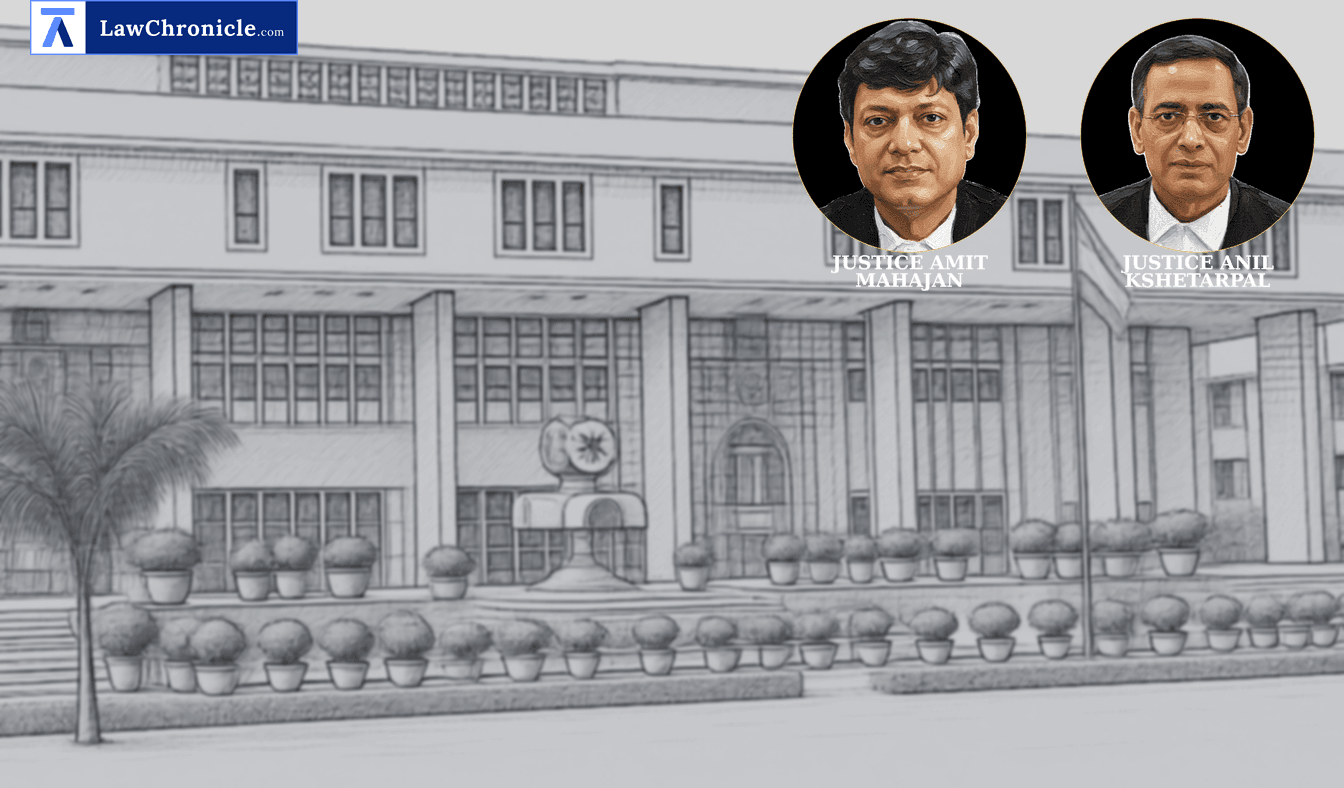
The Delhi High Court has fortified the sanctity of original sanctioned layout plans in urban development, refusing to stall the construction of a local shopping complex and parking facility despite protests from residents regarding 'green area' usage. By dismissing the review petitions, the Court reaffirmed that once land is earmarked for specific infrastructure in statutory plans, residents cannot claim a right to the contrary without demonstrating formal redesignation or modifications to the Master Plan.
A bench of Justice Anil Kshetarpal and Justice Amit Mahajan presided over the matter, examining whether factual inaccuracies had permeated a prior decision that allowed the Delhi Development Authority (DDA) to proceed with commercial and parking infrastructure in residential zones. The proceedings arose following a liberty granted by the Supreme Court in Narmada Residents Welfare Association v. Delhi Development Authority ( "SLP (C) No. 34056/2026": 2026 CaseBase(DEL) 6556), where the petitioners were permitted to approach the High Court to identify alleged factual errors in the original judgment.
Key Takeaways
Sanctity of Sanctioned Layouts
Proposed developments remains valid if they align with the original sanctioned layout plans, regardless of interim community use by residents.
Threshold for Review Jurisdiction
Review petitions cannot be used to seek a wholesale reconsideration of findings or to re-argue a case; they require a patent error apparent on the face of the record.
Burden of Proof for Land Redesignation
Litigants challenging land use must produce concrete evidence showing that the Master Plan or Zonal Development Plan has been formally modified to change the land's status.
Section 11A Compliance
Procedural requirements for plan modifications are only triggered when the DDA seeks to change the existing statutory plan, not when it implements it.
Court Observations and Directions
The Court scrutinized the petitioners' claims that the subject land was intended for 'green use' and that planning approvals were absent. However, the bench found that the original layout plans consistently earmarked the sites for neighbourhood commercial facilities and parking. The Court noted that the issues regarding existing basement parking operationality were distinct from the legality of the new proposed complex.
The Court, in its reasoning, observed: "The objections raised by the Petitioners essentially seek reconsideration of the findings already returned on the basis of the sanctioned layout plan and the material placed on record. The Petitioners have failed to demonstrate any patent error or mistake apparent on the face of the record which would warrant review of the judgment dated 17.08.2026."
The Court has the following directions:
"The present Review Petitions, along with pending applications, are accordingly, dismissed."
Ratio
A review of a judicial decision is not permissible for the purpose of re-appreciating evidence or reconsidering findings already returned on merits. Where a development project is consistent with the original sanctioned layout plan and no formal modification of the Master Plan or Zonal Development Plan under Delhi Development Act, 1957 is evidenced, the developer is not required to follow the amendment procedures under Section 11A of the said Act.
Background
A batch of four writ petitions was initially filed by various Residents’ Welfare Associations (RWAs) to stop the DDA from building a local shopping complex and a two-level parking facility. The residents argued that the land was being used as a green area and that the DDA had not followed the mandatory procedure for modifying the Master Plan. The High Court had dismissed these petitions on August 17, 2026, finding the DDA’s actions consistent with the area’s layout plan. One petitioner, Narmada RWA, moved the Supreme Court via Narmada Residents Welfare Association v. Delhi Development Authority ( "SLP (C) No. 34056/2026": 2026 CaseBase(DEL) 6556), but later withdrew it to seek a review before the High Court on the grounds of factual inaccuracies.
During the review hearing, the petitioners invoked Section 11A of the Delhi Development Act, 1957, alleging that the DDA had bypassed statutory procedures. The Court rejected this, clarifying that Section 11A applies only when the DDA seeks to modify a plan, not when it acts in accordance with one. The Court further noted that issues regarding fire clearances for existing residential basements were irrelevant to the legality of the new commercial project.
Case Details:
Case No.: W.P.(C) 17333/2025 and W.P.(C) 1185/2026
Case Title: Saraswati Apartments Residents Welfare Association & Anr. v. Delhi Development Authority & Ors.
Appearances:
For the Petitioner(s): Mr. Samrat Nigam, Sr. Adv. along with Ms. Akshya, Adv.; Mr. Ajjay Arora, Sr. Adv. along with Mr. Vansh Luthra, Adv.
For the Respondent(s): Mr. Akhil Mittal, Ms. Riddhi Jain, Ms. Shayna Das Pattanayak, Mr. Tushar Sannu, Mr. Parvin Bansal, Mr. Sanjay Katyal, and Mr. Nitish Kumar Danda, Advs.
Source: 2026 CaseBase(DEL) 7520
 Breaking News