Decree‑holder gets possession within two months; Supreme Court sets aside High Court order upholding obstructors' claim
 Copy Link
 Share
Share Save
Save
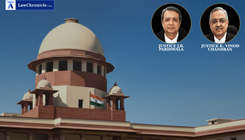
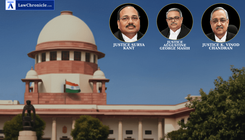
A bench of Justice J.B. Pardiwala and Justice Pankaj Mithal heard appeals arising out of a challenge to orders of the Madras High Court that had upheld an executing court’s acceptance of objections by two persons claiming to be cultivating tenants and had rejected the decree‑holder’s applications to amend execution proceedings. The appeals arose from Civil Appeal Nos. 3640–3642 of 2025 (arising out of SLP (C) Nos. 8490–8492 of 2020) concerning execution of a decree for specific performance and delivery of possession of immovable property.
The Court allowed the appeals, set aside the impugned High Court order and the executing court’s order, and directed the executing court to ensure delivery of vacant and peaceful possession to the decree‑holders within two months, “if necessary, with the aid of police.” The Court held that an executing court must determine bona fides of any obstruction and must not permit collusive claims to frustrate a decree. The judgment reiterated established principles under Order XXI, observing that Rule 97 gives relief both to decree‑holders facing obstruction and to third parties who legitimately claim rights; the executing court must adjudicate all relevant questions of right, title or interest in execution proceedings and such orders would have the force of a decree. The Court, in its reasoning, observed: “A conjoint reading of the relevant provisions and the principles laid down by this Court makes it clear that in execution of decree for possession of immovable property, the executing court delivers actual physical possession of the decretal land to the decree holder. Rule 35 confers jurisdiction on the executing Court to remove any person, who is bound by the decree and who refuses to vacate the property. The words ‘any person’ include even a stranger to a decree resisting the decree of possession as not being bound by a decree or by claiming independent right, title or interest to the property.” The Court further directed High Courts to collect data on execution pendency and to ensure execution matters were disposed within six months administratively.
Background The dispute arose from an agreement of sale dated 30.06.1980 for a plot sold for Rs.67,000; the purchaser (Ayyavoo Udayar and successors) sued for specific performance in 1983. The trial court decreed specific performance on 02.04.1986 and the decree was ultimately affirmed by the Madras High Court on 19.03.2004; the vendors’ SLP was dismissed by this Court in 2006. Execution proceedings followed and a sale deed was executed on 17.08.2007 in favour of the decree‑holders. Two nephews of the vendors (respondent Nos. 1 and 2) had been impleaded in the original suit as persons in possession and they obstructed delivery of possession in 2008, threatening self‑harm and later seeking recognition as cultivating tenants. They obtained certain revenue certificates and filed an application under Section 47/Order XXI, Rule 97 alleging lack of notice and claiming long possession. The executing court accepted their objections after trial‑style evidence and the High Court dismissed revision petitions by the decree‑holders and refused the decree‑holders’ amendment applications in the execution petition. The Supreme Court found the respondents’ claim to be collusive with the vendors and held that the executing court and High Court erred in sustaining the obstruction. The Supreme Court set aside the orders, ordered delivery of possession within two months, and issued administrative directions to all High Courts to ensure timely disposal of execution matters and to report compliance to this Court. Pending applications stood disposed.
Case Details: Case No.: 2025 INSC 329; Civil Appeal Nos. 3640–3642 of 2025 (Arising out of SLP (C) Nos. 8490–8492 of 2020) Case Title: Periyammal (Dead) through LRs & Ors. v. V. Rajamani & Anr. etc. Appearances: For the Petitioner(s): Mr. Senthil Jagadeesan, Senior Counsel For the Respondent(s): Mr. Rahul Jain, Counsel
 Breaking News