Defective Section 21 Notice Does Not Oust Court's Jurisdiction Under Section 11 of Arbitration Act: Bombay HC
 Copy Link
 Share
Share Save
Save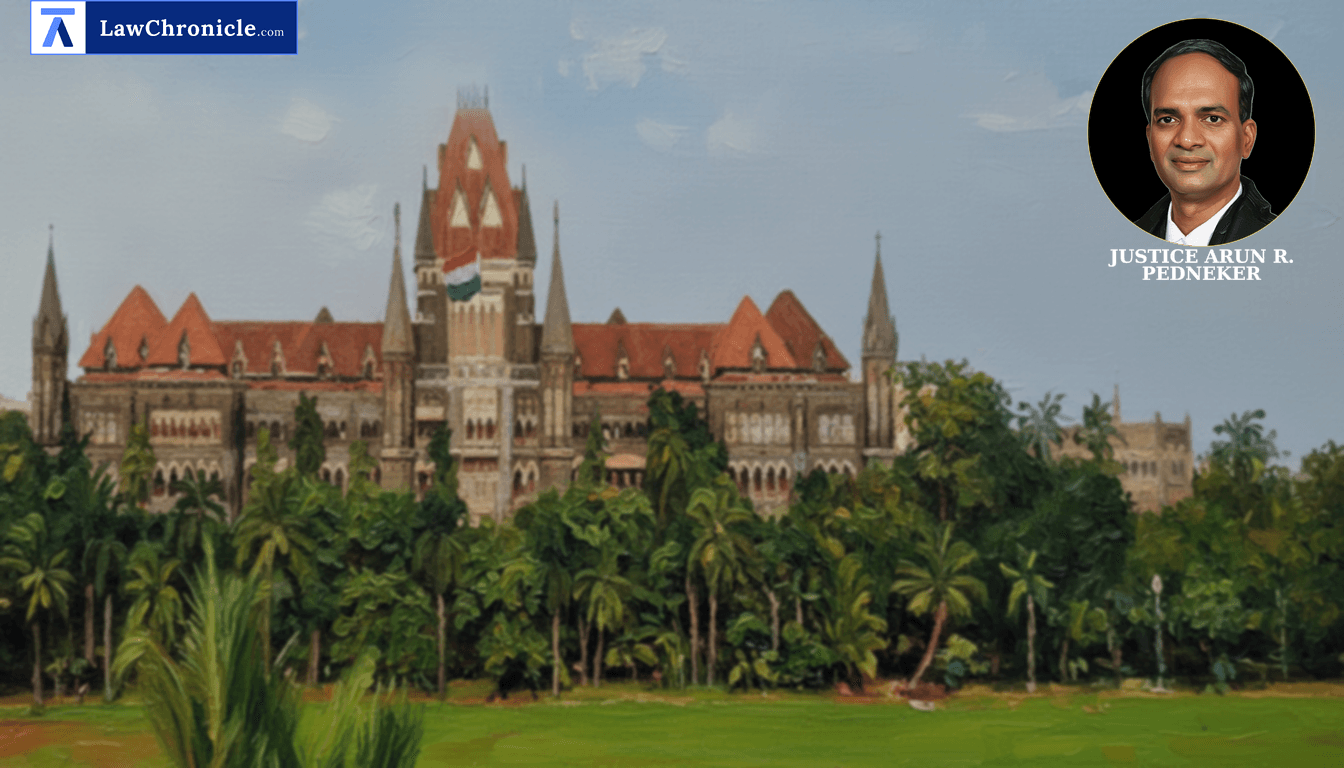
The Bombay High Court has ruled that a notice invoking arbitration under Section 21 of the Arbitration and Conciliation Act, 1996 remains valid for initiating legal proceedings even if it proposes a sole arbitrator contrary to a contractual clause requiring a three-member tribunal. This decision reinforces the principle that procedural irregularities in an invocation notice, which primarily serves to determine limitation and inform the respondent of claims, cannot defeat a court's power to appoint an arbitral tribunal when the agreed mechanism fails.
Justice Arun R. Pedneker, sitting as a single judge bench, adjudicated upon the application filed by Unistar Metals Private Limited. The Court was tasked with determining whether a deviation from the agreed appointment procedure in a Section 21 notice renders the subsequent Section 11 application non-maintainable.
Court Rejects Objection on Defective Invocation Notice
The Respondent, GE Power Limited, had challenged the maintainability of the application, arguing that the Arbitration and Conciliation Act, 1996 invocation was invalid because the applicant proposed a sole arbitrator instead of adhering to the agreed procedure of a three-member tribunal under the Rules of Delhi International Arbitration Centre (DIAC). The Respondent relied on the Bombay High Court's decision in Arohi Infrastructure & Ors. Vs. Tata Capital Financial Services Limited to suggest that a defective notice is fatal to a Section 11 petition.
However, the Court distinguished the nature of Section 21, observing that its primary function is time-related rather than jurisdictional. Referring to the Supreme Court's ratio in Bhagheeratha Engineering Ltd. Vs. State of Kerala, the Court noted that failure to issue a Section 21 notice is not fatal if the claim is valid and the dispute is arbitrable. The Court emphasized that the object of the notice is to anchor the commencement of proceedings for calculating limitation.
DIAC Rules Procedural; Cannot Bar Referral Court's Jurisdiction
Addressing the contention that the applicant should have approached the DIAC directly, the Court relied on the Delhi High Court's findings in M/s Magnolia Glass Private limited Vs. Pernod Ricard India Private Limited. The Court held that institutional rules are primarily procedural and cannot interfere with the jurisdiction of a referral court to refer disputes to arbitration. Since the Respondent resisted the appointment by claiming the dispute was time-barred, the Court held that the agreed procedure had effectively failed, triggering the Court’s jurisdiction under Section 11(6) of the Arbitration and Conciliation Act, 1996.
Judicial Reasoning on Section 21
The Court, in its reasoning, observed: "The purpose of notice under Section 21 is time-related and if the arbitral tribunal is not constituted as per the agreed procedure, this Court gets jurisdiction to appoint an ‘Arbitral Tribunal’ under Section 11(6). ... The other purposes served by such notice under Section 21 of informing the respondent about the claims, giving the respondent an opportunity to admit and contest claims and raise counter-claims, and to object to proposed arbitrators are only incidental and secondary."
Directions Issued by the Court
The Court has the following directions:
"(A) Smt. Anuja Prabhudessai, Former Judge of this Court is appointed as the sole Arbitrator to adjudicate upon the disputes and differences between the parties arising out of and in connection with the Agreement referred to above."
"(B) A copy of this order be communicated to the learned sole Arbitrator by the Advocates for the Applicant within a period of 1 week from the date of uploading of this order."
"(C) Venue of the arbitration would be governed by the provisions of the agreement executed between the parties or as agreed and the parties are permitted to make submissions before the arbitrator in this regard."
"(D) Learned sole Arbitrator is requested to forward the statutory Statement of Disclosure under Section 11(8) read with Section 12(1) of the Act to the Advocates for the Applicant so as to enable them to file the same in the Registry of this Court. The Registry of this Court shall retain the said Statement on the file of this Application and a copy of the same shall be furnished by the Advocates for the Applicant to the Respondent."
“(E) The parties shall appear before the learned sole Arbitrator on such date and at such place as indicated by her, to obtain appropriate direction with regard to conduct of the arbitration including fixing a schedule for pleadings, examination of witnesses, if any, schedule of hearings etc. At such meeting, the parties shall provide a valid and functional email address along with mobile and landline numbers, if any, of the respective Advocates of the parties to the Arbitral Tribunal. Communications to such email addresses shall constitute valid service of correspondence in connection with the arbitration.”
"(F) All arbitral costs and fees of the Arbitral Tribunal shall be borne by the parties equally in the first instance and shall be subject to any final Award that may be passed by the Tribunal in relation to costs."
Key Takeaways:
Primacy of Limitation over Procedure
Section 21's core function is to freeze the limitation period, and minor procedural deviations in the notice do not invalidate the commencement of arbitration.
Court's Intervention Power
When a party resists appointment on grounds like limitation, the contractual mechanism is deemed to have failed, allowing the High Court to exercise its power under Section 11(6).
Institutional Rules Are Secondary
Institutional rules (like DIAC) are procedural and cannot override the statutory jurisdiction of a referral court to appoint an arbitrator when a dispute exists.
Ratio Decidendi:
A notice issued under Section 21 of the Arbitration and Conciliation Act, 1996 is not rendered invalid merely because it suggests an appointment procedure (e.g., sole arbitrator) different from the one agreed upon in the contract (e.g., three arbitrators). As long as the notice invokes the arbitration clause and identifies the dispute, it satisfies the statutory requirement for the commencement of proceedings and enables the court to exercise jurisdiction under Section 11(6) if the parties fail to constitute the tribunal.
Background:
The dispute arose from a Purchase Order dated March 25, 2019, for the supply of ESP Cold Roof materials. The Applicant, Unistar Metals, invoked arbitration in September 2024. The Respondent refused to concur in the appointment, citing limitation and procedural non-compliance with the DIAC Rules. An initial application filed before the Delhi High Court was withdrawn due to a jurisdictional objection, as the Purchase Order granted exclusive jurisdiction to the courts where the buyer’s registered office is located (Mumbai). The Bombay High Court eventually allowed the application, appointing a former judge as the sole arbitrator while leaving the question of limitation and venue to be decided by the tribunal.
Case Details:
Case No.: ARBITRATION APPLICATION (L) NO. 15413 OF 2026
Case Title: Unistar Metals Private Limited Vs. GE Power Limited
Appearances:
For the Petitioner(s): Mr. Pranit Bag (Bar At Law), Mr. Chetan Arvind Alai, Mr. Rahul Poddar and Mr. Pranit Pawar
For the Respondent(s): Ms. Lizum C. Wangdi i/b Mr. Aniket Mokashi
Source: 2026 CaseBase(BOM) 293
 Breaking News