Delayed Tax Deposit Is Not Non-Payment, Penalty Not Automatic: SC
 Copy Link
 Share
Share Save
Save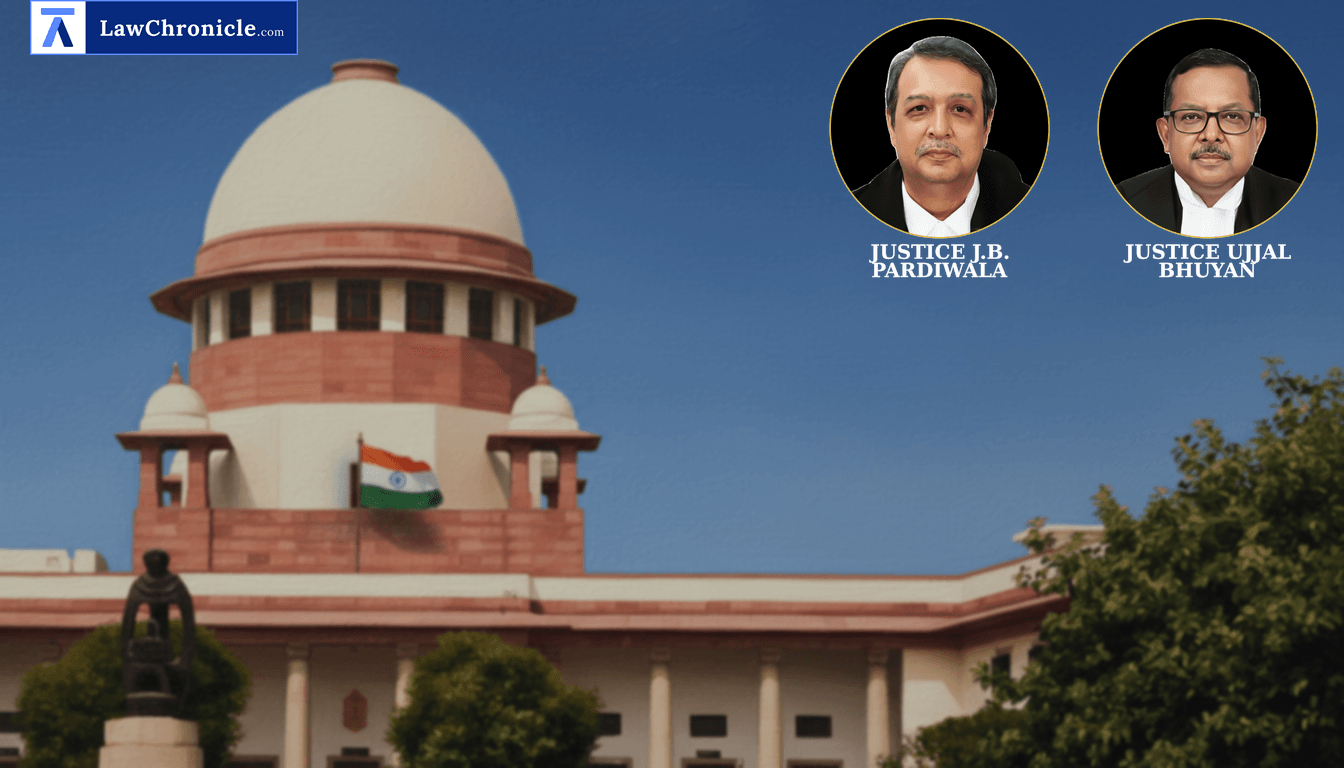
In a major relief for international carriers and tax assessees, the Supreme Court has ruled that mere delayed deposit of tax cannot be equated with absolute non-payment to trigger harsh non-payment penalties, while declaring that a litigant cannot be put in a worse position merely for exercising their legal right to appeal.
A bench comprising Justice J.B. Pardiwala and Justice Ujjal Bhuyan delivered the judgment in an appeal filed against the Bombay High Court's order, which had upheld a massive enhancement of penalty against an international airline. The dispute pertained to delayed payments of Foreign Travel Tax (FTT) under Chapter V of the Finance Act, 1979 and the Foreign Travel Tax Rules, 1979.
Key Takeaways
Delayed Deposit vs Non-Payment: Mere delay in remitting collected tax prior to a show cause notice does not amount to complete non-payment or failure to pay.
No Automatic Penalty: Imposition of statutory penalty is not automatic upon a breach, as adjudicating officers possess discretion to decide whether penalty is warranted.
Protection Against Reformatio in Peius: A party appealing an order cannot be placed in a worse position than before filing the appeal.
Strict Interpretation of Fiscal Statutes: Words used in penalty provisions of tax laws must be construed strictly without interpretive expansion.
Court Observations and Directions
The Supreme Court thoroughly analyzed Section 38 of the Finance Act, 1979 alongside the Foreign Travel Tax Rules, 1979. It drew a clear line of distinction between failure to pay tax and delayed deposit of tax. The Court emphasized that while failure to pay triggers penalty under Section 38(3), delayed payment falls under Section 38(4).
The Court, in its reasoning, observed: "'Failure to pay' would mean 'non-payment'. 'Failure to pay' would not mean and cannot be equated with 'delay in making payment'. The legislature has carefully used the expression 'fails to pay the foreign travel tax' to imply non-payment of FTT. If the legislative intent would have been to cover delayed payment of tax, then the legislature would have used a different expression. It is trite law of interpretation that when it comes to interpretation of taxation and fiscal statutes, we are not to import further meaning(s) to the expression used by the legislature by our own interpretative expansion which is not permissible."
Addressing the automatic nature of penalty, the Court observed that where adjudicatory mechanisms like show cause notices and personal hearings exist under Rule 12, penalty cannot be treated as a foregone conclusion. Relying on Hindustan Steel Ltd. Vs. State of Orissa ( "(1972) 83 ITR 26": 1970 CaseBase(SC) 490), the Court reiterated that whether penalty should be imposed for a statutory default remains a matter of judicial discretion. Reaffirming the principles in U.S. Technologies International Private Limited Vs. Commissioner of Income Tax, the Supreme Court stressed that mere delay in tax remittance after deduction/collection does not automatically attract penalty meant for complete non-payment.
The Court also condemned the drastic enhancement of penalty on remand, invoking the legal doctrine of prohibition of reformatio in peius. Endorsing the rulings in Jyoti Plastic Works Pvt. Ltd. Vs. Union of India and Nagarajan Vs. State of Tamil Nadu ( "(2025) 8 SCC 331": 2025 CaseBase(SC) 497), the Court affirmed that exercising a statutory right of appeal should not aggravate the situation of the appellant.
The Court has following directions:
"Consequently, impugned order of the High Court dated 09.08.2010, the revisional order dated 29.10.2004, order-in-appeal dated 09.01.2003 and the de novo order-in-original dated 08.08.2001 qua imposition of the penalty on the appellant for late deposit of FTT on 6 occasions are set aside and quashed. Any amount paid by the appellant as part of the above penalty shall be refunded by the respondents to the appellant with interest at the rate of 9 percent per annum within 3 months from today. Bank guarantee furnished by the appellant would also stand discharged."
Ratio
Delayed remittance of statutory tax collected prior to issuance of a show cause notice does not constitute 'failure to pay' or non-payment of tax, and does not automatically attract statutory penalties intended for non-payment. Furthermore, the power to impose statutory penalty carries inherent administrative and judicial discretion, and an appellate process cannot result in putting an appellant in a worse position (reformatio in peius) than prior to filing the appeal.
Background
The appellant, M/s. Saudi Arabian Airlines, collects FTT from international passengers and deposits it into the treasury under the Foreign Travel Tax Rules, 1979. For six specific months between 1994 and 1997, there were short delays ranging from 1 day to 63 days in depositing FTT. In five of these instances, demand drafts were purchased prior to the due date but deposited slightly late due to security restrictions. Show cause notices were issued, and in the initial order-in-original, a penalty of Rs. 12,000 was imposed under Section 38(3) of the Finance Act, 1979.
Upon an appeal by the airline seeking relief, the matter was remanded back. In the de novo order-in-original, the adjudicating authority drastically increased the penalty under Section 38(3) to Rs. 71,29,140 for the same six instances of late payment. This order was upheld by the Appellate Authority, the Revisional Authority, and eventually by the Bombay High Court in Writ Petition No. 3269 of 2004.
The High Court held that breach of civil obligation attracts penalty regardless of guilty intention, delay is equivalent to non-payment, and the adjudicating authority had the power to enhance penalty on de novo adjudication. Aggrieved, the airline appealed to the Supreme Court. The Apex Court allowed the appeal, quashing the penalty orders and ordering a full refund with interest.
Case Details:
Case No.: Civil Appeal No. 1052 of 2013
Neutral Citation: 2026 INSC 933
Case Title: M/s. Saudi Arabian Airlines v. Union of India & Ors.
Appearances:
For the Petitioner(s): Mr. P.V. Dinesh, Senior Advocate
For the Respondent(s): Mr. Arijit Prasad, Senior Advocate
Source: 2026 CaseBase(SC) 849
 Breaking News