


Delhi HC Acquits Accused in Commercial Heroin Case Over Procedural Lapses
 Copy Link
 Share
 Save
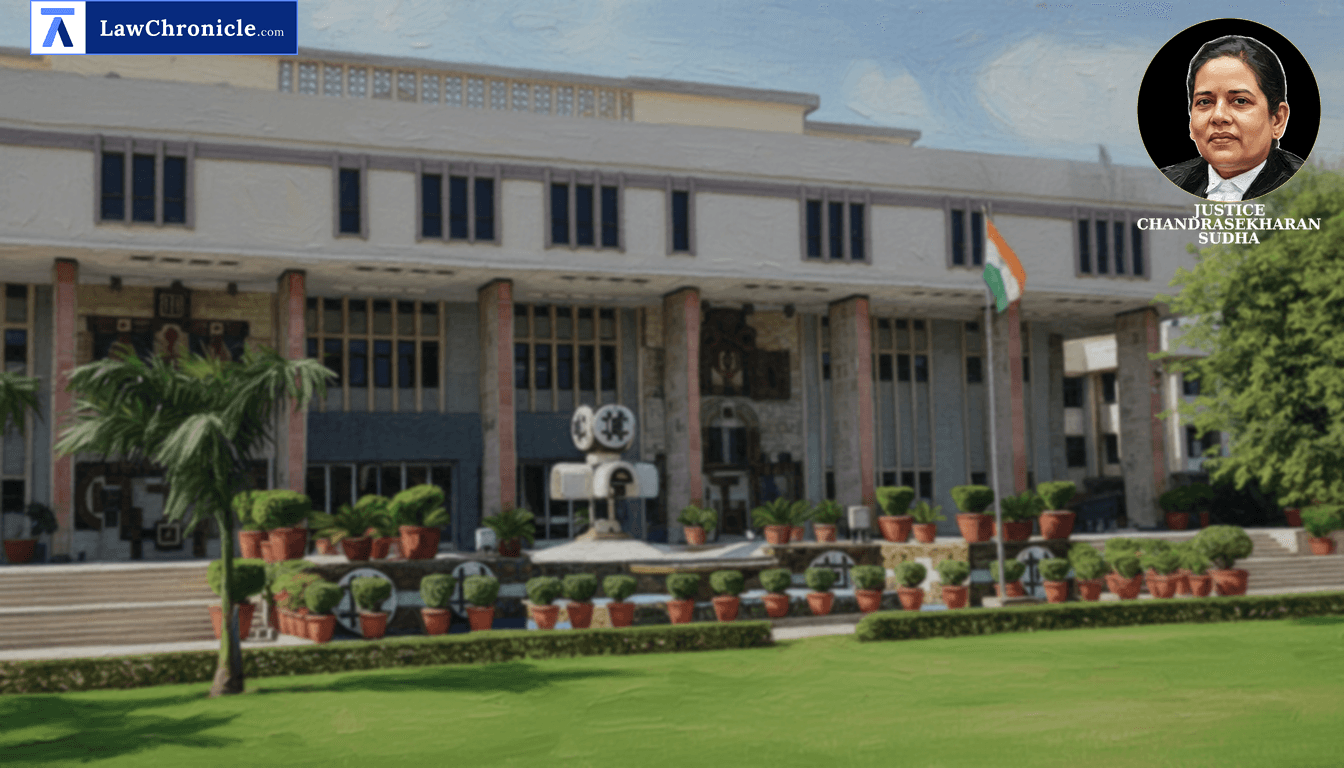
In a significant ruling, the Delhi High Court set aside the conviction of an individual accused of possessing a commercial quantity of heroin, citing gross procedural irregularities and failure to maintain the chain of custody. The Court emphasized that the stringent nature of the Narcotic Drugs and Psychotropic Substances Act, 1985 demands a higher degree of proof and strict adherence to mandatory safeguards to prevent the miscarriage of justice.
Justice Chandrasekharan Sudha heard the appeal filed under Section 374(2) of the Code of Criminal Procedure, 1973 against a trial court judgment that had sentenced the appellant to ten years of rigorous imprisonment. The case involved the alleged seizure of 1 kilogram of heroin from a vehicle at the Singhu Border in May 2012.
The Mandate of Section 52A and Procedural Safeguards
The Court scrutinized the investigation's adherence to Section 52A of the Narcotic Drugs and Psychotropic Substances Act, 1985, noting significant delays and lack of clarity in inventory management. The Court, in its reasoning, observed: "The provisions of the NDPS Act and the punishments prescribed therein are stringent, the extent of burden to prove the foundational facts cast on the prosecution, is more onerous. The courts would have to undertake a heightened scrutiny test and satisfy itself of 'proof beyond all reasonable doubt'. It is a well - settled principle of criminal jurisprudence that more serious the offence, the stricter would be the degree of proof and a higher degree of assurance would be necessary to convict an accused."
Referring to the legal framework regarding complaints under the Act, the Court clarified that the procedure followed by the Special Court was correct, relying on the principle in Tofan Singh vs The State Of Tamil Nadu ( "6 KHC 111 : AIR 2020 SC 5592 : (2021) 4 SCC 1": 2020 CaseBase(SC) 1147), which establishes that a Special Court may take cognizance without the accused being committed to it by a Magistrate.
Major Anomalies in Evidence and Documentation
The High Court identified several 'major anomalies,' particularly regarding the quantity of the contraband. While 10 grams were reportedly drawn as samples, the subsequent inventory still recorded the weight as a full 1 kilogram. Furthermore, the application to the Magistrate for sampling was moved after a five-month delay, violating the spirit of Section 52A.
Regarding the use of confession statements, the Court noted that in light of Tofan Singh vs The State Of Tamil Nadu ( "6 KHC 111 : AIR 2020 SC 5592 : (2021) 4 SCC 1": 2020 CaseBase(SC) 1147), statements recorded under Section 67 of the Narcotic Drugs and Psychotropic Substances Act, 1985 are inadmissible as evidence. The Court also expressed concern over the 'lackadaisical approach' of the Directorate of Revenue Intelligence (DRI) officials, noting that such carelessness allowed a potentially grave offender to go free.
Background:
The prosecution alleged that on May 18, 2012, DRI officials intercepted the appellant's car and recovered 1 kg of heroin hidden under the bonnet. The appellant contended he was falsely implicated, claiming he was picked up from near his house and forced to sign blank papers under duress. He challenged the search and seizure, arguing it was conducted at the DRI office rather than the spot of interception, in violation of Section 50 of the Narcotic Drugs and Psychotropic Substances Act, 1985.
While the DRI relied on Bharat Aambale v. State of Chhattisgarh to argue that non-compliance with Section 52A does not automatically vitiate a trial, the Court found the cumulative effect of the discrepancies including the three-day delay in depositing samples and the inconsistent weight records sufficient to grant the benefit of doubt. The Court also noted the relevance of Surepally Srinivas vs The State Of Andhra Pradesh regarding substantial compliance with Section 52-A. Consequently, the conviction was set aside, and the appellant was acquitted.
Case Details:
Case No.: CRL.A. 356/2016
Case Title: SUNIL @ SUNIL SHARMA v. DIRECTORATE OF REVENUE INTELLIGENCE
Appearances:
For the Petitioner(s): Mr. Adarsh Priyadarshi, Mr. Amit Dwivedi, Mr. Syed Miran, Mr. Suchit and Ms. Sandhya, Advocates
For the Respondent(s): Mr. Satish Aggarwala, Senior Standing Counsel with Ms. Mala Sharma and Mr. Gagan Vaswani, Advocates
Source: 2026 CaseBase(DEL) 296
Similar Articles




 Breaking News


