


Delhi HC Acquits MCD Official as Key Witnesses Turn Hostile in Corruption Case
 Copy Link
 Share
 Save
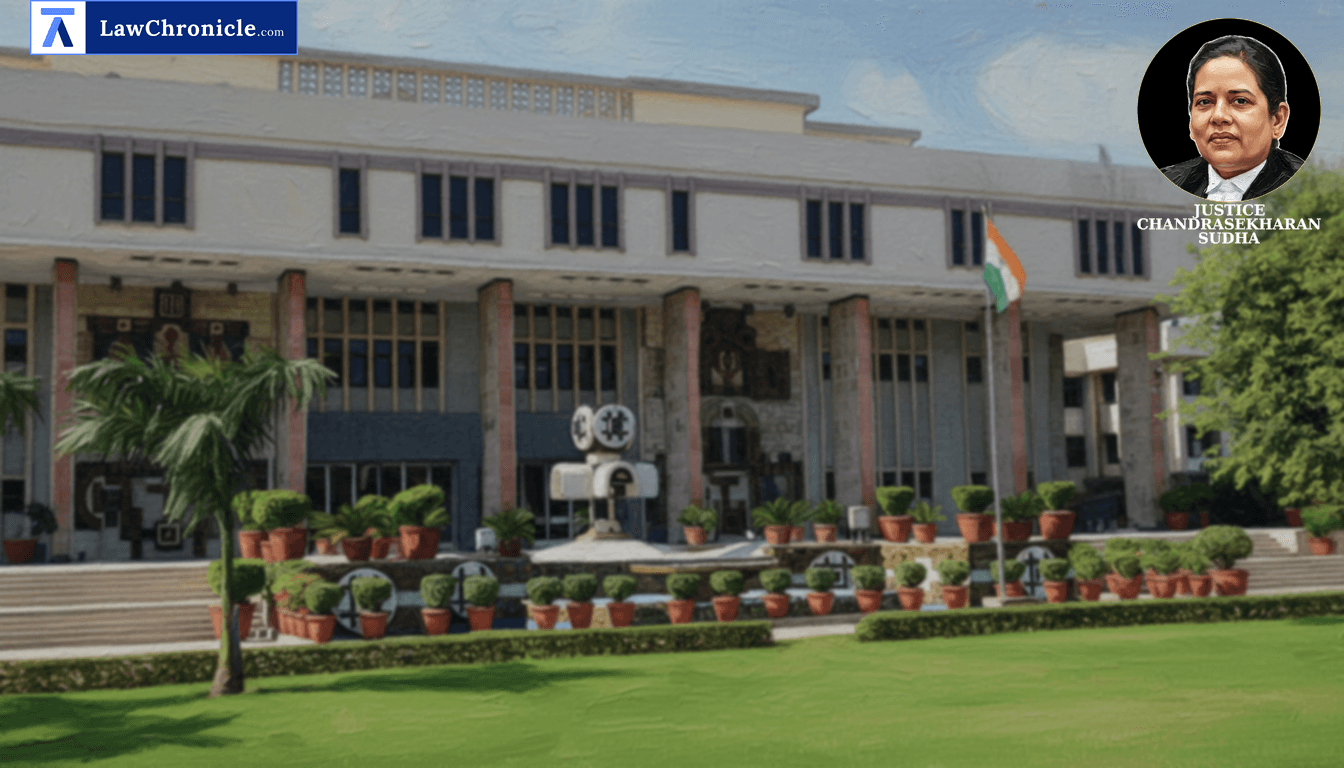
The Delhi High Court recently set aside the conviction of an MCD official, emphasizing that the uncorroborated testimony of a Trap Laying Officer cannot form the sole basis for conviction when primary witnesses turn hostile. The ruling underscores the necessity of proving 'demand and acceptance' beyond reasonable doubt in corruption cases.
In an appeal preferred under Section 374 of the Code of Criminal Procedure, 1973, a single-judge bench of Justice Chandrasekharan Sudha overturned the trial court's 2005 verdict. The court scrutinized the evidence against an official accused of demanding illegal gratification for processing a property mutation order, noting significant contradictions in the prosecution's narrative.
Lack of Corroboration and Witness Hostility
The prosecution alleged that the appellant, while working as a Clerk, demanded ₹5,000 from the complainant for a mutation order. However, during the trial, both the complainant and the panch witness (shadow witness) resiled from their previous statements. The complainant testified that the accused had actually refused the cash and requested a cheque for house tax dues, while the shadow witness claimed he was not present during the exact moment of the alleged transaction.
Inadmissibility of Hearsay Evidence
The Court observed that the testimony of the Trap Laying Officer (TLO) regarding the demand and acceptance was largely based on what the shadow witness had told him, rather than personal observation. The Court, in its reasoning, observed: "PW6 does not have a case that he had actually seen the accused accepting the money from PW2. His only case is that he was told of the same by PW4. However, PW4 has no such case while he was in the box. Moreover, the testimony of PW6 that he was told by PW4 that the accused had demanded and accepted the bribe money from PW2 is only hearsay evidence and hence inadmissible."
Court's Rationale on TLO Testimony
While the prosecution relied on State of U.P. v. Zakaullah and DK Sharma vs. State of Delhi to argue that a conviction can be based solely on the TLO's testimony, the High Court found the specific facts of this case rendered such reliance unsafe. The Court noted that the TLO's claim that the accused admitted his mistake was not reflected in the contemporaneous raid report.
The Court has following directions:
"In the result, the appeal is allowed and the impugned judgment is set aside. The appellant/accused is acquitted under Section 248(1) Cr.PC of the offences punishable under Sections 7 and 13(1)(d) read with Section 13(2) of the PC Act. He shall be set at liberty and his bail bond shall stand cancelled."
Background:
The dispute originated in December 2000 when a complaint was lodged with the Anti-Corruption Branch alleging that the appellant demanded a bribe for property mutation. The trial court had convicted the appellant under Sections 7 and 13(2) read with 13(1)(d) of the Prevention of Corruption Act, 1988, sentencing him to 18 months of rigorous imprisonment. The appellant contended that the mutation order had already been passed before the alleged demand, making the prosecution's story improbable. He maintained that he visited the complainant only to collect legitimate house tax dues. Finding the evidence unsatisfactory and the testimony of the TLO unreliable in isolation, the High Court granted the benefit of doubt to the appellant and acquitted him.
Case Details: Case No.: CRL.A. 487/2005 Case Title: MANJIT SINGH v. STATE OF DELHI Appearances: For the Petitioner(s): Mr. Gurbaksh Singh, Mr. Mandeep Singh and Mr. Arjun Dhamija, Advocates For the Respondent(s): Mr. Utkarsh, APP for the State with SI Bheem Singh, P.S. ACB, GNCTD
Source: 2026 CaseBase(DEL) 383
Similar Articles



 Breaking News


