


Delhi HC Dismisses Discoms' Challenge To CAG Audit Notice On Regulatory Assets
 Copy Link
 Share
 Save
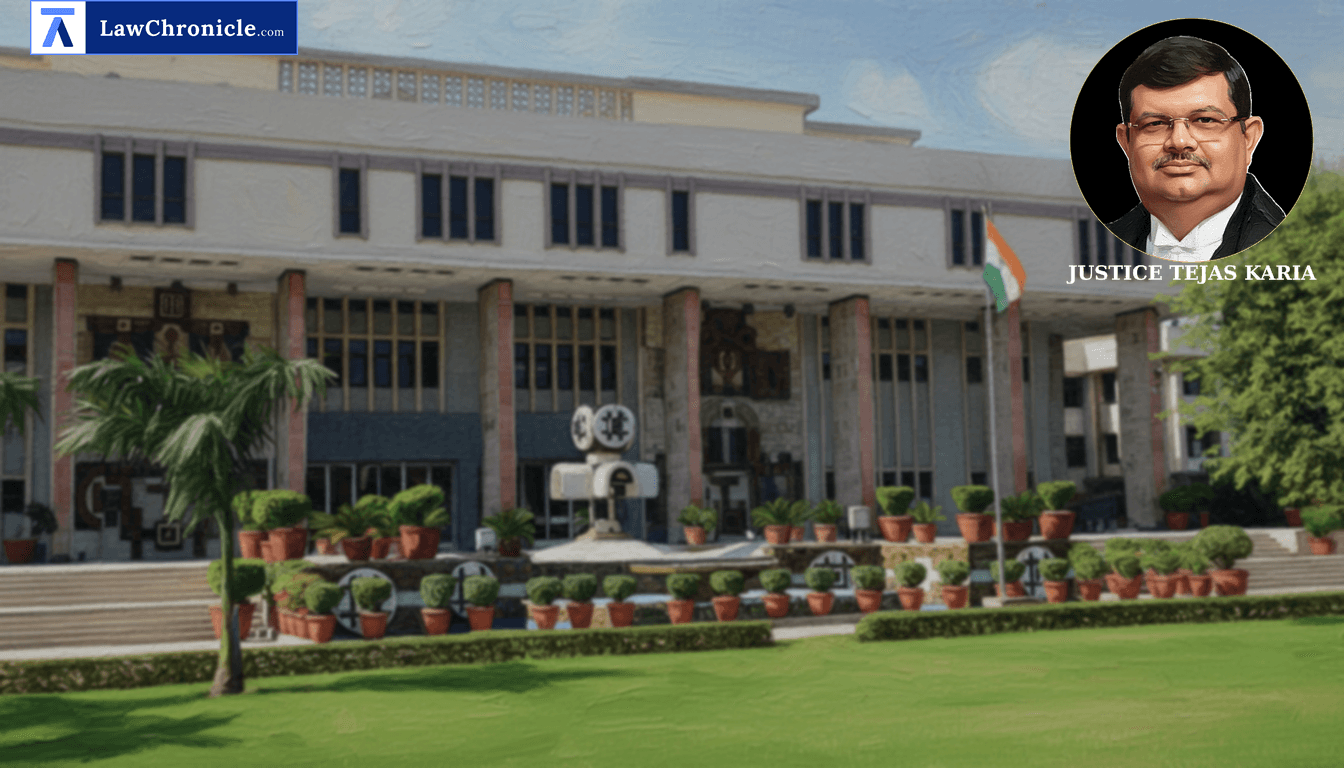
The Delhi High Court recently upheld the validity of a show-cause notice issued by the GNCTD to private electricity distribution companies regarding the entrustment of their audit to the Comptroller and Auditor General (CAG). This decision emphasizes that a mere show-cause notice does not typically infringe on legal rights and that the Comptroller and Auditor General (Duties, Powers and Conditions of Service) Act, 1971 process is essential for regulatory transparency.
Justice Tejas Karia, while dismissing the petition, observed that the challenge to the notice was premature as it merely afforded the petitioners an opportunity to be heard. The Court clarified that the proposed audit, aimed at examining the accumulation of Regulatory Assets (RA), was in alignment with recent judicial mandates to ensure accountability in the power sector.
Legal Validity of Show-Cause Notices
The Bench emphasized the limited scope of judicial interference at the show-cause stage. Drawing upon the principles established in Union of India v. Kunisetty Satyanarayana ( "(2006) 12 SCC 28": 2006 CaseBase(SC) 387), the Court noted that writ jurisdiction should not ordinarily be exercised to quash a notice that does not record adverse findings or determine final liabilities. The Court similarly relied on Secretary, Ministry of Defence & Ors. v. Prabhash Chandra Mridha to reiterate that a charge-sheet or show-cause notice does not give rise to a cause of action until a final order is passed.
The Mandate for 'Strict and Intensive Audit'
The Court noted that the Electricity Act, 2003 and specific directions from the Supreme Court in the BSES Writs (RA Judgment) (referred to as the RA Judgment) necessitated a deeper look into why distribution companies continued to operate without recovering substantial regulatory assets.
The Court, in its reasoning, observed: "The RA Judgment directs a strict and intensive audit of the circumstances in which the Distribution Companies continued without recovery of RA. The said direction does not exclude examination of the records, conduct, accounts, or financial position of the Distribution Companies. The scope of the audit is, therefore, sufficiently broad to include all relevant circumstances."
Regarding the conduct of the audit, the Court has the following directions:
"The proceedings to be conducted pursuant to the Impugned Notice under Section 20(3) of the CAG Act shall be decided by the competent authority after affording the Petitioners an opportunity of hearing and upon due consideration of all submissions that may be advanced by the Petitioners on merits, without being influenced in any manner by the observations made hereinabove. All rights and contentions of the Parties in relation to compliance with the timelines specified in the RA Judgment and the orders passed by the APTEL are kept open, subject to the outcome of the proceedings pending before the Supreme Court."
Distinction from the URJA Judgment
Rationale on Why Previous Precedent Does Not Apply
The petitioners heavily relied on the United Residents Joint Action v. Union of India (URJA Judgment) (URJA Judgment), which had previously quashed a CAG audit of these same entities. However, the High Court distinguished the current situation, noting that the new notice followed Comptroller and Auditor General (Duties, Powers and Conditions of Service) Act, 1971 and was specifically initiated to comply with the BSES Writs (RA Judgment). Unlike the previous instance, the current process involves a specialized audit focused on regulatory failure and the accumulation of unrecovered tariffs, rather than a general parallel audit for tariff fixation.
Background:
The petitioners, BSES Rajdhani Power Limited and BSES Yamuna Power Limited, challenged a notice dated June 6, 2026, issued by the GNCTD under Section 20(3) of the Comptroller and Auditor General (Duties, Powers and Conditions of Service) Act, 1971. The dispute traces back to the unbundling of the Delhi Vidyut Board and the subsequent privatization of power distribution. Over the years, massive ‘Regulatory Assets’ essentially unrecovered costs accumulated on the balance sheets of these Discoms. In 2025, the Supreme Court in the BSES Writs (RA Judgment) expressed concern over 'regulatory capture' and ordered a strict audit of the circumstances leading to these financial gaps. While the Appellate Tribunal for Electricity (APTEL) had earlier expressed reservations about a CAG audit due to procedural issues, the GNCTD issued the fresh notice to cure those defects. The petitioners argued the notice was an executive overreach and a 'colourable exercise of power' designed to reopen settled tariff orders. The Court ultimately found the petition to be premature and dismissed it, allowing the administrative hearing to proceed.
Case Details:
Case No.: W.P.(C) 8283/2026, CM Nos.39088/2026 & 39089/2026
Case Title: BSES RAJDHANI POWER LIMITED & ANR. Versus GOVERNMENT OF NCT OF DELHI & ORS.
Appearances:
For the Petitioner(s): Mr. Sandeep Sethi & Mr. Buddy Ranganathan, Sr. Advs. with Mr. Amit Kapur, Mr. Alok Kumar, Mr. Anupam Varma, Mr. Gauhar Mirza, Mr. Varun Chandiok, Mr. Aditya Gupta, Mr. Aditya Ajay, Mr. Yash Srivastava, Ms. Shreya Sethi, Mr. Krishna Gambir, Mr. Adamya Ojha & Ms. Mahima Kaur, Advs.
For the Respondent(s): Mr. S.V. Raju, ASG with Mr. Annam Venkatesh, Mr. Shaurya Sarin & Ms. Aditi Andley, Advs. for GNCTD; Mr. Sameer Vashisht & Ms. Harshita Nathrani, Advs. for GNCTD; Mr. Sanjeev Kumar Dubey, Sr. Adv. with Mr. Anirudh & Mr. Shah Rukh Khan, Advs. For R-2/DERC; Dr. S.S. Hooda, Mr. Aditya Hooda & Ms. Rashmi Rawat, Advs. for R-3 / CAG.
Source: 2026 CaseBase(DEL) 448
Similar Articles
 Breaking News


