

Delhi HC: Mere Suspicion Not Enough to Overturn Acquittal in Road Death Case
 Copy Link
 Share
Share Save
Save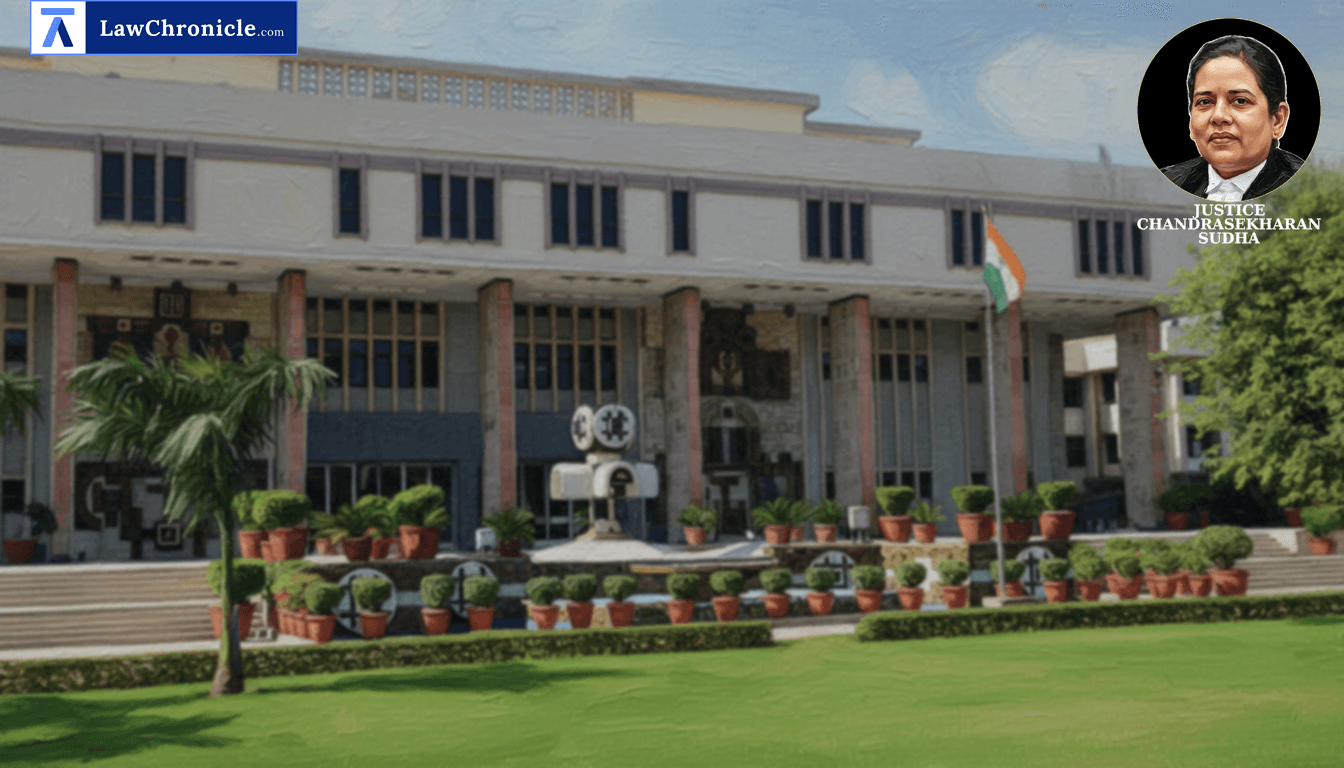
The Delhi High Court dismissed the appeal, ruling that driving at high speed alone is insufficient to establish rash or negligent driving on the part of the driver. A single-judge bench of Justice Chandrasekharan Sudha heard an appeal by the State under Section 378 of the Code Of Criminal Procedure, 1973 challenging the trial court's acquittal of the accused in Sessions Case No. 556 of 2009, where the accused had been acquitted of offences under Sections 279 and 304A of the Indian Penal Code, 1860 and Section 134 of the Motor Vehicles Act, 1988 arising from an alleged road accident in Seelampur.
The High Court held that the prosecution had failed to establish rashness or criminal negligence beyond reasonable doubt and that mere allegation of high speed without supporting material was insufficient to attract criminal liability.
The Court, in its reasoning, observed: "As held in State of Karnataka v. Satish ( "(1998) 8 SCC 493": 1996 CaseBase(SC) 2197), there can be no doubt that vehicles are intended to be driven in speed. Merely because the vehicle is being driven at a high speed does not show that the driver was rash or negligent by itself. "High speed" or "over speed" as it is often referred to, is a relative term. It is for the prosecution to bring on record materials to establish as to what is meant by "high speed" in the facts and circumstances of the case. In a criminal trial, the burden of proving everything essential to the establishment of the charge against an accused always rests on the prosecution and there is a presumption of innocence in favour of the accused until the contrary is proved. Criminality is not to be presumed, subject of course to some statutory exceptions. In the absence of any material-on-record, no presumption of "rashness" or "negligence" could be drawn against the accused by invoking the maxim "res ipsa loquitur"."
Background
The prosecution case arose from an FIR (Ext. PW3/A) in which the informant described that "At around 9:00 PM, a truck (dumper) bearing registration no. UP-15 D-9150 came from the direction of Shastri Park, being driven by its driver in a very negligent and high-speed manner" and that the truck knocked down a scooter rider who later died; PW3 identified the accused as the driver. The accused was charged under Sections 279 and 304A of the Indian Penal Code, 1860 and under Section 134 of the Motor Vehicles Act, 1988 and the State appealed under Section 378 of the Code Of Criminal Procedure, 1973 after his acquittal on 05.10.2015 by the trial court.
The High Court analysed the evidence of the eyewitness PW3, the site plan and the Section 133 reply (Ext. PW2/A), and observed that there was no material on record regarding the width of the road, the position of the vehicles, traffic conditions or any objective measure of "high speed". The Court relied on Naresh Giri v. State of Madhya Pradesh ( "(2008) 1 SCC 791": 2007 CaseBase(SC) 573) to restate that Section 304A applies where death is caused by a rash or negligent act without intent to cause death, and it relied on State of Karnataka v. Satish ( "(1998) 8 SCC 493": 1996 CaseBase(SC) 2197) for the proposition that "high speed" alone was not sufficient to establish criminal liability; on that basis the Court concluded that the prosecution failed to discharge its burden and dismissed the appeal, affirming the acquittal. The Court recorded that "PW3 has identified the accused as the driver of the offending vehicle" but emphasised that "even accepting the prosecution case of the accused having driven the truck, the materials on record are not sufficient to bring home his guilt for the offences charged against him." The appeal was dismissed and any pending applications were closed.
Case Details:
Case No.: CRL.A. 35/2018
NeutralCitation: 2026:DHC:3741
Case Title: STATE v. GANGA SHARAN
Appearances:
For the Petitioner(s): Mr. Utkarsh, APP for the State with PSI Manjeet Dhaka, PS Seelampur
For the Respondent(s): Mr. Archit Upadhayay, Advocate (DHCLSC) with respondent in person
Source: 2026 CaseBase(DEL) 288
 Breaking News