Delhi HC: Public Figures Must Not Be Thin-Skinned Towards Satirical Criticism
 Copy Link
 Share
Share Save
Save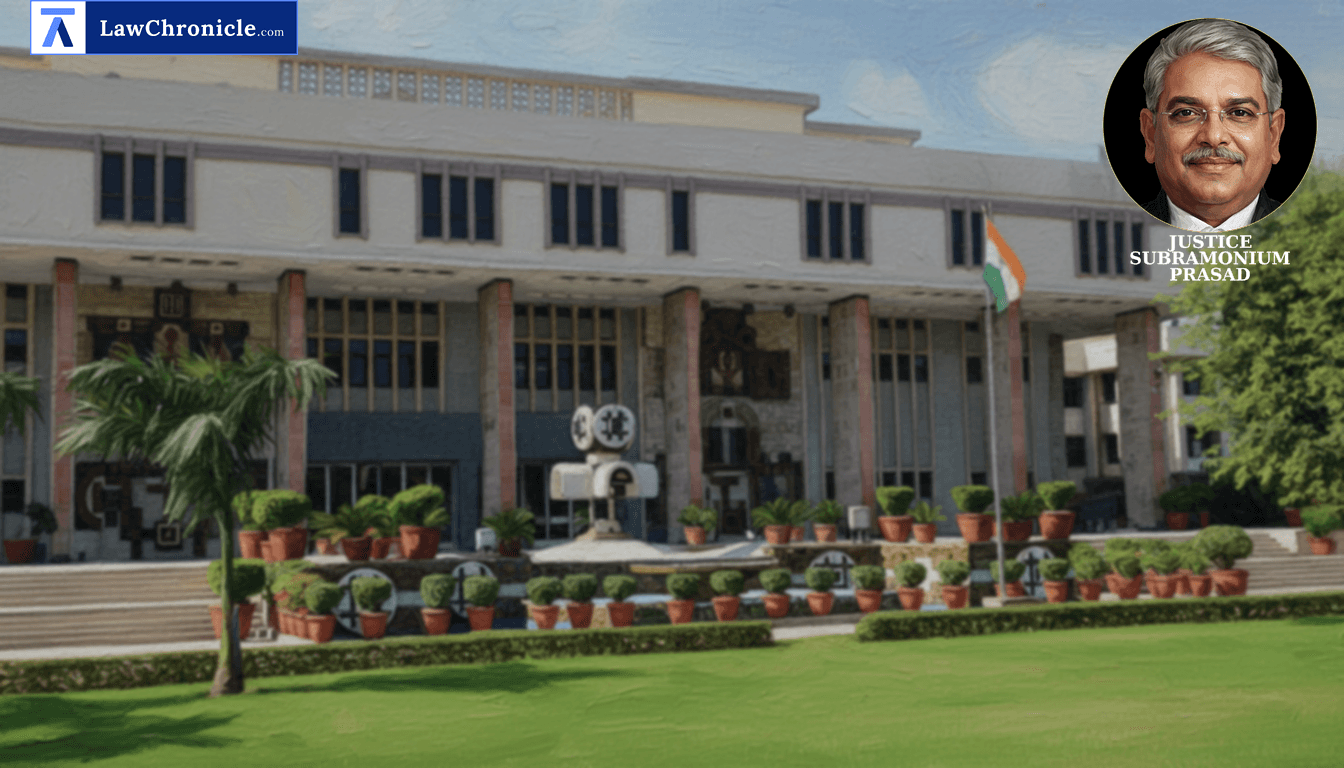
The Delhi High Court has underscored that individuals in public positions must exhibit a higher threshold of tolerance toward criticism and satirical humor, particularly in the digital age of AI-generated content. A single-judge bench of Justice Subramonium Prasad, while hearing an interim injunction application, observed that unless content is grossly defamatory, profane, or vulgar, the court must balance the right to dignity with the fundamental right to freedom of speech and expression as guaranteed under the Constitution of India, 1950.
Court Rationale on Public Figures and Defamation
The Court, in its reasoning, observed: "...a public person or a person holding a public office should not be so 'thin skinned' or should be rather 'thick skinned' so as to complain about the allegations or the averments or the write ups which are taking place against him in the media or are being telecast unless and until they are grossly defamatory per se. The publications may be inaccurate, not fully or substantially true or may be distorted or may be offending sensibilities of the person against whom such allegations are made or may be to his annoyance but that is not to be the ground to muzzle them altogether."
The bench highlighted that while AI-generated deepfakes can threaten individual dignity, satirical expressions regarding political decisions are a natural part of democratic discourse. The Court noted that public men must accept such attacks as a "necessary, though unpleasant, appendage" to their office.
Directives on Removal of Vulgar Content
While refusing a blanket ban on all satirical content, the Court found six specific documents to be profane and vulgar, falling outside the protection of humor. The Court has the following directions:
"i. The Defendants No. 2 and 4 are directed to take down the URLs associated with Documents No. 2, 8, 9, 11, 25 and 40 within a period of two weeks from the date of this Order till further Orders.
ii. The Defendants No. 2 and 4 are directed to provide the Plaintiff with Basic Subscriber Information (BSI), IP logs of the accounts associated with the content mentioned in Documents No. 2, 8, 9, 11, 25 and 40 within a period of two weeks from the date of this Order.
iii. Compliance of Order XXXIX Rule 3 of the CPC be made within a week from today."
Background:
The dispute arose when a prominent Member of Parliament moved the Court seeking an ex-parte ad-interim injunction against 'John Doe' defendants and social media intermediaries. The Plaintiff alleged that after his political defection from one party to another, a malicious campaign was launched using Artificial Intelligence to create deepfakes and morphed videos to tarnish his reputation.
Initially, the Plaintiff sought protection under personality and publicity rights. However, the Court clarified that personality rights involve commercial exploitation of one's likeness. Following this, the Plaintiff's counsel confined the arguments to defamation under the Code of Civil Procedure, 1908.
The Court relied on the 'Bonnard Principle' from Bonnard v. Perryman, emphasizing that pre-trial injunctions should not be granted unless the content is palpably false. This principle was recently affirmed by the Supreme Court in Bloomberg Television Production Services India Private Limited &Ors. v. Zee Entertainment Enterprises Limited ( "2024 SCC OnLine SC 426": 2024 CaseBase(SC) 262). Furthermore, the Court cited historical precedents like Kartar Singh v. State of Punjab ( "(1956) 1 SCC 692": 1956 CaseBase(SC) 12) and R. Rajagopal v. State of T.N. to reiterate that public officials cannot be overly sensitive to criticism. The bench also referred to Amish Devgan v. Union of India and Others ( "(2021) 1 SCC 1": 2020 CaseBase(SC) 689) regarding the balance between the right to dignity under Article 21 and free speech, as well as S. Charanjit Singh v. Aroon Purie and Naveen Jindal v. Zee Media Corporation Ltd., which addressed the necessity of public conduct being open to searching criticism. Ultimately, the Court granted limited relief by ordering the removal of only the most offensive links while protecting the right to political satire.
Case Details:
Case No.: CS(OS) 466/2026
Case Title: RAGHAV CHADHA v. ASHOK KUMAR JOHN DOE AND ORS
Appearances:
For the Petitioner(s): Mr. Rajiv Nayar, Senior Advocate with Mr. Sataya Anand, Mr. Nikhil Aradhe, Mr. Amber Chaturvedi, Ms. Manjira Das Gupta and Mr. Naman Maheshwari, Advocates
For the Respondent(s): Mr. Varun Pathak, Ms. Radhika Roy, Ms. Prasidhi Agrawal for Defendant No.2; Ms. Mamta Rani Jha, Mr. Rohan Ahuja, Ms. Shruttima Ehersa, Ms. Sanya Sehgal and Ms. Aiswarya for D-4; Ms. Dimple S Arora (SPC) and Mr. Vanshul Pali (GP) with Ms. Ayushika Mishra for Defendant No. 5-6.
Source: 2026 CaseBase(DEL) 462
 Breaking News