


Delhi High Court Grants State Leave to Appeal in POCSO Acquittal Case
 Copy Link
 Share
 Save
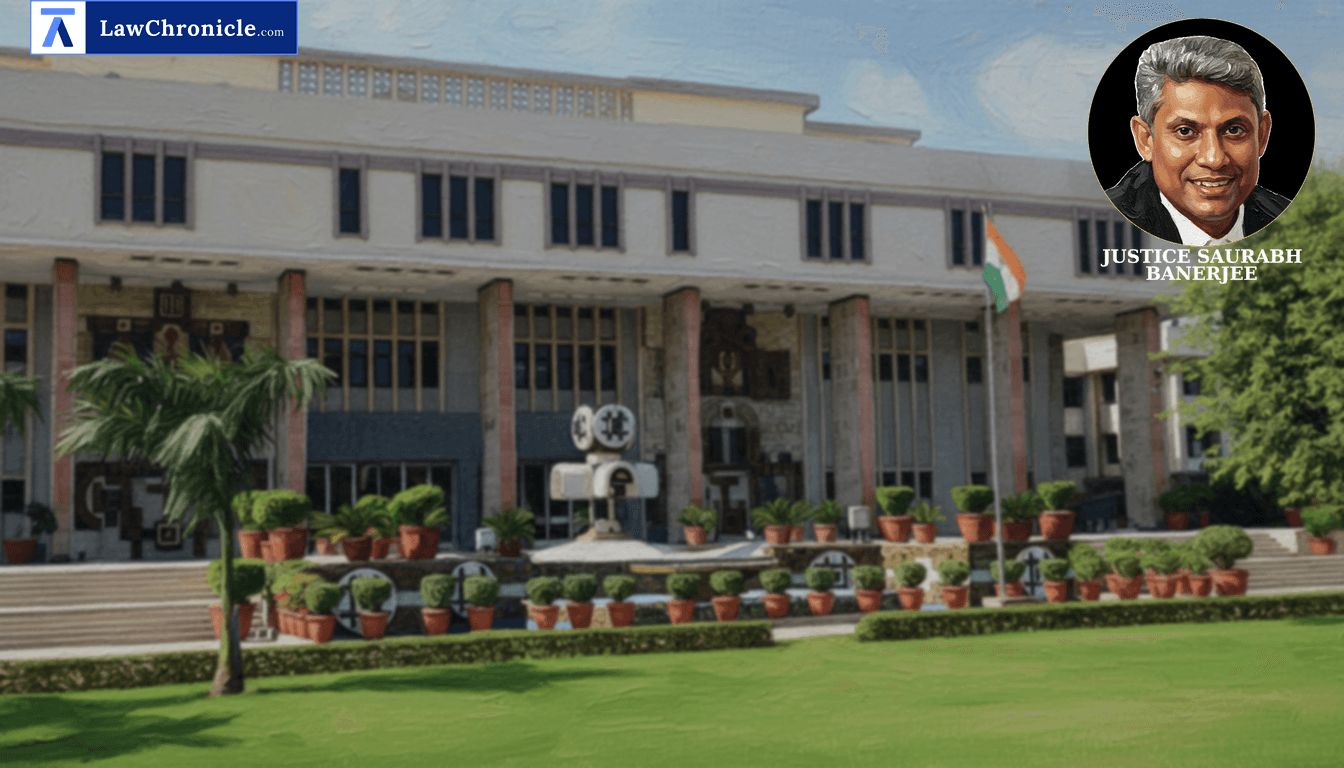
The Delhi High Court has reopened the doors for scrutiny in a child sexual assault case, granting the State leave to appeal against an acquittal that allegedly ignored the statutory presumption of guilt. The court determined that the prosecution raised arguable points regarding the reliability of a child victim’s testimony, necessitating a deeper judicial review of the trial court’s findings.
Justice Saurabh Banerjee, presiding over the matter, evaluated the State's petition seeking leave to appeal against an acquittal order involving charges under the Protection of Children from Sexual Offences Act, 2012 and the Indian Penal Code 1860. The Court scrutinized whether a prima facie case existed for a full appellate hearing, balancing the principle of double presumption of innocence against the potential errors in the lower court's appreciation of evidence.
Key Takeaways
Prima Facie Merit for Appeal
The Court established that leave to appeal must be granted if there are arguable points or a prima facie case, ensuring that acquittal orders are not shielded from legitimate review.
Statutory Presumption under POCSO
The ruling highlights the significance of Section 29 of the Protection of Children from Sexual Offences Act, 2012, which mandates a presumption of guilt, shifting the burden of scrutiny on how trial courts evaluate such evidence.
Reliability of Victim Testimony
The decision underscores that the 'sterling quality' of a victim's testimony and the requirement for independent corroboration are issues that require detailed appellate examination rather than summary dismissal.
Court Observations and Directions
The Court noted that the State had successfully made out a case that required the re-appreciation of evidence, particularly concerning the inter-se contradictions between the victim and her mother. The Court, in its reasoning, observed: "Based on the materials on record, particularly, the testimony of the victim coupled with the statement of the mother, this Court is of the considered view that learned APP has been able to make out a prima facie case warranting consideration in an appeal. Also, in view of the aforesaid materials, the issue qua discrediting them, and (non-)requirement of any corroboration thereto by independent witnesses, has also to be gone into. It is also significant to note that the respondent herein was being tried for an offence under Section 9 of the POCSO Act, thereby attracting presumption under Section 29 thereof."
The Court has the following directions:
"The Registry is directed to register the present matter as a criminal appeal and re-number accordingly. List before the Roster Bench on 28.10.2026."
Ratio
In deciding a petition for leave to appeal under Section 378(3) of the Code of Criminal Procedure, 1973, the High Court is not required to determine if the acquittal will be set aside, but rather whether the State has raised arguable points or a prima facie case that warrants a deeper scrutiny and re-appreciation of evidence by the appellate court.
Background
The case originated from an FIR registered in 2014, where a 10-year-old victim alleged that the respondent, a co-resident in her building, had sexually harassed her while she was performing household chores. Following a trial, the Additional Sessions Judge acquitted the respondent on February 10, 2016, citing contradictions between the victim's statement under Section 164 of the Code of Criminal Procedure, 1973 and her court testimony, as well as the lack of independent witnesses.
The State challenged this acquittal, arguing that the trial court relied on minor discrepancies and wrongly assumed the mother had a motive for false implication. The respondent maintained that the acquittal was a plausible view and that the victim's testimony was not of 'sterling quality'. The High Court, relying on the principles laid down in State of Maharashtra v. Sujay Mangesh Poyarekar ( "(2008) 9 SCC 475": 2008 CaseBase(SC) 763) and Manoj Rameshlal Chhabriya v. Mahesh Prakash Ahuja ( "2025 SCC OnLine SC 451": 2025 CaseBase(SC) 68), concluded that the matter deserved a full hearing on merits. Consequently, the petition was allowed, and the Registry was directed to register the matter as a criminal appeal.
Case Details:
Case No.: CRL.L.P. 435/2016
Case Title: State (Govt Of NCT of Delhi) V. Bajrang Bali Singh
Appearances:
For the Petitioner(s): Mr. Satish Kumar, APP with SI Monika
For the Respondent(s): Ms. Tara Narula and Mr Harshvardhan Jain, Advs.
Source: 2026 CaseBase(DEL) 6682
Similar Articles
 Breaking News


