


Delhi High Court Rejects Backdoor Entry for Interlocutory Challenges
 Copy Link
 Share
 Save
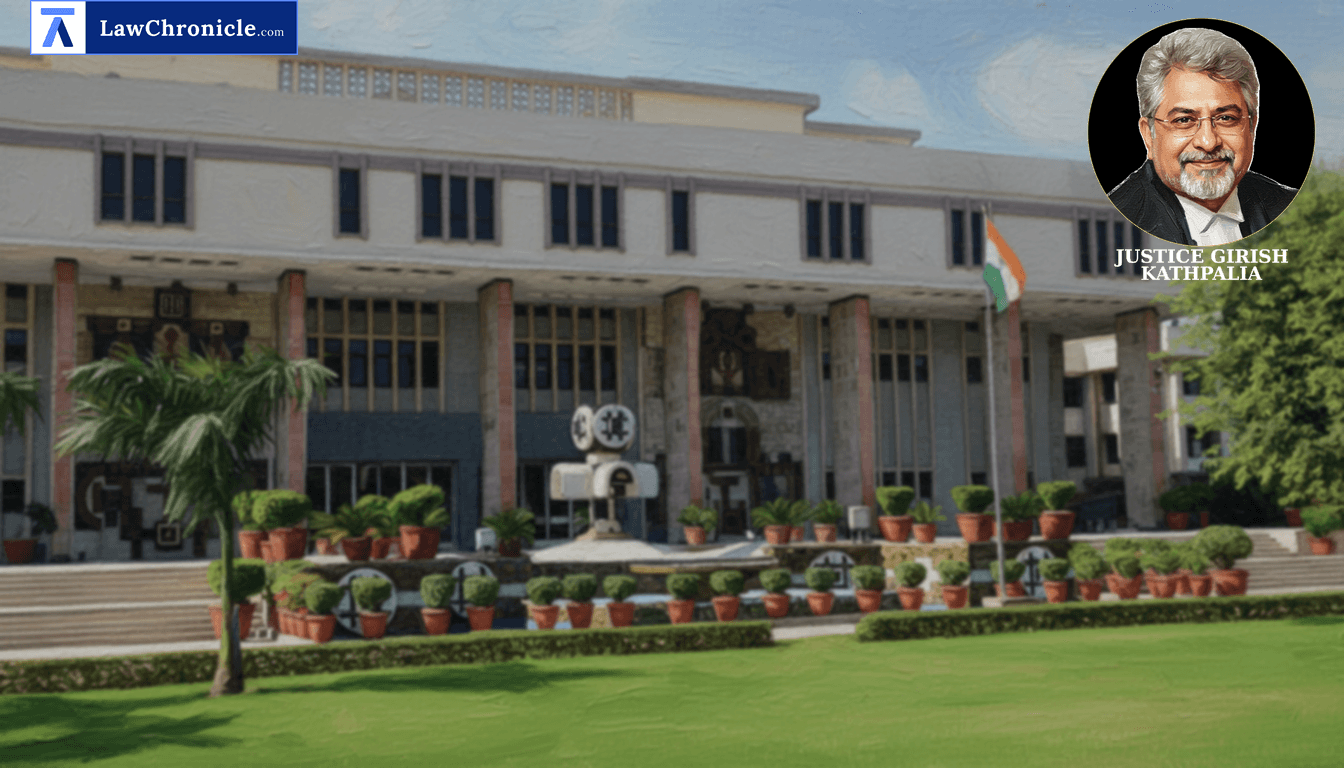
The Delhi High Court has slammed the brakes on attempts to circumvent the statutory bar on revisional jurisdiction by invoking inherent powers to challenge interlocutory orders, ruling that adjournments are matters of judicial courtesy rather than a vested right of counsel. Dismissing a 'frivolous' petition with exemplary costs, the Court held that litigants cannot protract trials under the guise of seeking further cross-examination when ample opportunities have already been provided.
A Single Judge Bench of Justice Girish Kathpalia was presiding over a petition challenging a trial court's refusal to recall a complainant for further cross-examination in a Negotiable Instruments Act proceeding. The Court examined whether the dismissal of an application under Section 348 of the BNSS could be assailed through the High Court's inherent powers despite the explicit prohibition found in Section 438(2) of the BNSS.
Key Takeaways
Statutory Bar on Interlocutory Challenges
Orders passed under Section 348 of the BNSS are interlocutory in nature and cannot be challenged through revision or inherent powers unless gross injustice is established.
Adjournments as Judicial Courtesy
Passovers and adjournments are not the rights of the counsel but are courtesies extended by the Court, which cannot be demanded when a trial has been repeatedly deferred.
Deterrence Against Trial Protraction
Courts will impose exemplary costs on litigants who attempt to frustrate the judicial process by repeatedly seeking to recall witnesses without satisfactory explanation for previous defaults.
Court's Rationale on Inherent Powers and Section 438(2) BNSS
The Court noted that the petitioner had been granted multiple opportunities over several years to cross-examine the complainant. It emphasized that the inherent powers of the High Court cannot be used to provide a "backdoor entry" to challenge orders that are explicitly barred from revision by the legislature. The Court relied on its earlier decisions in Ram Swaroop Gupta & Ors vs State NCT of Delhi & Anr. ( "2026:DHC:514": 2026 CaseBase(DEL) 2793) and Exclusive Capital Limited vs State Govt of NCT Delhi & Ors ( "2026:DHC:6742": 2026 CaseBase(DEL) 3752) to reiterate this principle.
The Court has following directions:
"I find the present petition not just devoid of merits but completely frivolous, so it is dismissed with cost of Rs. 10,000/- to be deposited within one week by the petitioner/accused online with www.bharatkeveer.gov.in. Accompanying applications also stand disposed of. Copy of this order be sent to the learned trial court."
In its reasoning, the Court observed: "It is trite that an order dismissing an application under Section 348 BNSS (earlier Section 311 CrPC) is an interlocutory order and that being so, it is not amenable to scrutiny under revisional jurisdiction of the Court of Sessions or even this Court in view of bar created by Section 438(2) BNSS. It is equally trite that what is explicitly prohibited by law cannot be granted a backdoor entry by invoking inherent powers, unless it is a case of gross injustice."
Ratio
An order dismissing an application for the recall of a witness for cross-examination under Section 348 of the BNSS constitutes an interlocutory order. Consequently, such an order is not amenable to the revisional jurisdiction of the Sessions Court or High Court due to the statutory bar under Section 438(2) of the BNSS. Inherent powers cannot be invoked to circumvent this prohibition unless there is a clear showing of gross injustice, which does not include the denial of discretionary passovers or repeated adjournments.
Background
The dispute arose from a complaint filed under Section 138 of the Negotiable Instruments Act, where notice was framed in April 2022. Between June 2023 and January 2026, the complainant remained in the witness box as the trial court granted several adjournments and 'last opportunities' to the petitioner to conclude cross-examination. On January 12, 2026, when neither the petitioner nor their counsel appeared at the first call, the trial court closed the right to cross-examine.
The petitioner subsequently moved an application under Section 348 of the BNSS to recall the complainant, which was dismissed by the trial magistrate. In the High Court, the petitioner argued that the trial court should not have closed the right in the 'very first call' as the counsel intended to seek a passover. The High Court rejected this, noting that the petitioner's counsel (who was also her husband) failed to provide a satisfactory explanation for the default and was merely trying to protract the trial to frustrate the respondent.
Case Details:
Case No.: CRL.M.C. 8226/2026
Case Title: Monika V. Usha Shrivastava
Appearances:
For the Petitioner(s): Mr. Soumava Karmakar, Ms. Jyoti Bajaj, Mr. Daksh Sharma, Advocates
For the Respondent(s): None
Source: 2026 CaseBase(DEL) 7526
Similar Articles
 Breaking News


