


Delhi HC Upholds Rape Conspiracy Convictions; Compensation Raised for Victim’s Family
 Copy Link
 Share
 Save
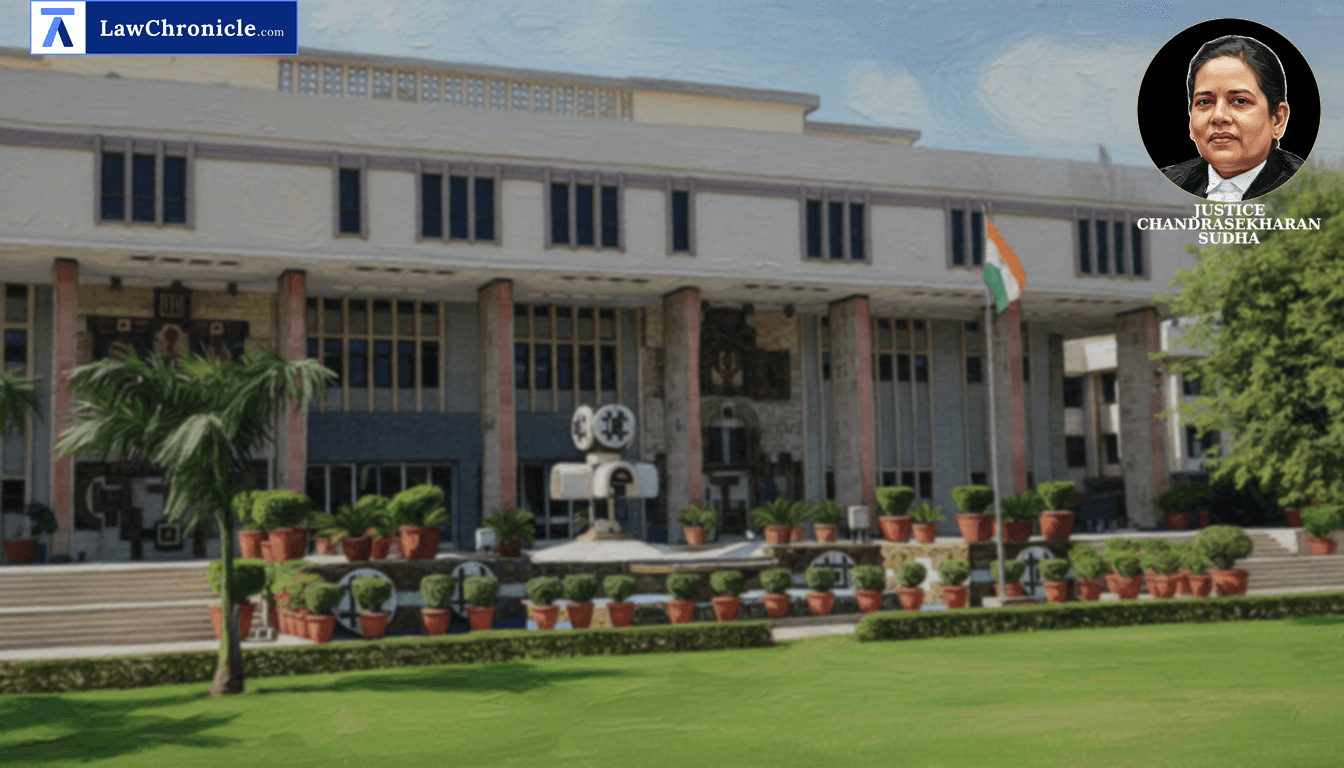
A single-judge bench of Justice Chandrasekharan Sudha heard appeals by two accused and an appeal by the legal representatives of the victim arising from Sessions Case No. 141/1/2010. The appeals challenged the conviction and sentence imposed by the trial court on findings of criminal conspiracy, fabrication and related offences; the victim’s representatives sought enhancement of the compensation awarded by the trial court.
The High Court held that the convictions of the two appellants for offences under Sections 120B, 193, 195, 218, 465 and 389 read with 120B IPC were sustainable on the evidence and dismissed their appeals. The Court rejected the defence's contention that the testimony of prosecution witnesses who participated in the scheme was inadmissible, relying on precedent holding that accomplice testimony remained competent and admissible, subject to caution. The Court found that the trial court’s delay and repeated adjournments had subjected the victim, PW12 to harassment and custodial violence, and it increased the compensation order: the entire fine of Rs.3,00,000 ordered to be realised from the convicted accused was directed to be paid to the legal representatives of the deceased victim. The Court noted the gravity of misconduct by persons holding public trust, observing that “this is a fit case in which a more stringent sentence ought to have been imposed,” while recording that no State appeal challenged the sentence’s adequacy.
The Court, in its reasoning, observed: “In the light of the dictum in Lakshmipat Choraria (supra), PW1, PW2, PW6 and PW7 are competent witnesses. Though they were extensively cross‑examined, nothing was brought to discredit their testimony. A reading of their testimony makes it clear that they agreed to become part of the conspiracy when substantial amounts were offered to them. All the said witnesses, who appear to be from the lower financial strata of the society, is seen to have fallen for the same. This Court is in no way justifying their conduct. But, taking into account their financial status, they seem to have fallen easy prey to the bait offered by the accused persons.”
Background
The prosecution alleged that in August 2000 four persons conspired to falsely implicate PW12 Sushil Gulati in a rape to extort money and to avenge his successful complaint that had led to the suspension of a police officer (A3). The scheme allegedly involved a lawyer (A1), a police chowki‑in‑charge (A2) and others who induced and paid witnesses to stage a rape scene, lodge a false first information report and fabricate records. After investigation by the Crime Branch exonerated PW12 and DNA reports identified semen of others not PW12, a chargesheet charged the accused with fabrication and allied offences. At trial, numerous prosecution witnesses (PWs 1–34) were examined; several key witnesses admitted participating in a staged scheme and later recanted the false accusation. PW12’s examination‑in‑chief spanned 2011–2012 but he was not cross‑examined repeatedly despite being present on many dates; he died during the pendency of proceedings.
Defence arguments raised improper reliance on accomplice witnesses and the absence of statutory procedures (Sections 306/307/315 CrPC) permitting examination of an accused as a witness; counsel also argued the absence of independent corroboration and lack of proof of A2’s involvement. The State relied on Section 133 and relevant precedents (including Lakshmipat Choraria and Chandran v. State of Kerala) to contend that an accomplice was a competent witness and that evidence could be admitted with caution. The High Court applied precedent to hold the witnesses competent, found their evidence corroborative of the conspiracy, and rejected objections to admissibility. The Court observed that Section 33 Evidence Act applied to admit earlier testimony in view of the deceased or unavailable witness and emphasised that defendants had repeated opportunities to cross‑examine but had sought and obtained adjournments, leading to delay; the judgment recorded that “PW12 Sushil Gulati was harassed to the maximum extent possible” and that some conduct amounted to “a clear abuse of the process of law.” On sentence and compensation, while affirming concurrent jail terms imposed by the trial court, the High Court enhanced monetary relief: it directed that the entire fine (Rs.3,00,000) be paid as compensation to the legal representatives of PW12. CRL.A. 286/2016 and CRL.A. 326/2016 were dismissed; CRL.A. 691/2016 was partly allowed to modify the compensation order.
Case Details:
Case No.: CRL.A. 286/2016; CRL.A. 326/2016; CRL.A. 691/2016
Case Title: CRL.A. 286/2016 & connected matters — Haji Mohd. Altaf & Ors. v. State (and connected appeals)
Appearances:
For the Petitioner(s): Mr. S.C. Buttan, Mr. Himanshu Buttan, Mr. Ojasvi Annadi Shambhu and Mr. Nikhil, Advocates (for Haji Mohd. Altaf); Mr. Ravin Rao, Mr. Akshit Sawal, Mr. Ayan Sharma and Mr. Akshay Mathur, Advocates (for Narender Singh)
For the Respondent(s): Mr. Utkarsh, Additional Public Prosecutor for State
Source: 2026 CaseBase(DEL) 189
Similar Articles

 Breaking News


