


Deposit in FDR not automatically a commercial purpose: Supreme Court
 Copy Link
 Share
 Save
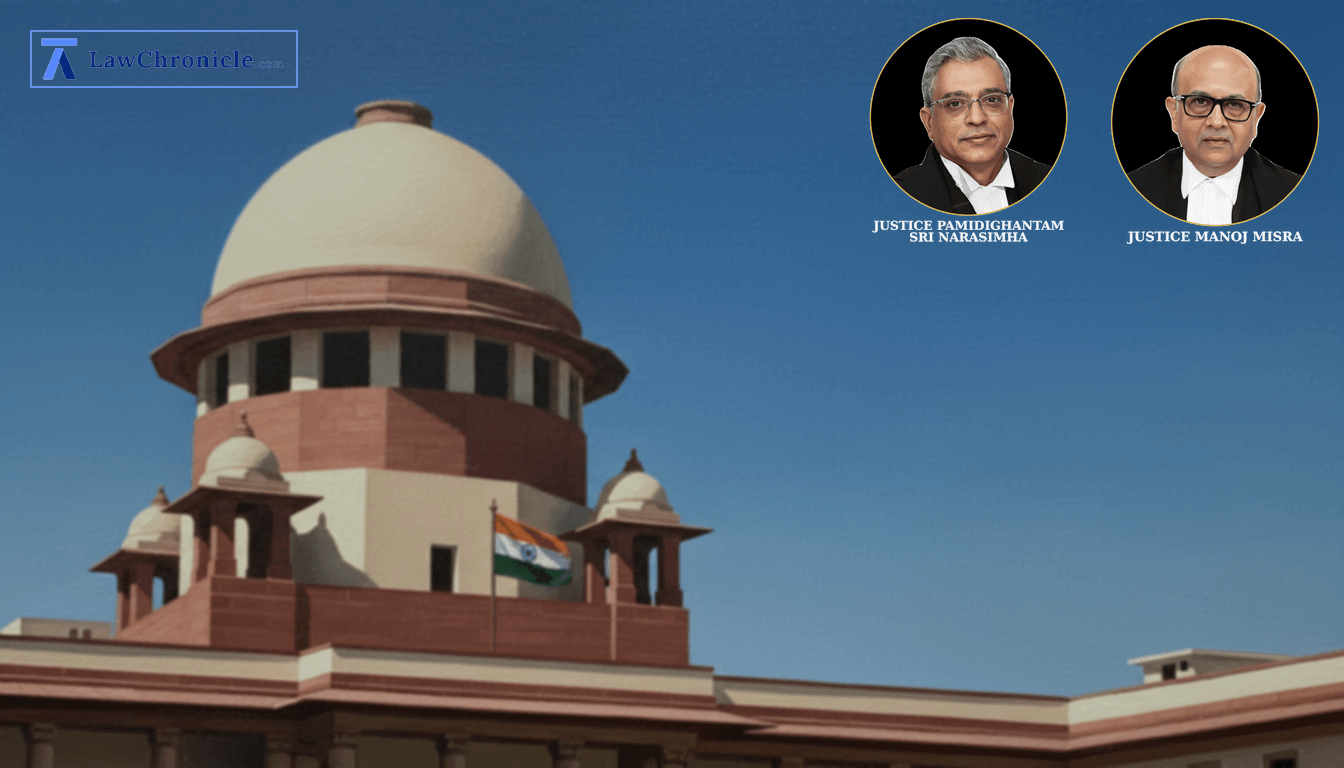
A bench of Justice Pamidighantam Sri Narasimha and Justice Manoj Misra heard an appeal against the National Consumer Disputes Redressal Commission’s order dismissing a consumer complaint by a company that alleged its Rs.9 crore fixed deposit receipt (FDR) with a bank was fraudulently hypothecated to obtain an overdraft. The central questions were whether a corporate depositor could be a “consumer” under Section 2(1)(d) of the Consumer Protection Act, 1986 and whether the nature of the allegations took the dispute outside the Commission’s summary jurisdiction.
The Court held that while a person or body corporate could be a consumer in relation to banking services, whether a transaction was “for a commercial purpose” depended on its dominant objective and required fact-specific inquiry. The appeal was dismissed because the complaint raised serious disputed questions of fact—including whether the FDR was pledged and whether documents were forged—that could not be resolved in summary consumer proceedings. The Court noted that “merely because a fixed deposit receipt earns interest does not mean that the banking service availed is for a commercial purpose.” The Court, in its reasoning, observed: “19. To summarize from the above discussion, though a straightjacket formula cannot be adopted in every case, the following broad principles can be culled out for determining whether an activity or transaction is ‘for a commercial purpose.’ 19.1 The question of whether a transaction is for a commercial purpose would depend upon the facts and circumstances of each case. However, ordinarily, ‘commercial purpose’ is understood to include manufacturing/industrial activity or business-to-business transactions between commercial entities. 19.2 The purchase of the good or service should have a close and direct nexus with a profit-generating activity. 19.3 The identity of the person making the purchase or the value of the transaction is not conclusive to the question of whether it is for a commercial purpose. It has to be seen whether the dominant intention or dominant purpose for the transaction was to facilitate some kind of profit generation for the purchaser and/or their beneficiary. 19.4 If it is found that the dominant purpose behind purchasing the good or service was for the personal use and consumption of the purchaser and/or their beneficiary, or is otherwise not linked to any commercial activity, the question of whether such a purchase was for the purpose of ‘generating livelihood by means of self-employment’ need not be looked into.” The Court also observed that “the complaint as framed is not maintainable.”
Background
The appellant, Sant Rohidas Leather Industries and Charmakar Development Corporation Ltd., deposited Rs.9,00,00,000 as an FDR with Vijaya Bank in February–March 2014. Interest was credited but the company later received communication that an overdraft of Rs.8.10 crores had been sanctioned against the FDR. The appellant alleged fraudulent sanction of the overdraft and lodged a complaint with the Economic Offences Wing and approached the Bank to reverse entries; the Bank adjusted outstanding dues against the FDR maturity value and remitted the balance. The appellant filed a consumer complaint before the NCDRC seeking recovery of the full deposit with interest and compensation. NCDRC dismissed the complaint principally on the ground that the company had availed banking services for a “commercial purpose” and therefore was not a “consumer” under Section 2(1)(d).
On appeal, the Supreme Court examined statutory definitions and precedents including Lilavati Kirtilal Mehta Medical Trust v. Unique Shanti Developers 2019 CaseBase(SC) 2033, National Insurance Co. v. Harsolia Motors 2023 CaseBase(SC) 50, and more recent decisions addressing the “commercial purpose” exception and the burden of proof. The Court reaffirmed that the identity of the purchaser (individual or corporate) and the value of the transaction were not determinative; the dominant intention and the direct nexus to profit-generation were decisive. It held that ordinary deposits that earn interest are not ipso facto commercial, but deposits made to leverage credit facilities for augmenting business would have a direct nexus with revenue generation and could be commercial.
Applying these principles, the Court found a triable factual dispute: the Bank asserted the original FDR was with it and had been pledged to secure an overdraft, while the appellant alleged forgery and unauthorised hypothecation. Given the complexity and overlap with alleged criminal/tortious conduct, the Court held such questions could not be resolved in summary consumer proceedings and thus upheld dismissal of the complaint by NCDRC, while noting the reasons recorded below were not entirely accurate. The dismissal did not bar the appellant from pursuing appropriate civil or criminal remedies. There was no order as to costs; pending applications stood disposed.
Case Details:
Case No.: CIVIL APPEAL NO.4841 OF 2023
NeutralCitation: 2026 INSC 264
Case Title: SANT ROHIDAS LEATHER INDUSTRIES AND CHARMAKAR DEVELOPMENT CORPORATION LTD. v. VIJAYA BANK
Source: 2026 CaseBase(SC) 222
Similar Articles




 Breaking News


