


Director's Liability Under NI Act Requires Specific Role Averments: Calcutta HC
 Copy Link
 Share
 Save
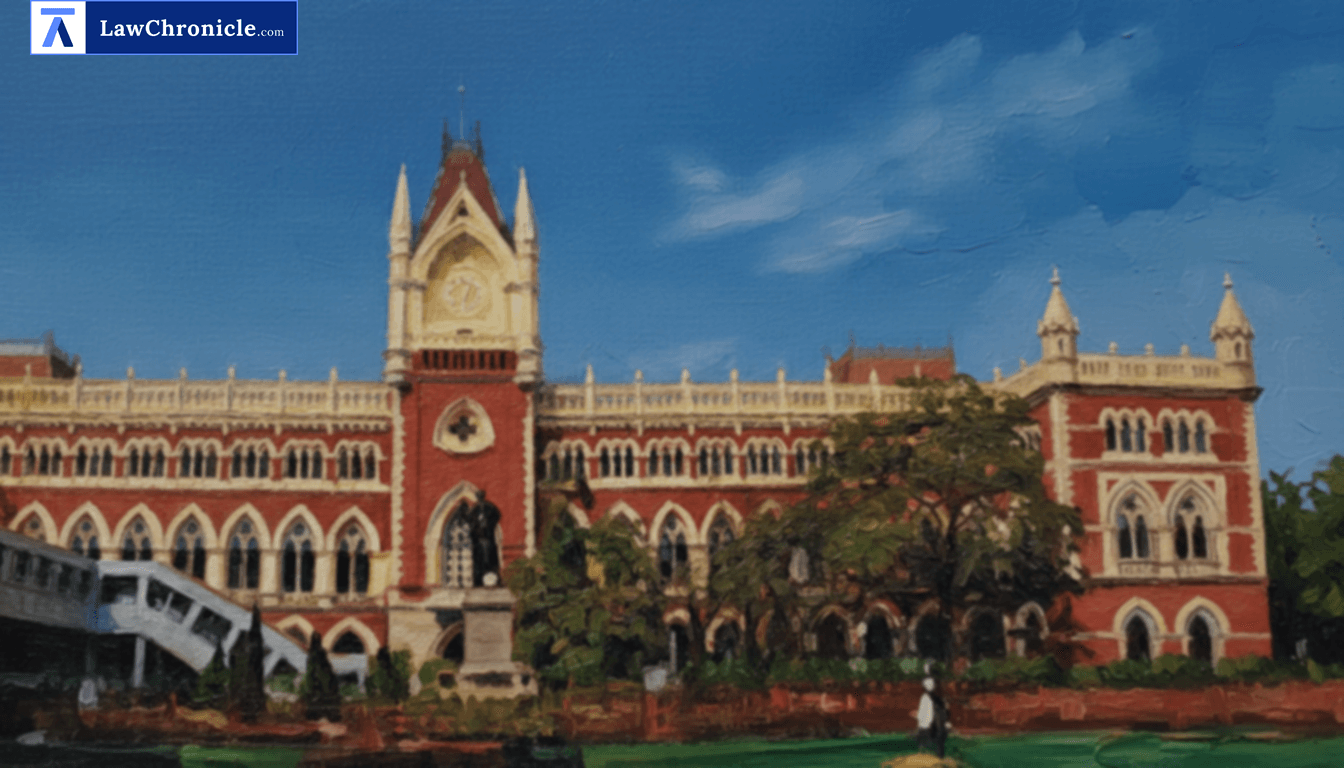
Vague and generic statements in a complaint are insufficient to fasten vicarious criminal liability on corporate directors without concrete factual allegations demonstrating their active involvement in cheque issuance and operations.
Single-judge Justice Shampa Dutt (Paul) quashed criminal proceedings for cheque dishonour against a company director, emphasizing that mere official designation cannot automatically expose an individual to penal consequences under the Negotiable Instruments Act, 1881.
Key Takeaways
- Strict Construction of Vicarious Liability: Vicarious criminal liability under Section 141 of the Negotiable Instruments Act, 1881 is a statutory exception and must be strictly interpreted.
- Cumulative Statutory Mandatory Requirements: Being "in charge of" and "responsible to the company for the conduct of business" are cumulative requirements that must both be explicitly pleaded.
- Pleading Specific Roles is Mandatory: A general statement that a director manages day-to-day affairs, without attributing specific acts or identifying the cheque signatory, makes prosecution legally unsustainable.
- Shielding Non-Active Directors: Corporate executives cannot be roped into frivolous criminal litigation solely based on their formal designation.
Court's Rationale on Corporate Vicarious Liability
Summarizing the statutory mechanism under Section 138 and Section 141 of the Negotiable Instruments Act, 1881, the High Court observed that to fasten vicarious liability, the complaint must clearly specify how and in what manner the arraigned director was in charge of and responsible for the company's business at the material time.
The Court directions:
"Copy of this judgment be sent to the learned Trial Court for necessary compliance."
The Court, in its reasoning, observed:
"For launching a prosecution against the Directors of a Company under Section 138 read with Section 141 of the NI Act, there has to be a specific allegation in the complaint in regard to the part played by them in the transaction in question. It is also laid down that the allegations has to be clear and unambiguous showing that the Directors were in charge of and responsible for the business of the Company. This was done to discourage frivolous litigation and to prevent abuse of the process of law."
Addressing the lack of specific pleadings, the Court added:
"In absence of the specific role qua the participation of a director in the alleged transaction with the complainant, no director can be implicated by virtue of Section 141 of the NI Act."
Ratio
To initiate prosecution against a director under Section 141 of the Negotiable Instruments Act, 1881, the complaint must contain specific, clear, and unambiguous factual averments establishing that the director was cumulatively in charge of and responsible to the company for the conduct of its business at the time of the offence. Generic assertions of managing daily affairs or holding a directorship without identifying specific overt acts or cheque signatures fail to fulfill statutory requirements.
Background
The case arose out of a revisional application filed under Section 482 of the Code of Criminal Procedure, 1973 seeking to quash complaint proceedings pending before the Learned Metropolitan Magistrate, 11th Court, Calcutta. The complainant had initiated criminal action against Credforce Asia Limited and its directors under Sections 138 and 141 of the Negotiable Instruments Act, 1881 following the dishonour of a cheque.
The petitioner, a director in the accused company, contended that he was arraigned solely due to his designation. The complaint contained no specific allegations detailing his participation in the underlying transaction, his role in authorizing or issuing the cheque, or his responsibility for its dishonour. It was argued that the statutory conditions under Section 141(1) were conjunctive and required precise factual pleadings.
Evaluating the precedents, the High Court noted that Ashok Shewakramani & Ors. Vs. State of Andhra Pradesh & Anr. ( "(2023) 8 SCC 473": 2023 CaseBase(SC) 1023), Siby Thomas V. Somany Ceramics Limited, and Rahul Tantia V. State of West Bengal settled the principle that mere designation as a director does not automatically make one liable under Section 141 of the Negotiable Instruments Act, 1881. The Court cited Pawan Kumar Goel v. State of U.P & Anr. ( "2022 (16) SCALE": 2022 CaseBase(SC) 109) and N. Harihara Krishnan vs. J. Thomas ( "(2018) 13 SCC 663": 2017 CaseBase(SC) 1063) to emphasize that taking cognizance under Section 138 requires clear identity and allegations regarding the specific drawer of the cheque.
Further relying on Shaleen Khemani & Ors. Vs. The State of West Bengal & Anr. and Sunil Todi & Ors. V. State of Gujarat & Anr. ( "2021(14) SCALE": 2021 CaseBase(SC) 404), the Court reiterated that vicarious liability cannot be imputed automatically unless the statutory deeming fiction is supported by foundational factual averments. Examining the complaint, the Court found that only general assertions were made against all directors collectively, without even specifying who signed the cheque or sent responses to the demand notice. Consequently, the High Court allowed the revisional application and quashed the proceedings against the petitioner.
Case Details:
Case No.: CRR 2615 of 2024
Neutral Citation: 2026:CHC-AS:1381
Case Title: Sanjeeva Shukla @ Sanjiv Shukla Vs Alok Kumar Chamria HUF
Appearances:
For the Petitioner(s): Mr. Sandipan Ganguly, Sr. Adv., Ms. Priyanka Sarkar
For the Respondent(s): None
Source: 2026 CaseBase(CAL) 2318
Similar Articles



 Breaking News


