Eight-Year Delay Bars Writ Relief For Contractual Dues: Patna High Court
 Copy Link
 Share
 Save
The Patna High Court has slammed the door on stale contractual claims, ruling that the extraordinary jurisdiction under the Constitution cannot be used to resurrect debts that are otherwise barred by the law of limitation. In a stern reminder to indolent litigants, the Court held that while Article 226 has no fixed period of limitation, it cannot be invoked to abrogate the rule of law or assist those who sleep over their rights for nearly a decade.
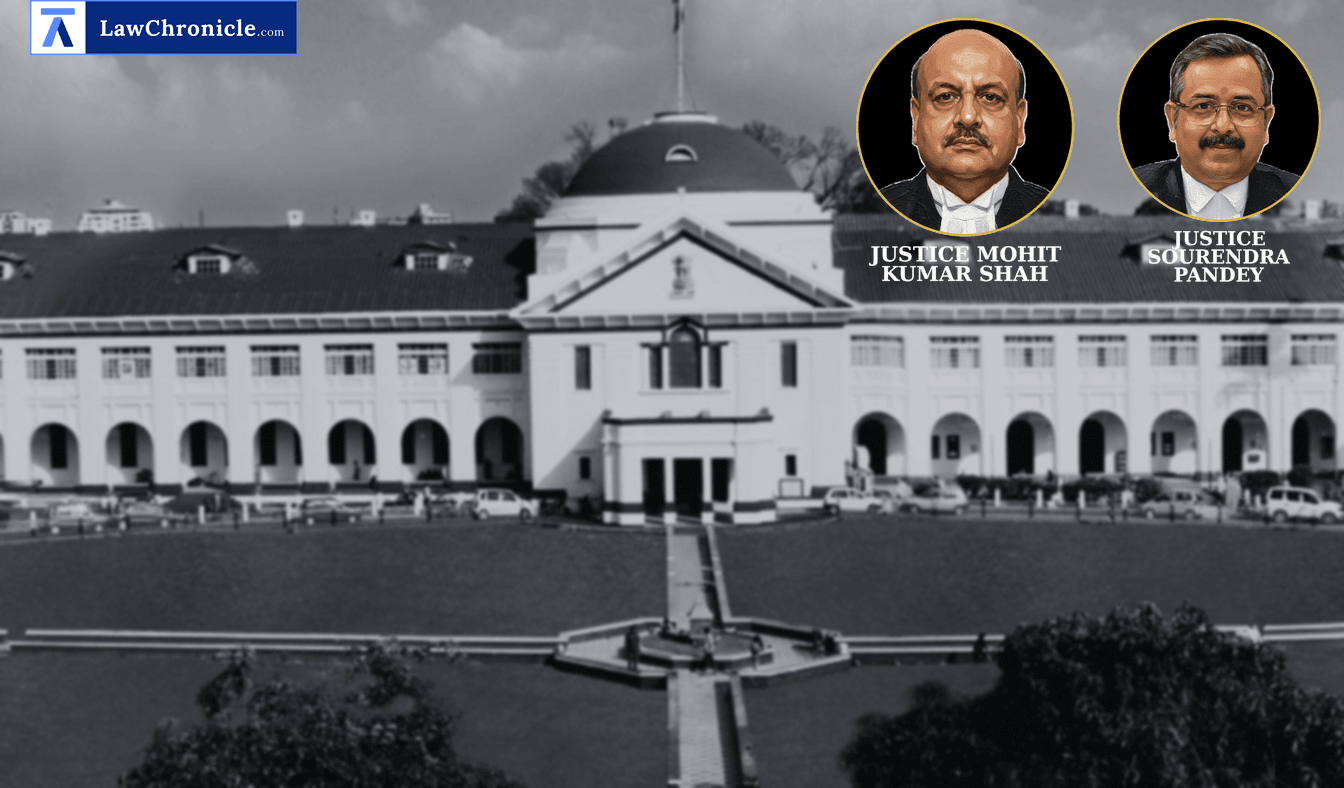
Developing a narrative of judicial discipline, a division bench comprising Justice Mohit Kumar Shah and Justice Sourendra Pandey heard the challenge against a Single Judge's order. The bench examined whether a contractor could seek a writ of mandamus for the recovery of alleged outstanding dues after a lapse of eight years without providing any plausible justification for the delay.
Key Takeaways
Limitation as a Yardstick
While the Limitation Act, 1963 does not strictly apply to writ proceedings, the three-year period for civil suits serves as a reasonable standard to measure 'unreasonable delay' under Article 226.
No Aid to the Indolent
Constitutional Courts are not required to grant indulgence to litigants who approach the court at their own 'leisure or pleasure' after the cause of action has effectively drifted away.
Discretionary Nature of Writ Jurisdiction
High Courts must exercise discretionary power to effectuate the rule of law, not to bypass statutory bars like limitation that would have otherwise applied in a civil suit.
Public Law vs Private Law
In purely contractual matters without a public law element, parties should ideally be relegated to ordinary civil remedies or arbitration rather than invoking extraordinary jurisdiction.
The Court, in its reasoning, observed: "The maximum period fixed by the legislature as the time within which the relief by a suit in a civil court must be brought may ordinarily be taken to be a reasonable standard by which delay in seeking remedy under Art. 226 can be measured. Thus, the Court may consider the delay to be unreasonable even if it is less than the period of limitation prescribed for a civil action for the remedy but where the delay is more than this period, it will always be proper for the Court to hold that it is unreasonable."
The Court further emphasized that the power under Constitution of India, 1950 is conceived to serve the ends of law and not to transgress them. Relying on the principle laid down in Mafatlal Industries Ltd. v. Union of India, the bench noted that High Courts cannot ignore or override the law even while acting under constitutional powers.
Regarding the dismissal of the appeal, the Court has the following directions:
"The writ petition was filed after an inordinate delay of about eight years and this delay having not been appropriately explained, we find that the writ petition was not maintainable on this ground alone... thus the present appeal is sans merit, accordingly the same stands dismissed."
Ratio
Where an aggrieved person approaches the High Court under Article 226 of the Constitution after the expiry of the limitation period prescribed for a civil suit for the same relief, such delay is ordinarily considered unreasonable. The extraordinary writ jurisdiction cannot be exercised to enforce a time-barred debt or to assist a litigant guilty of inordinate delay and laches without satisfactory explanation.
Background
The appellant had participated in an E-Tender in 2014 and was awarded three work orders for construction projects in Rohtas, Bihar. Agreements were entered into with the District Urban Development Agency (DUDA). Although the appellant claimed to have completed the work, and part payments were made in 2015, a significant portion of the dues allegedly remained unpaid. Notably, an FIR had been lodged in 2015 regarding fake tenders involving various contractors and officials, though the appellant claimed the police investigation cleared him of complicity.
The appellant moved the High Court only in 2023. A Single Judge initially dismissed the writ petition as not maintainable, citing the availability of an alternative remedy under the Commercial Courts Act, 2015. On appeal, the Respondents, represented by Senior Counsel Lalit Kishore, argued that the petition was liable to be dismissed on the ground of delay alone, citing State of Madhya Pradesh & Anr. vs. Bhailal Bhai & Others ( "AIR 1964 SC 1006": 1964 CaseBase(SC) 280). They also pointed out that previous similar claims had been relegated to the Arbitration Tribunal under the Bihar Public Works Contract Arbitration Tribunal Act, 2008, as seen in M/s Ankuj Construction vs. The State of Bihar & Ors..
The Court scrutinized several precedents, including Joshi Technologies International Inc. vs. Union of India & Others ( "(2015) 7 SCC 728": 2015 CaseBase(SC) 525) on the scope of Article 226 in contractual matters, and Mrinmoy Maity vs. Chanda Koley & Others ( "(2024) 15 SCC 215": 2024 CaseBase(SC) 114) regarding the doctrine of delay and laches. The bench ultimately found that since the appellant waited eight years well beyond the three-year limit for recovery suits the writ petition was marred by laches and could not be entertained.
Case Details:
Case No.: Letters Patent Appeal No.627 of 2023
Case Title: Binod Kumar Mishra v. The State of Bihar & Others
Appearances:
For the Petitioner(s): Mr. Deo Prakash Singh, Adv.
For the Respondent(s): Mr. Yogendra Prasad Sinha, AAG-7; Mr. Rajeev Kumar Sinha, AC to AAG-7; Mr. Lalit Kishore, Sr. Adv.; Mr. Rabindra Kumar Priyadarshi, Adv.
Source: 2026 CaseBase(PAT) 3968
 Breaking News