

Election Tribunal Becomes Functus Officio After Final Relief: SC
 Copy Link
 Share
Share Save
Save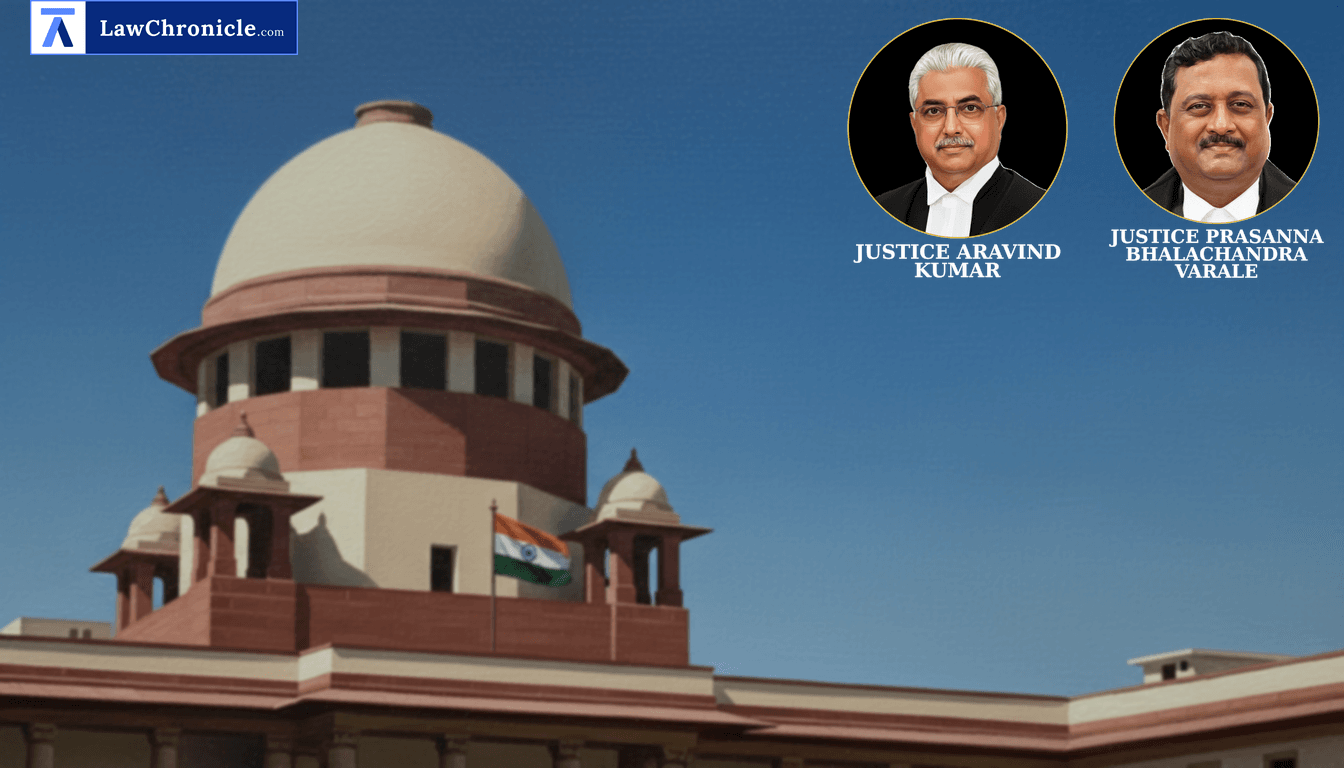
The Supreme Court has clarified the jurisdictional limits of election tribunals, holding that once a Prescribed Authority grants final relief in an election petition, it ceases to have jurisdiction and cannot pass subsequent orders. The ruling came in a dispute concerning the election of a Gram Pradhan, where the court distinguished between interim directions for recounting and final orders that effectively terminate the tribunal's authority.
A bench of Justice Aravind Kumar and Justice Prasanna B. Varale adjudicated upon the appeal challenging an Allahabad High Court decision. The primary legal question centered on whether an order directing the recounting of votes, while simultaneously allowing the election petition, renders the authority functus officio, thereby precluding any further declaration of results.
The Functus Officio Doctrine in Election Disputes
The Court observed that under Section 12C of the Uttar Pradesh Panchayat Raj Act, 1947, the Prescribed Authority possesses exclusive power to set aside election results. However, this power must be exercised within the bounds of procedural law. The bench highlighted that if an authority passes a final order instead of an interim one, it loses the legal capacity to act further in the matter.
The Court, in its reasoning, observed: "...once the Prescribed Authority has passed an order in the nature of a final order, it ceases to have jurisdiction to pass any further order, having become functus officio... the difficulty arising from the passing of a final order and the consequent cessation of jurisdiction is that, even after recounting, the election officers... cannot reassume authority to declare the election results afresh or set aside the earlier results."
Distinction Between Interim and Final Orders
Rationale on Order Dated 05.11.2022
The Bench contrasted the present case with Raj Kumari v. Asha Devi and Ors, noting that in the latter, the order was interim as it fixed a date for recounting and required results to be apprised to the authority. In the present case, the order was framed as a final judgment, leaving no legal room for the subsequent declaration of a new winner on 17.03.2023.
Background:
The dispute arose from the 2021 Three Tier Panchayat Election for the post of Pradhan of Parauli Sughapur Village. Respondent No. 3 was initially declared the winner by a narrow margin of 2 votes. The Appellant challenged this result under Section 12C of the Uttar Pradesh Panchayat Raj Act, 1947, alleging irregularities in the counting process in violation of Rules 104, 105, and 106 of the U.P. Panchayat Election Rules, 1994.
The Sub Divisional Officer (SDO) allowed the petition on 05.11.2022, ordering a recount due to discrepancies between Form 45 and Form 46. While the recount later showed the Appellant leading by 12 votes, the High Court of Allahabad set aside the SDO's order. The High Court relied on Parshuram vs. State of U.P and Ors. and Hari Vishnu Kamath v. Syed Ahmad Ishaque and Ors, stating that the SDO became functus officio the moment the election petition was allowed. The Supreme Court upheld this view, citing Hari Vishnu Kamath v. Syed Ahmad Ishaque and Ors and Parasuram vs. State of U.P. and others to emphasize that constitutional challenges to elections under Article 243-O of the Constitution of India, 1950 must follow strict statutory finality. Consequently, the appeal was dismissed.
Case Details:
Case No.: CIVIL APPEAL NO.7427 OF 2026
NeutralCitation: 2026 INSC 471
Case Title: URMILA DEVI VERSUS THE STATE OF UTTAR PRADESH & ORS.
Appearances:
For the Petitioner(s): Mr. Ashok Anand, Advocate
For the Respondent(s): Mr. Shaurya Sahay, Advocate; Mr. Aman Jaiswal, Advocate; Mr. Kaushal Yadav, Advocate; Mr. Nandlal Kumar Mishra, Advocate
Source: 2026 CaseBase(SC) 403
 Breaking News