


Electricity Consumption Alone Cannot Prove Clandestine Production: Karnataka HC
 Copy Link
 Share
 Save
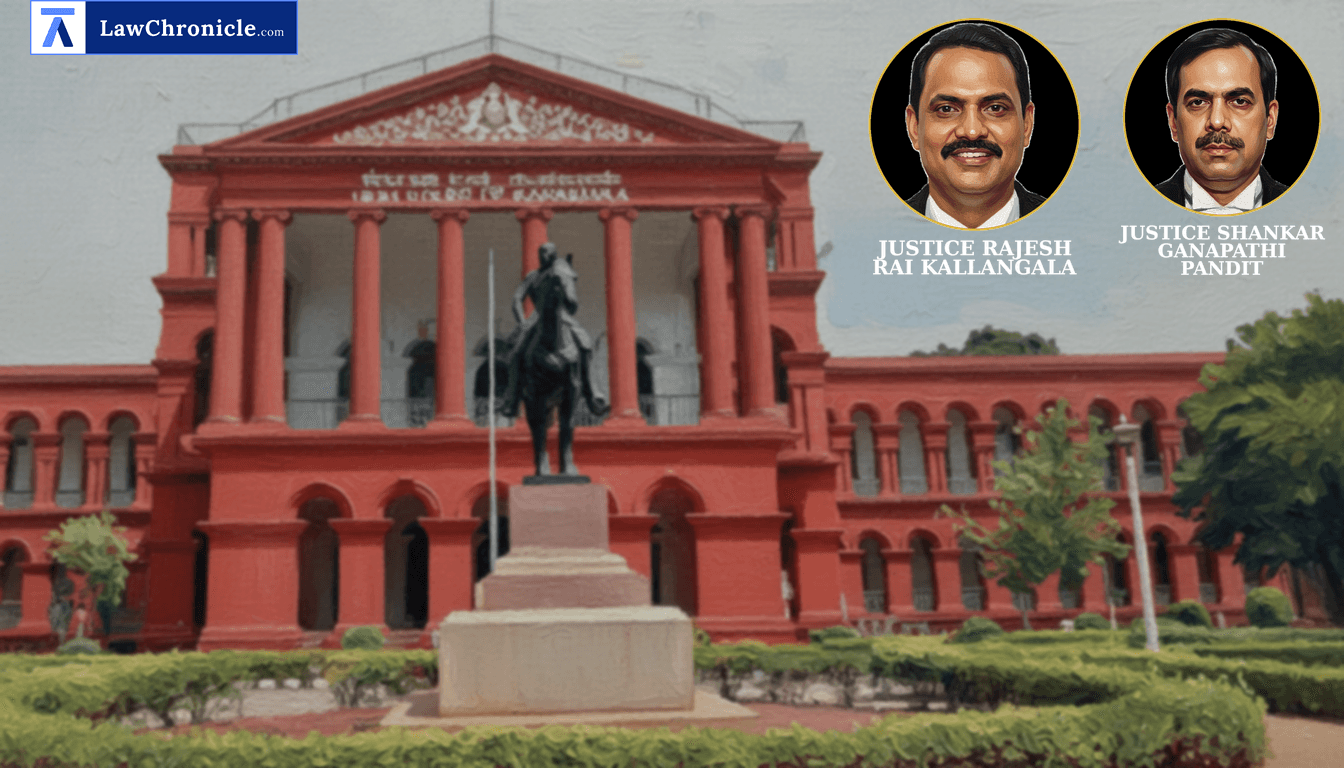
The Karnataka High Court has affirmed that the Revenue Department cannot establish the clandestine manufacture and removal of goods solely on the basis of electricity consumption norms without corroborative evidence. The bench, comprising Hon'ble Mr. Justice S.G. Pandit and Hon'ble Mr. Justice Rajesh Rai K, emphasized that power consumption varies due to multiple operational factors and cannot serve as the solitary basis for a massive tax demand.
Court Rejects Power Consumption as Sole Determinant of Clandestine Activity
The Karnataka High Court dismissed the Revenue's appeal against the Final Order Nos. 176 to 180/2011 passed by the CESTAT, Bangalore, which had set aside the demand of duty and penalties imposed by the Commissioner of Central Excise. The Bench observed that while the department relied heavily on expert opinions regarding electricity consumption to allege under-reported production, such estimations lacked a scientific or technical foundation specifically tailored to the assessee's machinery and furnace conditions.
Inconsistency in Expert Testimony and Evidentiary Gaps
The Court, in its reasoning, observed: "...the power consumption was determined on the basis of reasonable estimation without any scientific backing or technical literature prescribing standard norms, and without proper adjustment for variations in raw material, furnace condition, and other relevant operational factors affecting output. These aspects of the matter have been elaborately considered and dealt with by the Tribunal... there is no reliable evidence on record to establish procurement of raw materials outside the books of account, clandestine clearance of finished goods without payment of duty, or receipt of sale proceeds therefrom."
Background:
The dispute originated from search operations conducted in 2004 by the Directorate General of Central Excise Intelligence at the premises of M/s. Saravana Alloy Steel Private Limited (SAPL). The Revenue alleged that SAPL was evading duty by clandestinely removing steel ingots and CTD bars. To support this, they relied on reports from a Chartered Engineer and the Nucleus Group, asserting that the actual power consumed was substantially higher than the recorded production accounted for under the Central Excise Act, 1944.
The Commissioner had initially confirmed a duty demand exceeding Rs. 8 crore and imposed equal penalties under Section 11AC of the Central Excise Act, 1944 and Rule 25 of the Central Excise (No.2) Rules, 2001 / Central Excise Rules, 2002. However, the Tribunal noted that the expert witness, Sri G.S. Hegde, admitted during cross-examination that no trial production was conducted and no standard technical literature supported his norms. Furthermore, alleged corroborative evidence, such as statements from scrap dealers and 'kaccha slips', was either retracted or found to be vague.
Following a challenge by the Revenue, the matter previously reached the Supreme Court, which, exercising its power under Article 142 of the Constitution of India, 1950, restored the appeal to the High Court for a decision on merits. After reviewing the evidence, the High Court concluded that the Revenue failed to provide tangible proof of clandestine activity, such as the actual procurement of unaccounted raw materials or the flow of illicit funds, thereby upholding the Tribunal’s decision to set aside the demand.
Case Details:
Case No.: CENTRAL EXCISE APPEAL NO. 34 OF 2011
NeutralCitation: 2014:KHC:11456-DB
Case Title: COMMISSIONER OF CENTRAL EXCISE vs. M/S. SARAVANA ALLOY STEEL PRIVATE LIMITED
Appearances:
For the Petitioner(s): SRI. ARAVIND V CHAVAN, ADVOCATE
For the Respondent(s): SMT. VANI H, ADVOCATE
Source: 2026 CaseBase(KAR) 209
 Breaking News


