


Electricity Theft | Supreme Court Clarifies Procedure For Power Restoration
 Copy Link
 Share
 Save
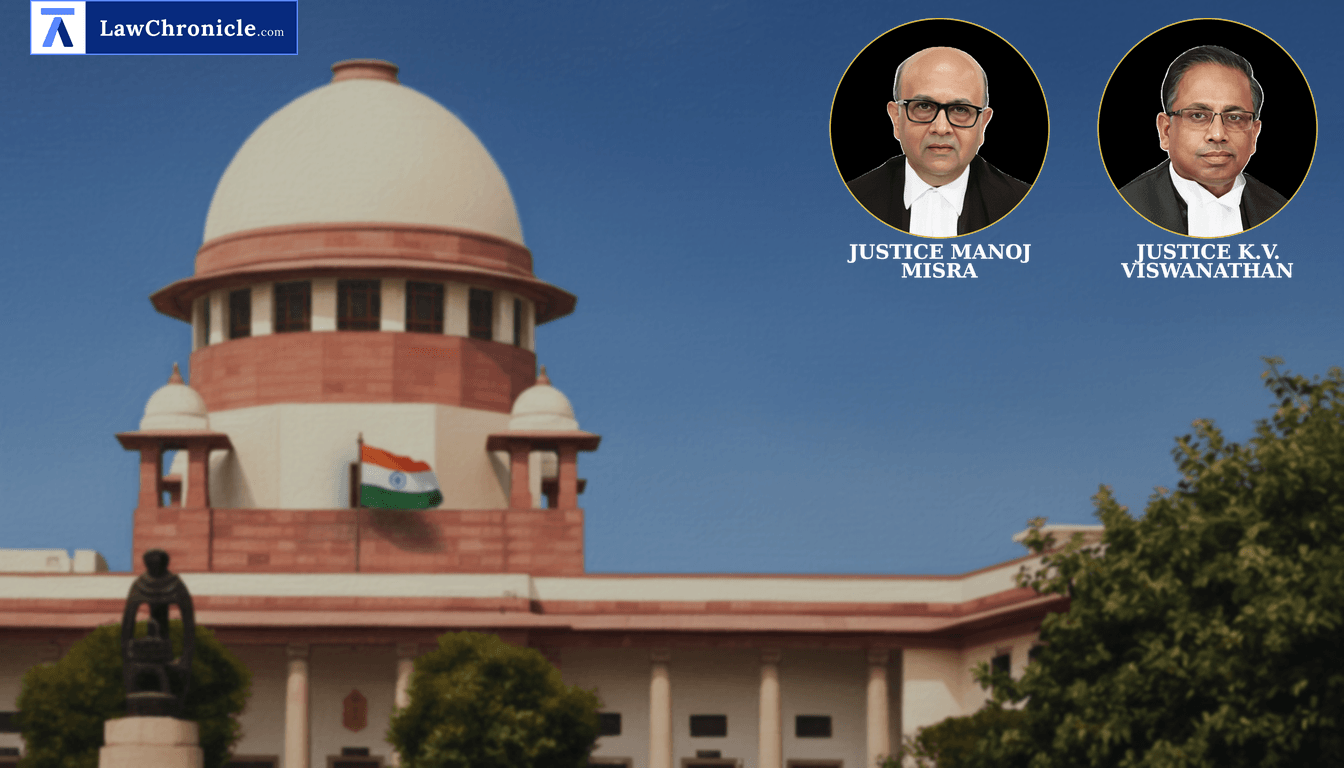
In a crucial clarification resolving the interplay between administrative assessments and judicial determination of civil liability, the Supreme Court has ruled that power supply disconnected over electricity theft allegations can be restored using assessment procedures laid down under Section 126 of the Electricity Act, 2003. The Apex Court held that while administrative assessments and appellate decisions under Section 127 are final for the limited purpose of restoring power supply, they remain strictly subject to the final determination of civil liability by the Special Court under Section 154(5) of the Act.
A bench comprising Justice Manoj Misra and Justice K.V. Viswanathan adjudicated appeals filed by distribution licensees challenging High Court orders that allowed consumers accused of electricity theft to file objections against supplementary bills and seek restoration of supply on 50 percent deposit.
Key Takeaways
- Uniform Procedure for Power Restoration: In the absence of a distinct assessment mechanism under the Gujarat Electricity Regulatory Commission (Electricity Supply Code and Related Matters) Regulations, 2015 for theft cases, the assessment formula and provisional-to-final procedure under Section 126 of the Electricity Act, 2003 applies for determining the amount required to restore disconnected power supply.
- Dual Nature of Appellate Finality: The finality of an appellate order passed under Section 127 of the Electricity Act, 2003 is restricted exclusively to the purpose of power restoration and does not oust or curtail the jurisdiction of the Special Court to adjudicate civil liability.
- Primacy of Special Court Determination: Civil liability determined by the Special Court under Section 154(5) of the Electricity Act, 2003 overrides administrative assessments; any excess amount paid by the consumer must be refunded with interest under Section 154(6).
- Constitutional Discretion of High Courts: High Courts exercising jurisdiction under Article 226 of the Constitution of India may, in cases of prima facie arbitrary provisional assessments, order power restoration upon a deposit of not less than 50 percent of the demanded bill amount.
Court Observations and Directions
The Supreme Court analyzed the statutory framework of the Electricity Act, 2003 alongside the Electricity (Removal of Difficulties) Order, 2005 and the Gujarat Electricity Regulatory Commission (Electricity Supply Code and Related Matters) Regulations, 2015. The Bench observed that theft under Section 135 inherently encompasses unauthorized use of electricity, making the assessment procedure under Section 126 logically applicable for restoration of supply under the third proviso to Section 135(1A).
Reaffirming the legal principles laid down in West Bengal State Electricity Distribution Company Ltd. and Ors. v. M/s. Orion Metal Pvt. Ltd. & Anr. ( "(2020) 18 SCC 588": 2019 CaseBase(SC) 683) and noting the context of Southern Electricity Supply Company of Orissa Limited (SOUTHCO) & Anr. v. Sri Seetaram Rice Mill, the Court, in its reasoning, observed: "Thus, the legal position emerging from the aforesaid discussion is that the benefit of the third proviso to sub-section (1A) of Section 135 qua restoration of the supply of electricity disconnected under sub-section (1A) of Section 135, in the absence of any specific provision in the Supply Code notified under Section 181(2)(x) read with Section 50 of the 2003 Act, is available on deposit or payment of the amount assessed in accordance with the provisions of Section 126 of the 2003 Act read with the provisions of the Supply Code, as are applicable to cases of unauthorized use of electricity. However, since an appeal is considered as a continuation of the original proceeding, the amount so assessed under Section 126 is subject to the order in an appeal under Section 127. In consequence, the assessed amount determined in the appeal, if any, is final for the limited purpose of seeking restoration of the supply of electricity as contemplated under the third proviso to sub-section (1A) of Section 135. However, in cases of theft where a criminal complaint is filed, the determination under Sections 126 and 127, though final for the purpose of seeking restoration of the supply of electricity under the third proviso to sub-section (1A) of Section 135, is subject to the determination of the civil liability by the Special Court under sub-section (5) of Section 154 of the 2003 Act."
Procedure to Follow in Electricity Theft Cases
The Supreme Court has issued the following directions:
"(i) In cases of electricity theft, for seeking restoration of the supply of electricity disconnected under sub-section (1A) of Section 135 of the 2003 Act, the ‘assessed amount’ required to be deposited or paid under the third proviso to sub-section (1A) of Section 135 by the person concerned, in the absence of any specific procedure prescribed under the Supply Code notified under Section 181(2)(x) read with Section 50 of the 2003 Act, is to be determined by adopting the same procedure as is for assessing the electricity charges payable by a person benefiting by the unauthorized use of electricity.
(ii) The amount so assessed is subject to the determination in an appeal, if any, filed under Section 127 of the 2003 Act. However, in cases of theft, the determination by the appellate authority is final for the limited purpose of seeking restoration of the supply of electricity in terms of the third proviso to sub-section (1A) of Section 135 of the 2003 Act. Importantly, where a criminal complaint is filed, such determination is not binding on the Special Court which is empowered to determine the civil liability of the person concerned under sub-section (5) of Section 154 of the 2003 Act.
(iii) If the amount assessed and deposited under the third proviso to sub-section (1A) of Section 135 exceeds the civil liability determined by the Special Court under sub-section (5) of Section 154, the excess amount is to be refunded in terms envisaged under sub-section (6) of Section 154."
Ratio
In cases of electricity theft under Section 135 of the Electricity Act, 2003, the assessment of the amount required for restoration of disconnected electricity supply under the third proviso to Section 135(1A) must follow the procedure outlined in Section 126 of the Act and the relevant Gujarat Electricity Regulatory Commission (Electricity Supply Code and Related Matters) Regulations, 2015. While administrative finality under Section 127 applies solely to the restoration of supply, it does not preclude or bind the Special Court from independently determining civil liability under Section 154(5) of the Act.
Background
The dispute stemmed from inspections carried out by distribution licensees in Gujarat, which detected alleged theft of electricity under Section 135 of the Electricity Act, 2003. Supplementary bills demanding sums towards energy consumption and compounding charges under Section 152 of the Electricity Act, 2003 read with the Code of Criminal Procedure, 1973 were issued to the respondents, along with disconnection of supply.
The consumers filed writ petitions under Article 226 of the Constitution of India before the High Court of Gujarat. Single Judge benches directed reconnection upon deposit of 50 percent of the demanded amounts. On appeal by the distribution licensees, the Division Bench allowed the consumers to submit objections to the Executive Engineer and avail remedy under Section 127 of the Electricity Act, 2003. The licensees appealed to the Supreme Court, contending that Section 126 and Section 127 remedies do not apply to theft cases under Section 135, as civil liability is exclusively determinable by the Special Court under Section 154 of the Electricity Act, 2003.
Dismissing the appeals with clarification, the Supreme Court upheld the High Court's interim directions while emphasizing that administrative assessments remain subject to final determination by the Special Court.
Case Details:
Case No.: Civil Appeal No. of 2026 (Arising out of SLP (C) No. 17868/2024) with Civil Appeal No. of 2026 (Arising out of SLP (C) No. 8778/2025)
Neutral Citation: 2026 INSC 1157
Case Title: Dakshin Gujarat Vij Company Limited & Anr. v. Vaibhav Metal Crusher WITH Paschim Gujarat Vij Company Limited & Anr. v. Jamanbhai Nanajibhai Bhuva
Appearances:
For the Petitioner(s): Shri Ranjit Kumar, Senior Advocate
For the Respondent(s): Shri Raghenth Basant, Advocate
Source: 2026 CaseBase(SC) 9062
 Breaking News


