Employer Cannot Use Probationary Discharge To Bypass Misconduct Enquiry: SC
 Copy Link
 Share
Share Save
Save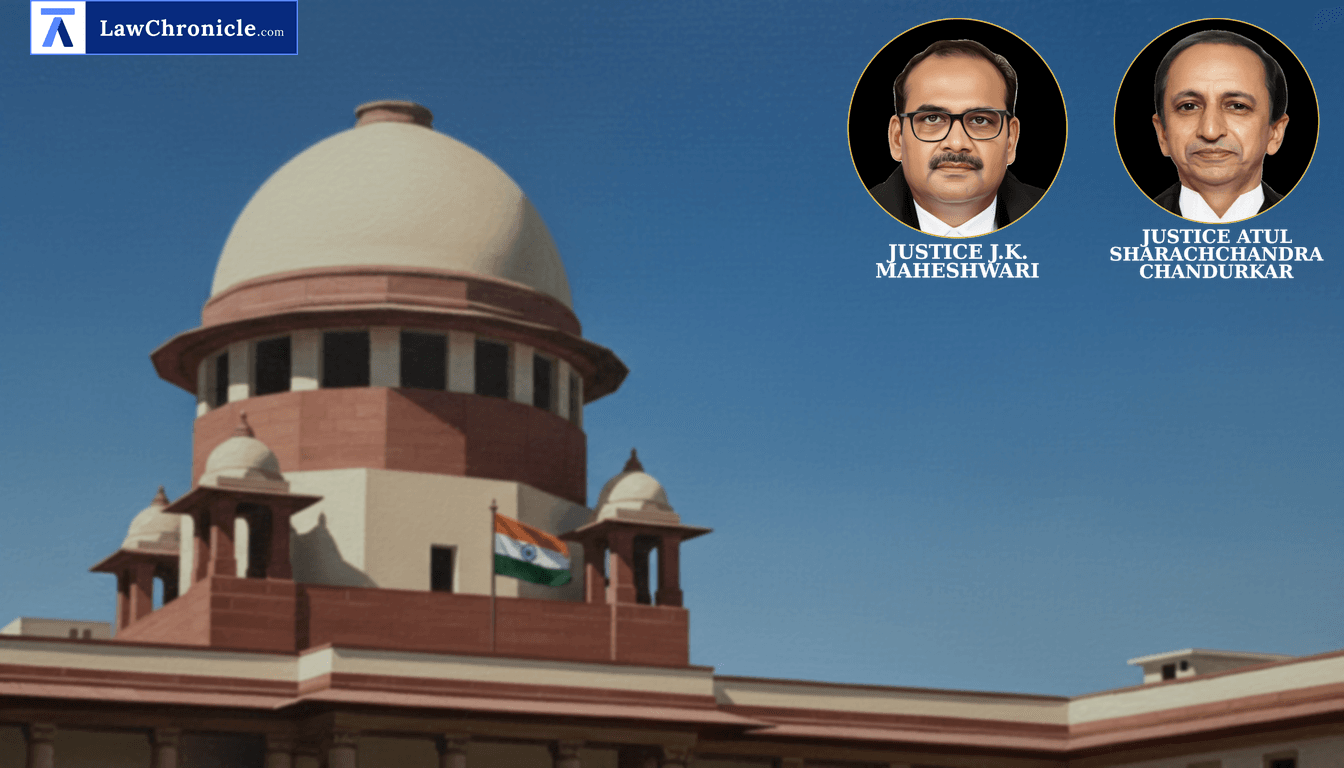
The Supreme Court ruled that while employers have the discretion to terminate a probationer’s services for unsuitability, they cannot use the cloak of ‘unsatisfactory performance’ to bypass formal disciplinary proceedings when the actual foundation of the termination is alleged misconduct.
In a decision delivered by a bench comprising Justice J.K. Maheshwari and Justice Atul S. Chandurkar, the Court dismissed an appeal by the Bank of Baroda (substituted for the erstwhile Vijaya Bank). The Bench emphasized that the subjective satisfaction of an authority to terminate a probationer must be rooted in objective facts and must not suffer from the vice of arbitrariness.
The Distinction Between Motive and Foundation
The Court observed that a distinction must be drawn between a routine non-stigmatic termination for unsuitability and a disguised punitive termination. If an employer's decision is founded on allegations of misconduct rather than a genuine assessment of work, the termination is stigmatic and requires compliance with due process. The Court, in its reasoning, observed: "While the Regulation appears to vest the Competent Authority with the discretion to terminate a probationer based on its satisfaction, it remains strictly bound by the established principles of administrative law... withholding constructive or adverse feedback deprives the concerned officer of a meaningful opportunity for improvement."
Invalidity of Uncommunicated Performance Memos
The Bank had relied on three internal memos to justify the termination of the respondent, an Assistant General Manager on probation. However, the Court found that these memos lacked evidentiary value. One memo was never communicated to the employee, and another was contradicted by a commendation letter from the Government of India praising the employee’s work on the OLTAS system. The Court noted that relying on uncommunicated adverse remarks violates the principles of natural justice.
Court's Rationale on Punitive Termination
Referring to precedents like Dipti Prakash Banerjee vs. Satyendra Nath Bose National Centre for Basis Sciences, Calcutta and Others ( "(1999) 3 SCC 60": 1999 CaseBase(SC) 239) and Mathew P. Thomas vs. Kerala State Civil Supply Corporation Ltd. & Ors., the Court noted that the sequence of events suspension for alleged document theft followed by two probation extensions without an inquiry demonstrated a "calculated intent" to orchestrate a pretextual termination. The Court held that the alleged misconduct was both the motive and the foundation for the discharge, rendering the invocation of Section 16(3)(a) of the Vijaya Bank (Officers’) Regulations, 1982 as a mere facade.
Directions Issued by the Court
The Court has the following directions:
"direct that Respondent No. 1 shall be entitled to 50% backwages from the date of his termination up to the date of his superannuation including all consequential benefits notionally. Accordingly, all benefits as directed, be settled within a period of three months."
Background:
The dispute began in 2005 when the respondent, an AGM (Networking) at Vijaya Bank, was suspended following allegations that he tried to unauthorizedly remove confidential tender documents. Although the suspension was revoked, his probation was extended twice. On November 5, 2005, his services were terminated citing "unsatisfactory performance" under the Vijaya Bank (Officers’) Regulations, 1982. The Respondent challenged this before the Calcutta High Court. A Single Judge quashed the termination, finding it based on irrelevant considerations. This was upheld by the Division Bench, leading the Bank to appeal to the Supreme Court. The Apex Court affirmed the High Court's findings, concluding that the Bank used the Vijaya Bank (Officers’) Regulations, 1982 to avoid a major penalty inquiry advised by the Central Vigilance Commission.
Case Details:
Case No.: CIVIL APPEAL NO. 4814 OF 2017
NeutralCitation: 2026 INSC 589
Case Title: GENERAL MANAGER, BANK OF BARODA AND OTHERS VERSUS ASHOK KUMAR SINGH AND OTHERS
Appearances:
For the Petitioner(s): Mr. Vikramjit Banerjee, Additional Solicitor General
For the Respondent(s): Mr. P.S. Patwalia, Senior Counsel
Source: 2026 CaseBase(SC) 503
 Breaking News