Enhanced Pension Payable Only On Completing Specified Age, Not Entering It: Patna HC
 Copy Link
 Share
Share Save
Save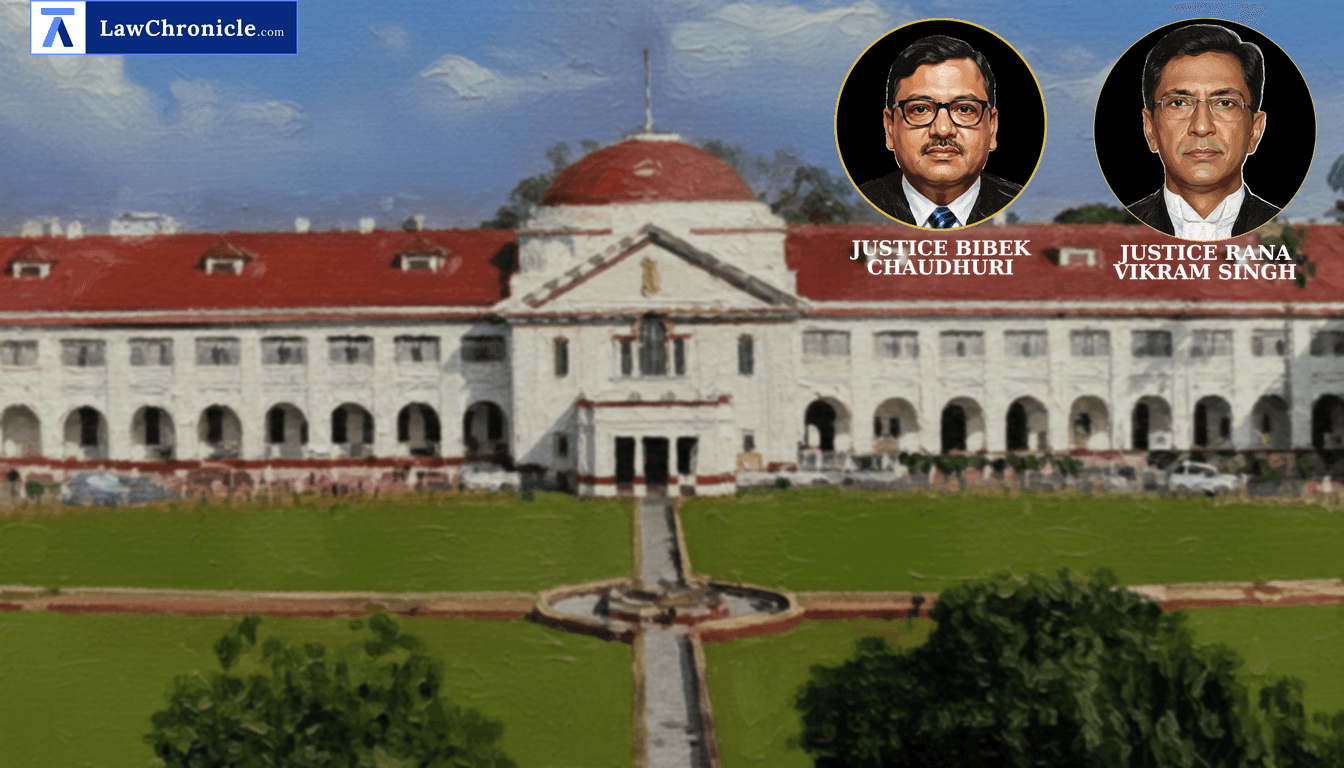
In a crucial clarification on pensionary benefits, the Patna High Court ruled that additional quantum of pension for elderly retirees becomes payable only upon completing the specified age of 80 or 85 years, rather than from the commencement of that year.
A Division Bench comprising Justice Bibek Chaudhuri and Justice Rana Vikram Singh set aside a Single Judge order which had previously directed the State of Bihar to release enhanced pensionary benefits from the beginning of the 80th and 85th years of age.
Key Takeaways
- Strict Age Computation: Pensioners become eligible for additional age-related quantum only after completing 80 or 85 full years of age.
- No Automatic Pre-Entitlement: Entering the 80th or 85th year (completion of 79 or 84 years) does not trigger additional financial benefits under state pension rules.
- Clarification on Precedents: Dismissal of a Special Leave Petition by a non-speaking order does not constitute binding law under Constitution of India, 1950.
- Administrative Uniformity: Clarifies pension disbursement rules for government departments and disbursing banks across the state.
Court Observations and Directions
The High Court observed that when statutory provisions or government resolutions set clear age milestones, the plain and grammatical meaning must prevail without judicial rewriting. Emphasizing the established legal principles for computing age, the Court noted that a person completes a specified age on the day preceding the anniversary of their birth.
The Court, in its reasoning, observed: "The plain language of the Resolution, the statutory illustration of 2021, the clarification that 'years' means completed years, and the consistent administrative understanding all support the view that the additional quantum becomes payable only upon completion of 80 years, 85 years, and so on."
The Court issued the following directions:
"(i) In view of the analysis and reasoning recorded above, we hold that the additional quantum of pension under the relevant Resolution of the State of Bihar and the corresponding Central Office Memorandum becomes payable only upon completion of the specified age of 80 years, 85 years, and so on, and not from the beginning of the 80th year or 85th year of age.
(ii) The common judgment and order, dated 22.12.2023, passed by the learned Single Judge in CWJC No. 5003 of 2022 (and the connected CWJC No. 7400 of 2023), insofar as it relates to the respondent-writ petitioner Nand Kishor Singh, is set aside.
(iii) The writ petition (CWJC No. 5003 of 2022) is dismissed.
(iv) It is declared that the respondent-writ petitioner is entitled to the additional quantum of 20% of basic pension only with effect from 01.01.2017 (upon completion of 80 years of age) and to the additional quantum of 30% of basic pension only with effect from 01.01.2022 (upon completion of 85 years of age). The payments already made by the appellants on the said basis are in accordance with law.
(v) The Pension Sanctioning Authority and the disbursing bank shall continue to release the pension and the additional quantum strictly in accordance with the above declaration.
(vi) The Letters Patent Appeal is allowed in the above terms.
(vii) Let a copy of this judgment be communicated to the Principal Secretary, Finance Department, Government of Bihar; the Accountant General (A&E), Bihar; and the Centralised Pension Processing Centre, State Bank of India, Patna, for necessary compliance and information."
Ratio
The additional quantum of pension sanctioned under age-based benefit slabs becomes legally admissible only upon the full completion of the designated age threshold (e.g., completion of 80 or 85 years) and not upon entry into the corresponding year of age.
Background
The respondent-writ petitioner, a retired officer of the Bihar Education Service born on January 1, 1937, superannuated in 1994. The State granted him an additional 20% basic pension upon completing 80 years on January 1, 2017, and an additional 30% upon completing 85 years on January 1, 2022. Claiming that the benefits should have been extended one year earlier upon his entering the 80th and 85th years respectively, he approached the High Court.
A Single Judge bench allowed his writ petition by relying on the Gauhati High Court decision in Virendra Dutt Gyani v. Union of India. Aggrieved, the State of Bihar preferred a Letters Patent Appeal. Re-evaluating the legal landscape, the Division Bench referred to Nathi Devi v. Radha Devi Gupta ( "(2005) 2 SCC 271": 2004 CaseBase(SC) 243) for principles of literal interpretation and Prabhu Dayal Sesma v. State of Rajasthan ( "(1986) 4 SCC 59": 1986 CaseBase(SC) 577) on computation of age. It distinguished Virendra Dutt Gyani v. Union of India, noting it arose under Section 17B of the High Court Judges (Salaries and Conditions of Service) Act, 1954. Citing Kunhayammed v. State of Kerala ( "(2000) 6 SCC 359": 2000 CaseBase(SC) 4), the Bench held that the Supreme Court's non-speaking dismissal in Union of India v. Virendra Dutt Gyani did not create binding precedent under Constitution of India, 1950. The Division Bench also highlighted the similar stance taken in B.L. Sharma v. Union of India ( "Civil Writ Petition No. 16575/2023": 2021 CaseBase(DEL) 1145) and interim orders in Union of India v. Bishnu Deo Ojha (Retd.), as well as the illustration in the Central Civil Services (Pension) Rules, 2021 and provisions under Section 4 of the Indian Majority Act, 1875. Conclusively, the High Court set aside the Single Judge ruling and dismissed the writ petition.
Case Details:
Case No.: Letters Patent Appeal No.249 of 2024 In CWJC No.5003 of 2022
Case Title: The State of Bihar & Ors. v. Nand Kishor Singh & Ors.
Appearances:
For the Petitioner(s): Mr. Sarvesh Kumar Singh, AAG-13; Mr. Tej Pratap Singh, AC to AAG-13; Mr. Ravi Kumar, AC to AAG-13
For the Respondent(s): Mr. Binod Kumar Labh, Advocate; Mr. Shyama Kant Singh, Advocate; Mr. Sunil Kumar Sing, Advocate; Mr. Amish Kumar, Advocate (for SBI); Mr. K. C. Jha, Advocate (for SBI)
Source: 2026 CaseBase(PAT) 2284
 Breaking News