


Evolution of Industry Definition – Supreme Court Judgments
 Copy Link
 Share
 Save
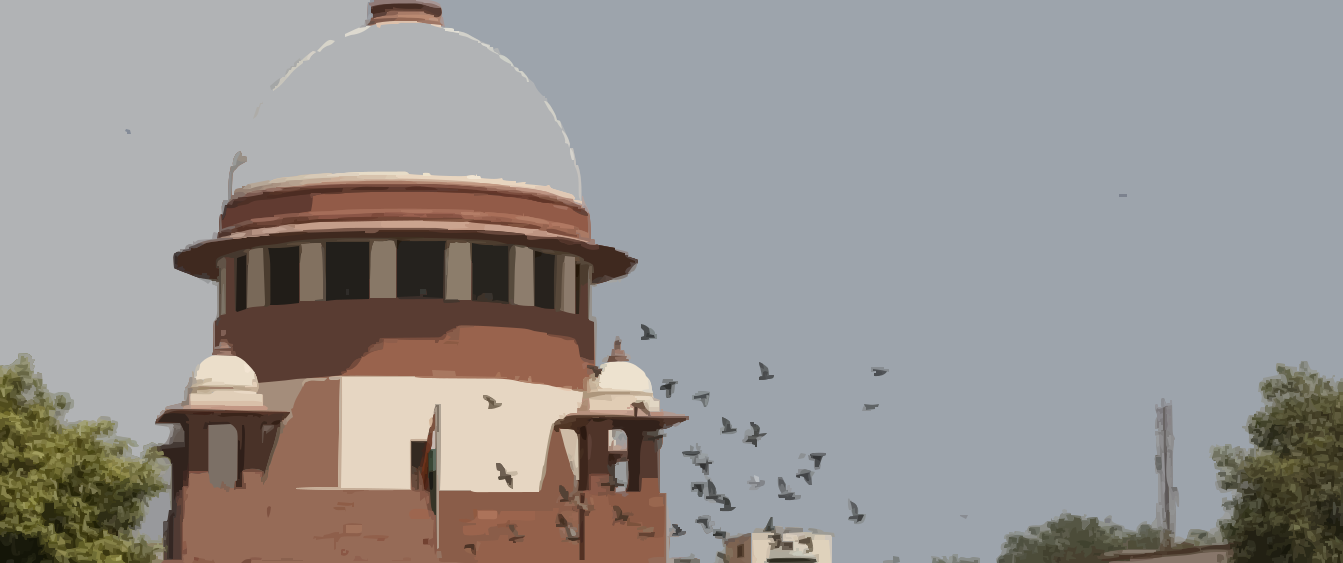
The Supreme Court recently constituted a 9-Judge Bench to consider the correctness of the expansive interpretation of the term “industry”. The Bench shall relook into the definition of industry as per the decision of a 7-Judge Bench in Bangalore Water Supply case (1978 CaseBase(SC) 153). To understand the evolution of industry definition, Supreme Court judgments over the years give a clear glimpse. Here is a compilation of judgments of the Supreme Court Benches discussing the scope of ‘industry’ while deciding various industrial disputes.
But first, it is important to understand how industry has been defined in the Industrial Disputes Act, 1947:
Definition of Industry in Labour Law
Section 2(j) of the 1947 Act defines industry as “any business, trade, undertaking, manufacture or calling of employers and includes any calling, service, employment, handicraft, or industrial occupation or avocation of workmen”. The definition is short and crisp, however, has been discussed and expanded several times, by the Supreme Court of India.
Proposed Definition of Industry
An amendment was introduced to the Industrial Disputes law through Act No. 46 of 1982. Section 2 clause (j) of the Industrial Disputes Act shall stand substituted as follows when clause (c) of section 2 of the Industrial Disputes (Amendment) Act, 1982 (Act 46 of 1982) will come into force:
“(j) “industry” means any systematic activity carried on by co-operation between an employer and his workmen (whether such workmen are employed by such employer directly or by or through any agency, including a contractor) for the production, supply or distribution of goods or services with a view to satisfy human wants or wishes (not being wants or wishes which are merely spiritual or religious in nature), whether or not,—
(i) any capital has been invested for the purpose of carrying on such activity; or
(ii) such activity is carried on with a motive to make any gain or profit, and includes—
(a) any activity of the Dock Labour Board established under section 5A of the Dock Workers (Regulation of Employment) Act, 1948 (9 of 1948);
(b) any activity relating to the promotion of sales or business or both carried on by an establishment, but does not include—
(1) any agricultural operation except where such agricultural operation is carried on in an integrated manner with any other activity (being any such activity as is referred to in the foregoing provisions of this clause) and such other activity is the predominant one.
Explanation:—For the purposes of this sub-clause, “agricultural operation” does not include any activity carried on in a plantation as defined in clause (f) of section 2 of the Plantations Labour Act, 1951 (69 of 1951); or
(2) hospitals or dispensaries; or
(3) educational, scientific, research or training institutions; or
(4) institutions owned or managed by organisations wholly or substantially engaged in any charitable, social or philanthropic service; or
(5) khadi or village industries; or
(6) any activity of the Government relatable to the sovereign functions of the Government including all the activities carried on by the departments of the Central Government dealing with defence research, atomic energy and space; or
(7) any domestic service; or
(8) any activity, being a profession practised by an individual or body of individuals, if the number of persons employed by the individual or body of individuals in relation to such profession is less than ten; or
(9) any activity, being an activity carried on by a co-operative society or a club or any other like body of individuals, if the number of persons employed by the co-operative society, club or other like body of individuals in relation to such activity is less than ten;”
It may be noted that the provision of amending Section 2(j) of the Act has not been enforced till now. Now, let us look at how judicial pronouncements decided the scope of industry in India.
Supreme Court Judgments on Industry Definition
Given below are Supreme Court cases on definition of industry, discussing, expanding, or confining the scope of Industrial Disputes Act, 1947:
D. N. Banerji vs P. R. Mukherjee And Others (1952 CaseBase(SC) 88)
The Supreme Court in this case clarified that the definition of industry under Section 2(j) of Industrial Disputes Act included any undertaking or service carried on by a local authority. The Court held that industrial disputes as per the statute include disputes between municipalities and their employees for work analogous to carrying on trade or business. The 5-Judge Bench of the Supreme Court expanded the scope of ‘industry’, not strictly confined to trade or a business venture.
State Of Bombay And Others vs Hospital Mazdoor Sabha And Others (1960 CaseBase(SC) 156)
The matter pertained to the retrenchment claim by hospital ward servants, while State claimed that hospitals did not constitute ‘industry’ under the Industrial Disputes Act. The Division Bench of the Apex Court cautioned that “though S. 2(j) uses word of very wide denotation, a line would have to be drawn in a fair and just manner so as to exclude some callings, services or undertakings. If all the words used are given their widest meaning, all services and all callings would come within the purview of the definition; even service rendered by a servant purely in a personal or domestic matter or even in a causal way would fall within the definition.”
Touching upon the question of whether hospitals were covered under the definition of industry, the Supreme Court explained that profit motive was not a must for bringing an undertaking under S. 2(j). Therefore, the Apex Court held that the Industrial Disputes Act, 1947 was applicable to hospitals run by the State, and not excluded for its sovereign functions.
Secretary, Madras Gymkhana Club Employees' Union v. Management Of The Gymkhana Club (1967)
The major question here pertained to whether clubs fell under industry definition. A Bench comprising 3 Supreme Court Judges concluded that Madras Gymkhana Club was not an industry. While deciding, the Apex Court dived deeper into the provision under Section 2(j) of the 1947 Act, which is divided into two parts.
The Court explained that “The definition of 'industry' is in two parts, the first, from the point of view of employers and the second, from the angle of employees. In its first part it means any 'trade, business, undertaking, manufacture or calling of employers'. This part determines an industry by reference to occupation of employers in respect of those activities specified by the five words and they determine what an 'industry’ is, and what the cognate expression 'industrial' is intended to convey. But the second part standing alone cannot define 'industry'. If the existence of an industry viewed from the angle of what the employer is doing is established, all who render service and fall within the definition of 'workman' come within the fold of industry' irrespective of what they do. Thus, the cardinal test is to find out whether there is an industry according to the denotation of the word in the first part.”
Management Of Safdarjung Hospital, New Delhi vs Kuldip Singh Sethi (1970 CaseBase(SC) 230)
The Supreme Court discussed and clarified that to be categorized as a public utility service, the precondition was to be an industry. Further, a Government department providing treatment without commercial analogy was not an industry. The Apex Court held elaborated Tuberculosis Hospital, where treatment was incidental to research and training, was not an industry. Similarly, Kurji Holy Family Hospital, with its charitable objects, donation-based funding, and prohibition of profit distribution, was also not an industry.
The Supreme Court 5-Judge Bench overruled the previous rulings where hospitals were held to be industries, particularly in 1960 CaseBase(SC) 156. It further explained that “It is an erroneous assumption that an economic activity must be related to capital and profit making alone. An economic activity can exist without the presence of both.”
Bangalore Water Supply And Sewerage Board And Others vs A. Rajappa And Others (1978 CaseBase(SC) 153)
In this case, the interpretation of ‘industry’ vis-à-vis hospitals was once again in question. The 7-Judge Bench of Apex Court held the decision in Safdarjung erroneous and upheld the explanation in Hospital Mazdoor Sabha. This industry definition Supreme Court judgment is also known for triple tests of systematic activity, co-operation between employer and employee, and production of goods and services to define industry. The Apex Court assessed various institutions like clubs, research institutes, co-operatives, and hospitals to elaborate on the scope of industry under the Industrial Disputes Act.
Des Raj And Others vs State Of Punjab And Others (1988 CaseBase(SC) 453)
The Supreme Court considered the question of whether the Irrigation Department of the State Governments of Punjab and Haryana was an ‘industry’ as per S. 2(j). The Division Bench analyzed definition of 'industry' in light of various Supreme Court judgments. The Court examined that the Irrigation Department’s activities, including systematic water supply for agriculture, drinking, and industry, flood control, and drainage, involved organized cooperation between employers and employees to satisfy human wants, which aligned with the 'triple test' established in Bangalore Water Supply case (1978 CaseBase(SC) 153). Therefore, the Apex Court held that the Irrigation Department of the State Governments was an industry.
Coir Board, Ernakulam, Cochin And Another vs Indira Devi P. S. And Others (1998 CaseBase(SC) 1198)
The question here pertained to whether Coir Board established under the Coir Industry Act, 1953 could be treated as an industry. The Apex Court discussed the interpretation of industry in detail to conclude that it was indeed an industry under the 1947 Act.
Confusion arose with the discussion that “the function of the Coir Board is to promote coir industry, open markets for it and provide facilities to make the coir industry's products more marketable. It is not set up to run any industry itself.” The Supreme Court Division Bench observed that not every organization involved in useful service and employing people could be labelled as an industry. Thus, to contemplate further upon industry definition, the matter was passed on to a Supreme Court Larger Bench for consideration.
Chief Conservator Of Forests And Another vs Jagannath Maruti Kondhare And Others (1995 CaseBase(SC) 993)
The 3-Judge Bench considered the primary question of whether Forest Department of the State Government is an "industry" within the meaning of s. 2(j) of the Industrial Disputes Act, 1947. The Apex Court referred to the judgment in Bangalore Water Supply case (1978 CaseBase(SC) 153) to hold that the Forest Department's activities, including Pachgaon Parwati Scheme, are an "industry".
The Bench explained that “As per the Bangalore Water-Supply case sovereign functions "strictly understood" alone qualify for exemption; and not the welfare activities or economic adventures undertaken by the Government. This is not all. A rider has been added that even in the departments discharging sovereign functions, if there are units which are industries and they are substantially severable, then they can be considered to be an industry. As to which activities of the Government could be called sovereign functions strictly understood, has not been spelt out in the aforesaid case.”
State Of Gujarat And Others vs Pratamsingh Narsinh Parmar (2001 CaseBase(SC) 3066)
The question pertained to the Forest Department in the State of Gujarat to be regarded as an industry. The 2-Judge Bench of Supreme Court did not concur with Jagannath Maruti Kondhare (1995 CaseBase(SC) 993) for factual reasons, since the question pertained to termination of a clerk.
The Bench highlighted that “If a dispute arises as to whether a particular establishment or part of it wherein an appointment has been made is an industry or not, it would be for the person concerned who claims the same to be an industry, to give positive facts for coming to the conclusion that it constitutes "an industry". Ordinarily, a Department of the Government cannot be held to be an industry and rather it is a part of the sovereign function.”
State of Uttar Pradesh vs Jai Bir Singh (2005 CaseBase(SC) 392)
The matter reached a 5-Judge Bench on apparent conflict between Supreme Court judgments on industry definition in Jagannath Maruti Kondhare (1995 CaseBase(SC) 993) and Pratamsingh Narsinh Parmar (2001 CaseBase(SC) 3066).
The Court through a 5-Judge Bench sought clarity through judicial pronouncements on definition of industry and referred the matter to a Larger Bench to reconsider the Bangalore Water Supply case. The Court observed that “This Court must, therefore, reconsider where the line should be drawn and what limitations can and should be reasonably implied in interpreting the wide words used in section 2(j). That no doubt is rather a difficult problem to resolve more so when both the legislature and executive are silent and have kept an important amended provision of law dormant on the statute book.”
The Bench noted that certain provisions of the Industrial Disputes (Amendment) Act 1982 had been enforced. However, the amended definition of ‘industry’ had not been enforced since 23 years (at that point). This way, the industry definition in Supreme Court judgment of Bangalore Water Supply case has been followed so far.
9-Judge Bench on Industry Definition
The Supreme Court recently notified the composition of a 9-Judge Bench which is all set to reconsider the Bangalore Water Supply case (1978 CaseBase(SC) 153). The Bench shall comprise of Chief Justice Surya Kant, Justice B.V. Nagarathna, Justice P.S. Narasimha, Justice Dipankar Datta, Justice Ujjal Bhuyan, Justice Satish Chandra Sharma, Justice Joymala Bagchi, Justice Alok Aradhe and Justice Vipul M. Pancholi. The hearing on the matter shall commence on 17th March. The Bench is entrusted with the task to once and for all delineate what constitutes an “industry” for broadly deciding the applicability of the Industrial Disputes Act, 1947.
 Breaking News


