Ex-Gratia COVID-19 Claims Require Reliable Corroborative Evidence: Patna HC
 Copy Link
 Share
Share Save
Save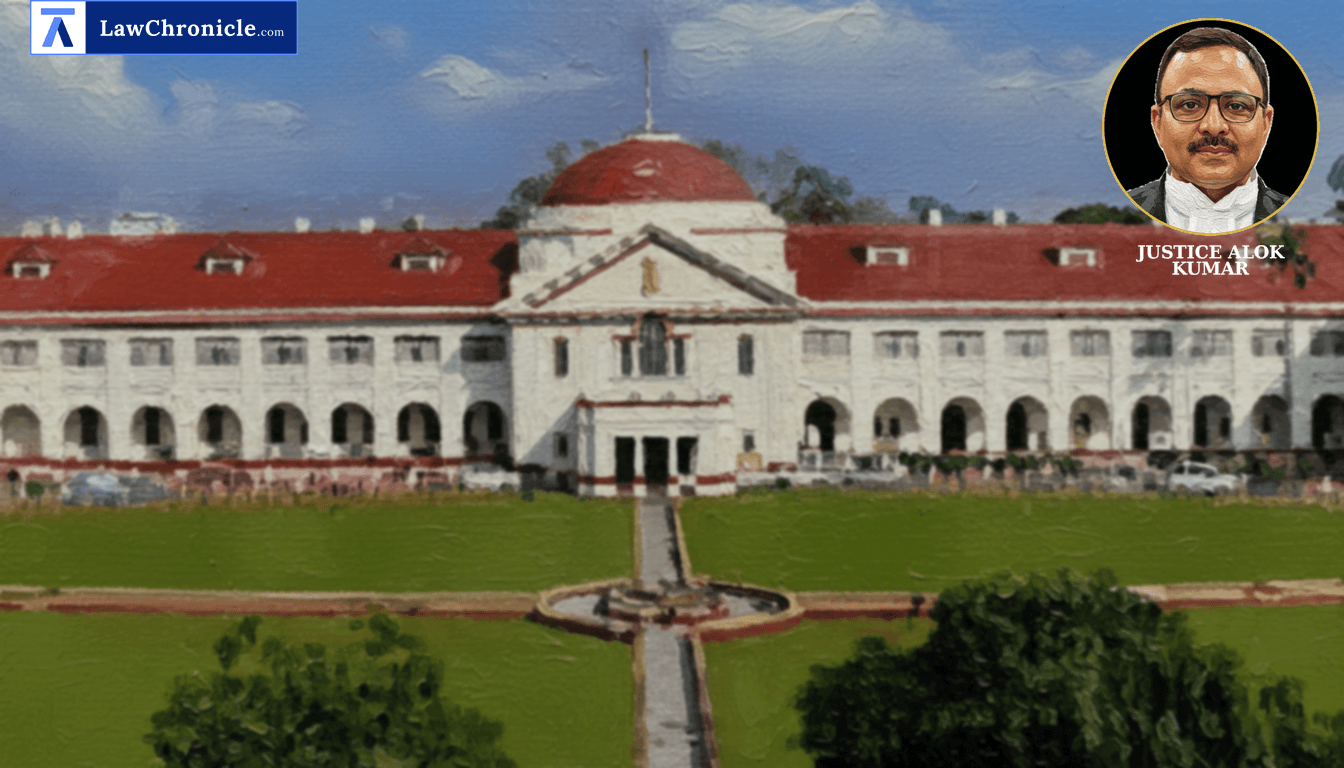
The Patna High Court has slammed the door on ex-gratia COVID-19 claims lacking foundational medical proof, ruling that while technicalities shouldn't block relief, claimants must present reliable corroborative material to establish a virus-linked death. The court clarified that the absence of formal testing can only be overlooked if other clinical records unequivocally point to COVID-19, preventing the ex-gratia scheme from being invoked on speculative grounds.
In a hearing presided over by Justice Alok Kumar, the Court examined a writ petition challenging the rejection of a statutory compensation claim by a District Enquiry Committee. The petitioner sought a direction for the payment of four lakh rupees following his father's demise during the second wave of the pandemic, alleging that the rejection was discriminatory and ignored medical realities.
Key Takeaways
Foundational Fact Requirement
The court emphasized that claimants must establish the 'foundational fact' of a COVID-19 infection through reliable evidence before seeking ex-gratia benefits.
Limitations of CT-Scans
Private diagnostic reports, such as CT-Scans, may not be sufficient to prove COVID-19 status if treating hospital prescriptions and official death certificates remain silent on the infection.
Standard of Corroboration
While formal tests like RT-PCR are not the sole criteria, the absence of such tests places a higher burden on the claimant to provide other credible medical documentation.
Court Rejects Reliance on Private Diagnostic Reports
The Court observed that in the present case, a genuine dispute existed regarding the cause of death. Unlike precedents where death was undisputed and only the laboratory's accreditation was questioned, the petitioner here lacked basic medical documentation. The treating hospital's own records did not mention COVID-19, and the death certificate indicated the residence as the place of death rather than a medical facility.
The Court, in its reasoning, observed: "The Hon'ble Supreme Court in the case of Gaurav Kumar Bansal v. Union of India & Anr. ( "2021 SCC OnLine SC 3384": 2021 CaseBase(SC) 308) has held that absence of a formal Covid-19 test report is not, by itself, conclusive, and the State cannot deny ex-gratia assistance solely on such technical grounds where other requisite documents otherwise establish the claimant's eligibility. The said principle, however, presupposes the existence of reliable corroborative material establishing that death occurred on account of Covid-19, which, on the facts noted above, does not stand demonstrated before the Committee."
Proof of COVID-19 Mandatory for Claims
The Court has following directions: "The claimant must establish that the victim had contracted COVID-19 by placing on record the relevant COVID-19 test report or a COVID-19 death certificate in support of the claim."
Ratio
The State cannot be compelled to grant ex-gratia assistance for COVID-19 deaths where the claimant fails to establish the foundational fact of infection through reliable corroborative material. While the absence of a formal RT-PCR/Antigen test is not fatal to a claim if other evidence exists, the claim must be supported by medical prescriptions or death certificates that explicitly record the infection or its clinical apprehension.
Background
The petitioner's father passed away on May 7, 2021. The petitioner contended that after Sadar Hospital, Chapra refused admission, his father was treated at Sanskar Hospital and diagnosed with a severe infection via a private CT-Scan. He argued that the refusal to issue a discharge certificate by the hospital and the subsequent rejection of his claim by the three-member District Enquiry Committee on July 30, 2021, were arbitrary.
The State, represented by the Advocate General, countered that no RT-PCR, Antigen, or TrueNat tests were conducted. Furthermore, the State pointed out that the medical prescriptions from the private hospital did not disclose any COVID-19 apprehension and the death certificate recorded the death at home. The Court, after analyzing the lack of clinical evidence, found no merit in the petition and dismissed the writ.
Case Details:
Case No.: Civil Writ Jurisdiction Case No.9460 of 2024
Case Title: Jai Prakash Narayan v. The State of Bihar & Others
Appearances:
For the Petitioner(s): Mr. Dhananjai Kumar Singh, Advocate
For the Respondent(s): Mr. Advocate General
Source: 2026 CaseBase(PAT) 2689
 Breaking News