


Expired Select List Cannot Be Revived For Unfilled Reserved Vacancies: Allahabad HC
 Copy Link
 Share
 Save
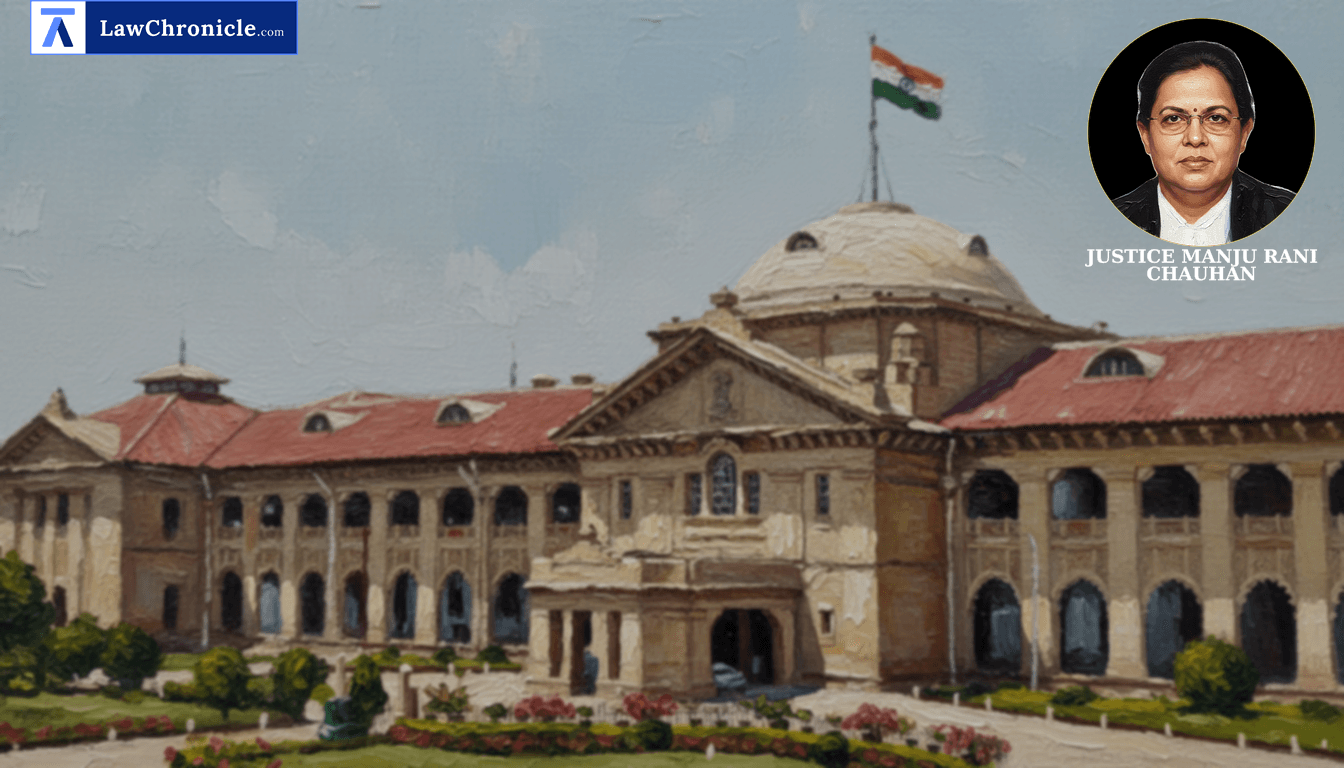
The Allahabad High Court has slammed the door on candidates seeking appointment against unfilled reserved vacancies after the statutory life of a recruitment list has expired, ruling that judicial review cannot resurrect a dead selection process. The Court clarified that while inter-category exchange between Scheduled Tribes and Scheduled Castes is legally permissible under state reservation laws, such a mechanism does not grant a perpetual right to appointment once the underlying select list stands extinguished by operation of law.
A Single Judge bench of Justice Manju Rani Chauhan adjudicated upon the petitions filed by candidates seeking to fill four unfilled Scheduled Tribe vacancies in District Firozabad. The petitioners, belonging to the Scheduled Caste category, argued that since no eligible Scheduled Tribe candidates were available, these vacancies should have been diverted to them in accordance with the statutory mandate governing reserved posts.
Key Takeaways
Select List Validity is Final
Recruitment lists are not inexhaustible reservoirs; once the statutory period (typically one year) expires, no enforceable right to appointment survives for remaining vacancies.
Inter-Category Exchange Not Automatic
While Uttar Pradesh Public Services (Reservation for Scheduled Castes, Scheduled Tribes and Other Backward Classes) Act, 1994 permits SC-ST interchange for unfilled vacancies, it is subject to strict statutory conditions and roster adjustments, not an automatic de-reservation.
Judicial Restraint in Recruitment
Courts cannot use the power of judicial review to extend the life of a statutory select list or direct appointments contrary to governing service rules.
Parity Claims Require Factual Identity
An allegedly erroneous benefit granted to candidates in one district does not entitle others to a similar mandamus if it contradicts statutory provisions.
Court Observations on SC-ST Interchange
The Court examined the interplay between the reservation statute and service rules, noting that the primary issue was whether the four vacancies earmarked for the Scheduled Tribe category could be utilized for Scheduled Caste candidates. The Court, in its reasoning, observed: "The reservation statute contains a complete mechanism for dealing with reserved vacancies which remain unfilled for want of suitable candidates. The legislative scheme, however, does not confer upon a candidate belonging to the Scheduled Caste category an automatic or indefeasible right to appropriate an unfilled Scheduled Tribe vacancy."
The Court emphasized that the statutory mechanism under Section 3(3) of the Uttar Pradesh Public Services (Reservation for Scheduled Castes, Scheduled Tribes and Other Backward Classes) Act, 1994 must operate harmoniously with the Uttar Pradesh Basic Education (Teachers) Service Rules, 1981. It noted that the modern legal framework has evolved significantly, especially after the introduction of Article 16(4B) of the Constitution of India, which recognizes backlog vacancies as a separate class.
The Court has following directions:
"The writ petition is, accordingly, liable to be dismissed, leaving it open to the competent authority to deal with the unfilled reserved vacancies strictly in accordance with the Reservation Act, the applicable roster and the recruitment rules governing any subsequent recruitment."
Ratio
An unfilled reserved vacancy does not automatically grant a right of appointment to candidates of another category; such interchange must occur within the subsistence of the recruitment process. Once a select list expires under Rule 17-A(2) of the Uttar Pradesh Basic Education (Teachers) Service Rules, 1981, the selection process stands extinguished, and no right can be resurrected for vacancies that remained unfilled during the list's currency.
Background
The controversy arose from an advertisement issued in December 2015 for 15,000 Assistant Teacher posts. In Firozabad, four posts reserved for the Scheduled Tribe (ST) category remained vacant due to non-availability of candidates. The petitioner, a Scheduled Caste (SC) candidate who participated in the 2016 counseling but failed to make the cut-off, sought appointment against these ST vacancies. The petitioner relied on Section 3(3) of the Uttar Pradesh Public Services (Reservation for Scheduled Castes, Scheduled Tribes and Other Backward Classes) Act, 1994 and cited B.N. Tewari v. Union of India ( "AIR 1965 SC 1430": 1964 CaseBase(SC) 72) to argue for SC-ST interchange.
The respondents, represented by the District Basic Education Officer, contended that all SC-reserved posts were already filled and that the select list had expired after one year per Rule 17-A(2) of the Uttar Pradesh Basic Education (Teachers) Service Rules, 1981. The Court reviewed several precedents including T. Devadasan v. Union of India ( "AIR 1964 SC 179": 1963 CaseBase(SC) 190), M.R. Balaji v. State of Mysore ( "AIR 1963 SC 649": 1962 CaseBase(SC) 121), and Indra Sawhney v. Union of India ( "1992 Supp (3) SCC 217": 1992 CaseBase(SC) 156) regarding reservation limits and carry-forward rules. Ultimately, the Court held that while Section 3(3) of Uttar Pradesh Public Services (Reservation for Scheduled Castes, Scheduled Tribes and Other Backward Classes) Act, 1994 allows for interchange, it cannot be used to revive an exhausted select list, leading to the dismissal of the petition.
Case Details:
Case No.: WRIT - A No. - 1422 of 2020
Case Title: Bhoopendra Kumar Versus State of U.P. and 2 others
Appearances:
For the Petitioner(s): Kamlesh Kumar Tiwari, Sanjay Kumar Dubey
For the Respondent(s): Suresh Kumar Maurya, Bhupendra Kumar Yadav, C.S.C., Harsh Vardhan Gupta
Source: 2026 CaseBase(ALL) 882
Similar Articles

 Breaking News


