Failure to Redeem Pledged Jewels Not Abetment to Suicide: Madras High Court
 Copy Link
 Share
Share Save
Save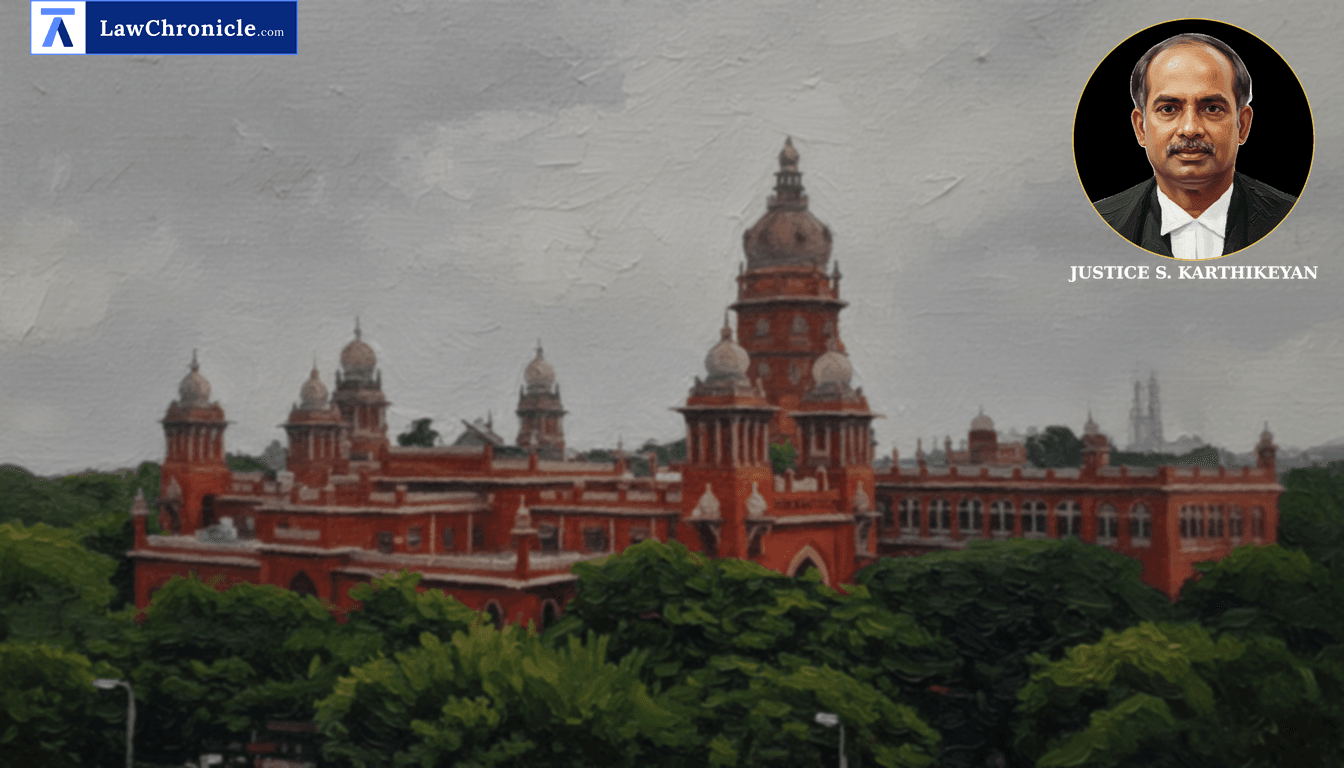
The Madras High Court has clarified the stringent threshold for abetment to suicide, ruling that a failure to redeem pledged jewellery or settle financial liabilities does not, by itself, constitute intentional instigation under the new criminal code. This decision reinforces the legal principle that personal frustration resulting from commercial or financial disputes cannot be equated to criminal intent to cause death.
Justice S. Karthikeyan, sitting at the Madurai Bench, delivered this verdict while hearing a criminal appeal challenging the denial of bail to an accused woman. The court scrutinized the thin line between breach of promise in financial transactions and the criminal act of instigating a person to end their life.
Key Takeaways
Defining Abetment under BNS
The court clarified that financial disputes or failures to fulfill promises do not automatically attract the rigors of abetment laws without proof of active instigation.
Status of Investigation
The recovery of the subject matter (jewellery) and the completion of major investigative steps are pivotal factors in granting bail in suicide-related cases.
Gender-Based Consideration
The judiciary continues to lean towards leniency regarding bail for women who have been in custody for extended periods, especially when the case is based on circumstantial financial friction.
Clarification on Section 108 of the BNS
The Court focused on the legal requirements for proving abetment under the Bharatiya Nyaya Sanhita, 2023. It noted that the prosecution must establish a direct link between the actions of the accused and the victim's decision to commit suicide. The Court, in its reasoning, observed: "It is a well-settled position of law that, in order to attract the offence under Section 108 of the BNS, there must be intentional instigation or intentional aid for the commission of suicide. Merely because the appellant did not redeem the jewels already pledged or did not help the deceased to redeem the jewels, that by itself, would not amount to intentional instigation or intentional aid so as to attract the provisions of Section 108 of the BNS."
The Court has following directions:
"i) The appellant/A2 shall execute a bond for a sum of Rs.20,000/- (Rupees Twenty Thousand only) with two sureties, each for a like sum, to the satisfaction of the learned Special Judge for Trial of SC/ST Act Cases, Pudukottai, in Crl.M.P.No.2 of 2026, dated 07.07.2026.
ii) The appellant/A2 and the sureties shall submit copies of their Aadhaar Cards or any other identity cards issued by the Government in proof of their residential addresses.
iii) The appellant/A2 and the sureties shall file an affidavit of undertaking before the respondent police stating that the appellant/A2 will not involve herself in any offence in future.
iv) The appellant shall stay at Kanchipuram and report before the Inspector of Police, Vishnu Kanchi Police Station, Kanchipuram, daily at 10.30 a.m., until further orders, except the days, on which her appearance is required before the trial Court.
v) On violation of any of the above conditions by the appellant, the respondent police shall move an application for cancellation of the bail."
Ratio
To attract the offense of abetment to suicide, there must be evidence of intentional instigation or intentional aid. A mere failure to redeem pledged jewels or a failure to facilitate a financial transaction, even if it leads to the victim's frustration and subsequent suicide, does not constitute 'intentional instigation' as defined under the law of the land.
Background
The appellant, Kayalvizhi, was accused No. 2 in a case involving the suicide of an individual who had approached her and her brother to redeem and re-pledge jewellery. According to the prosecution, the deceased handed over jewels to the accused, who re-pledged them but failed to return them despite payments. The deceased left a suicide note blaming the accused for his financial distress.
The appellant moved the High Court under Section 14A(2) of the Scheduled Castes and Scheduled Tribes (Prevention of Atrocities) Act, 1989 after the Special Court for trial of SC/ST Act Cases, Pudukottai, dismissed her bail application on July 7, 2026. Her counsel argued she was a first-time offender and that the jewels had already been handed over to the police. The State and the de facto complainant strongly opposed the bail, citing the suicide note. However, the High Court observed that since the 12 sovereigns of jewels were already recovered and the investigation was substantially complete, the appellant was entitled to bail.
Case Details:
Case No.: Crl.A(MD)No.1021 of 2026
Case Title: Kayal @ Kayalvizhi Vs. The Deputy Superintendent of Police and others
Appearances:
For the Petitioner(s): Mr.A.K.Gopalan, Advocate
For the Respondent(s): Mr.A.Robinson, Government Advocate (Crl. Side) for R1 & R2; Mr.G.Bhagavath Singh, Advocate for R3
Source: 2026 CaseBase(MAD) 19258
 Breaking News