


Falsifying Pedigree to Usurp Property Constitutes Forgery: Gujarat High Court
 Copy Link
 Share
 Save
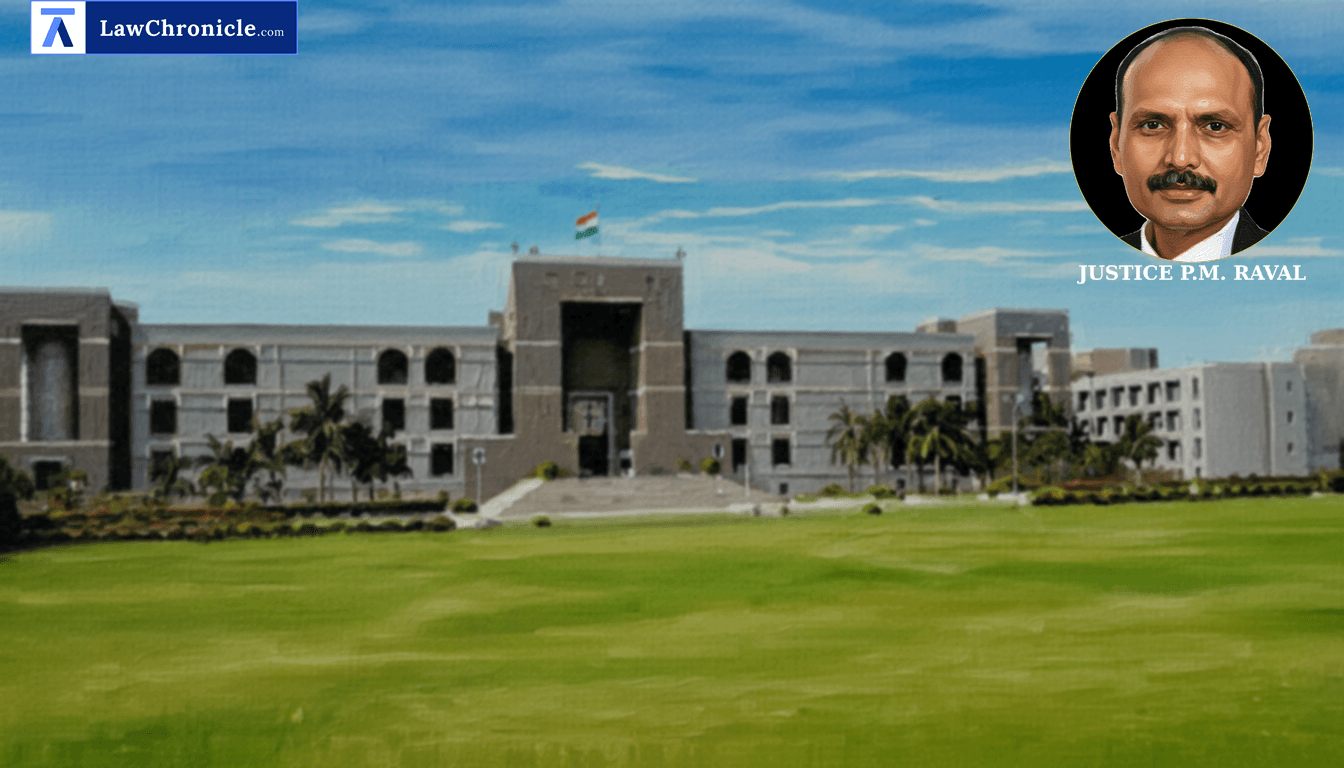
The Gujarat High Court has refused to quash a criminal case involving the alleged fabrication of family pedigrees to illegally mutate ancestral land, ruling that engineering fictitious heirships is not a mere civil dispute but a criminal act of forgery. The court clarified that while claiming incorrect ownership might be a civil wrong, creating documents that falsify the legal existence or timeline of a person to bypass lawful descendants triggers the punitive provisions of the Indian Penal Code, 1860.
In an application filed under Section 482 of the Code of Criminal Procedure, 1973, Justice P. M. Raval adjudicated upon a challenge to an FIR lodged in 2012 involving charges of forgery and cheating. The petitioners sought to set aside the proceedings, contending that the dispute was essentially civil in nature and suffered from an exorbitant delay of 24 years.
Key Takeaways
Forgery vs. False Claims
Executing a document with an incorrect claim is not forgery, but creating a document that purports to be made by another or falsifies family trees to engineer inheritance rights constitutes a criminal offense.
Delay Not Fatal in Fraud Cases
Unexplained delay in filing an FIR is not a ground for quashing when the fraud was discovered recently, particularly during official revenue proceedings.
Successive Quashing Petitions Barred
Litigants cannot file a second petition under Section 482 of the Code of Criminal Procedure, 1973 if a previous application for the same relief was unconditionally withdrawn without a sigificant change in circumstances.
Court Observations on Forgery and Fabricated Pedigrees
The Court observed that the applicants did not merely assert an unfounded claim but actively fabricated a panchnama and pedigree, falsifying a living person’s legal timeline. The Court noted that portraying a living person as deceased to substitute them with a fake heir in a legal pedigree amounts to creating a false document.
The Court, in its reasoning, observed: "Falsifying Pedigree to create non-existent legal entities and identities constitutes the making of a false document under Section 464 IPC, placing the act at the very core of forgery... Falsely depicting a living person as dead in a legal Pedigree to substitute them with a fake heir constitutes creating a false document in the name of/pertaining to a fictitious legal entity under Explanation 2 to Section 464 IPC."
Addressing the petitioners' reliance on precedents, the Court distinguished the present case from Sheila Sebastian v. R. Jawaharaj and Another etc. and Mohd. Ibrahim v. State of Bihar, noting that here, the execution of the document itself was fraudulent as it involved deceiving an illiterate person into providing a thumb impression on an instrument with false recitals. The Court emphasized that while exercising inherent powers, it must follow the guidelines laid down in State of Haryana v. Bhajan Lal.
Ratio
Falsifying a family pedigree (Pedhinama) to create fictitious familial relationships and portraying a living person as deceased to facilitate illegal land mutation constitutes the 'making of a false document' under Section 464 of the Indian Penal Code, 1860. Such acts transcend civil property disputes and satisfy the essential ingredients of forgery and cheating, rendering the criminal proceedings maintainable regardless of the delay in discovery.
Background
The dispute centered on Block No. 72 in Sosank Village. The complainant alleged that the applicants fabricated a panchnama and pedigree in 1987, falsely claiming that one Dahiben (the original owner) had a sister named Kamuben and that Applicant No. 2 was Kamuben’s daughter. In reality, Kamuben was Dahiben’s niece, and she was very much alive in 1987 despite the pedigree stating she was deceased. By creating these false links, the applicants mutated the land in their favor, bypassing Dahiben's actual descendants.
The fraud came to light in 2011 during suo motu revision proceedings initiated by the District Collector, who subsequently cancelled the fraudulent entry. The applicants argued that the matter was a civil dispute and that a civil suit was already pending. However, the High Court found ample material demonstrating criminality, noting that witnesses had stated they signed the documents at the instance of the applicants. Finding that a prima facie case was made out, the Court dismissed the application and vacated the interim stay, though it granted a brief extension of eight weeks for the applicants to approach the Supreme Court.
Case Details:
Case No.: R/CRIMINAL MISC. APPLICATION NO. 6539 of 2015
Neutral Citation: 2026:GUJHC:60833
Case Title: Mahendrabhai Chandubhai Patel & Anr. Versus State Of Gujarat & Ors.
Appearances:
For the Petitioner(s): MR RR MARSHALL, SR ADVOCATE with ADITYA R PARIKH
For the Respondent(s): MR VIRAT G POPAT for Respondent No. 3, MR KM ANTANI, APP for Respondent No. 1, 2
Source: 2026 CaseBase(GUJ) 24768
Similar Articles




 Breaking News


