


Wife Branding Husband as Fatty Or Black Complexioned No Ground For Divorce: Chhattisgarh HC
 Copy Link
 Share
 Save
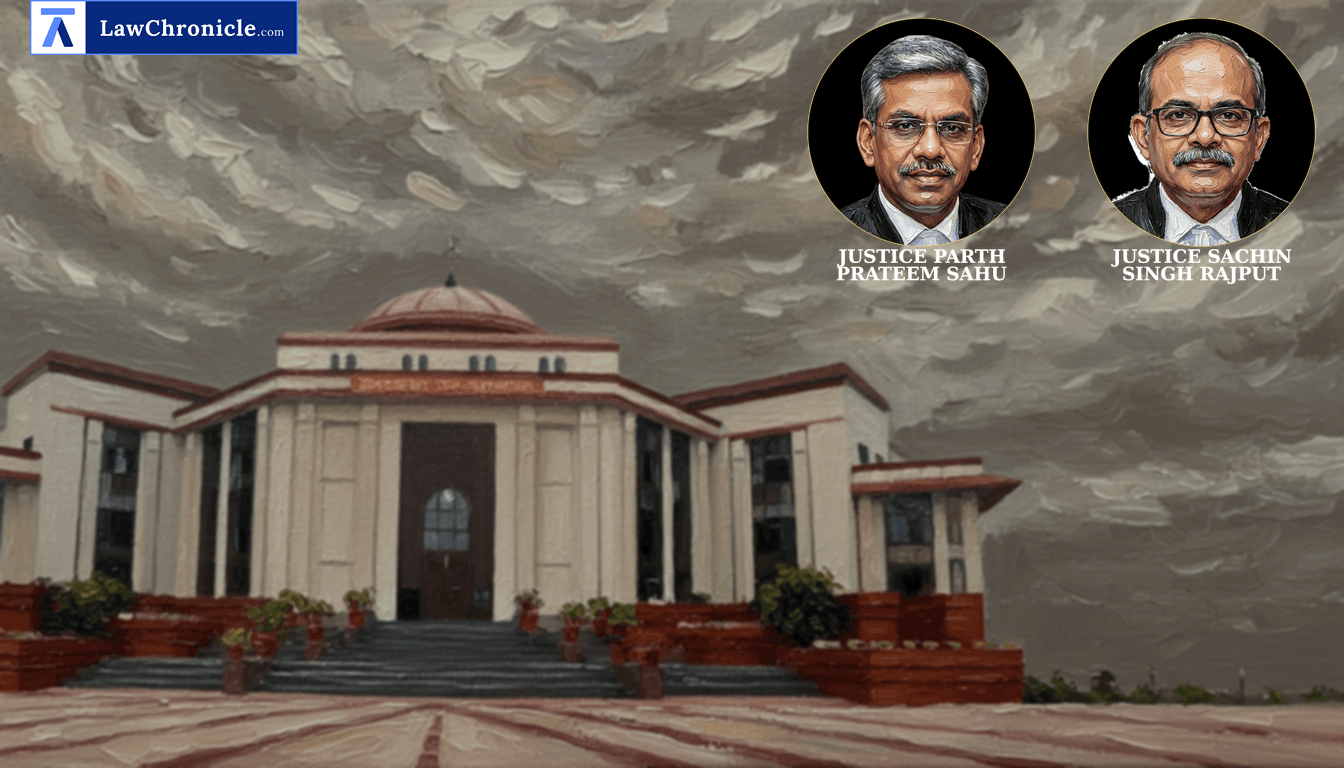
The Chhattisgarh High Court has ruled that verbal insults regarding physical appearance do not constitute 'mental cruelty' sufficient as a ground for divorce. In a significant affirmation of spousal rights, the Bench held that allegations of being called 'fatty' or 'black complexioned' lack the requisite gravity to meet the legal standards of cruelty under personal laws.
A Division Bench comprising Justice Parth Prateem Sahu and Justice Sachin Singh Rajput delivered this judgment while hearing a matrimonial appeal filed by a husband. The appellant had challenged a Family Court order that dismissed his plea for divorce while simultaneously directing the return of 'stridhan' to his wife.
Key Takeaways
Physical Appearance Insults Not Cruelty
Casual remarks or insults regarding a spouse's complexion or body shape do not automatically qualify as mental cruelty for dissolving a marriage.
High Standard for Animis Deserendi
For a plea of desertion to succeed, the petitioner must prove a clear intention on the part of the respondent to permanently terminate cohabitation without reasonable cause.
Protection of Stridhan
Courts maintain the authority under Section 27 of the Hindu Marriage Act, 1955 to direct the return of bridal gifts and property even if the primary prayer for divorce is rejected.
Court Dismisses Allegations of Mental Cruelty and Desertion
The appellant sought a decree of divorce alleging that his wife treated him with hostility, threatened false litigation, and eventually deserted him following a miscarriage. He specifically contended that she insulted his physical appearance. However, the Chhattisgarh High Court found these allegations unsubstantiated by cogent evidence. The Bench noted that the wife's move to her parental home was linked to medical necessity and that the husband had failed to make efforts to bring her back.
Regarding the legal threshold for mental cruelty, the Chhattisgarh High Court analyzed the principles established in Samar Ghosh vs. Jaya Ghosh ( "(2007) 4 SCC 511": 2006 CaseBase(SC) 1119). It observed that while human behavior varies, the instances cited by the husband did not fall within the illustrative categories of cruelty that would warrant a judicial separation. The Bench expressed that “Though the appellant/husband has made several allegations against the respondent/wife yet none of them have been substantiated by leading any cogent evidence of the witnesses. Of course, he has alleged that the respondent/wife used to brand him as being a black complexioned or a fatty shaped but they cannot be taken to be sufficient ground for granting a decree of divorce to him.”
Ratio
To grant a decree of divorce on the grounds of cruelty, the conduct complained of must be of such a character as to cause in the mind of the other spouse a reasonable apprehension that it will be harmful or injurious to live with the other. Mere trivial irritations or verbal insults regarding physical traits, absent evidence of systemic mental torture, do not constitute legal cruelty. Furthermore, desertion requires the proof of ‘animus deserendi’ (the intention to desert) which cannot be established if the separation is due to medical reasons or lack of effort from the seeking spouse to resume cohabitation.
Background
The parties were married on March 7, 2019. The husband alleged that the wife lived with him for only a few months before frequently visiting her parental home and eventually leaving permanently after a miscarriage in late 2019. He initiated proceedings under Section 13 of the Hindu Marriage Act, 1955. The wife countered, alleging the husband had an illicit relationship and had neglected her medical needs, forcing her mother to take her for treatment.
The Family Court at Janjgir-Champa had dismissed the husband's suit for divorce but allowed the wife’s application under Section 27 of the Hindu Marriage Act, 1955, ordering the return of gifts (stridhan). The Chhattisgarh High Court, after perusing the records, found that the husband failed to prove the respondent was living separately without reasonable excuse, noting that his family had forcibly sent her away during her illness. Consequently, the Chhattisgarh High Court affirmed the lower court's decree.
Case Details:
Case No.: FA(MAT) No. 325 of 2024
Neutral Citation: 2026:CGHC:40835-DB
Case Title: Akash Ghosh v. Smt. Pooja Seet
Appearances:
For the Petitioner(s): Shri Parasmani Shriwas, Advocate
For the Respondent(s): Shri Punit Ruparel, Advocate
Source: 2026 CaseBase(CTH) 17080
Similar Articles

 Breaking News


